Garage Doors in Woburn, OntarioDoors for the shop,the bay and the warehouse.
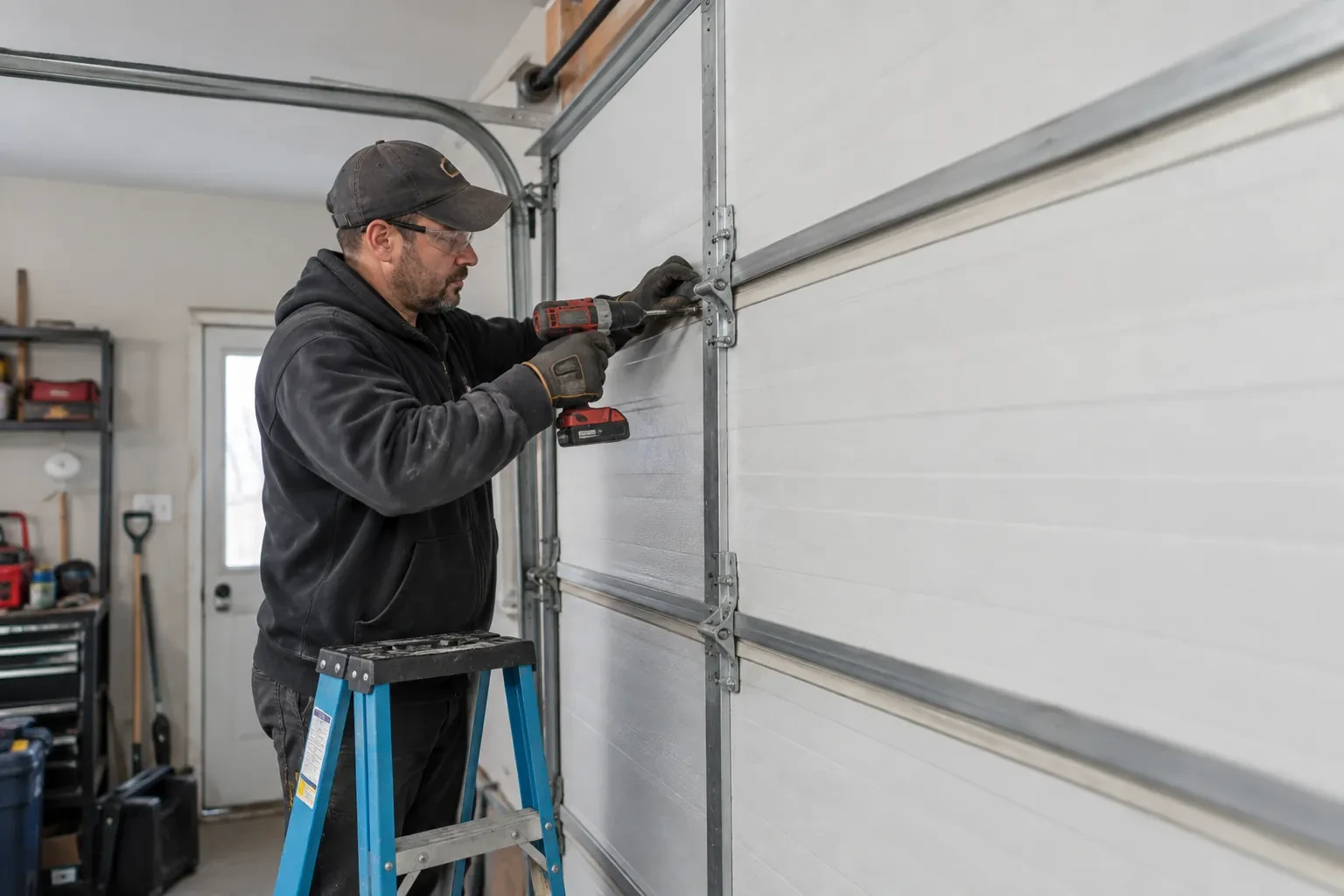
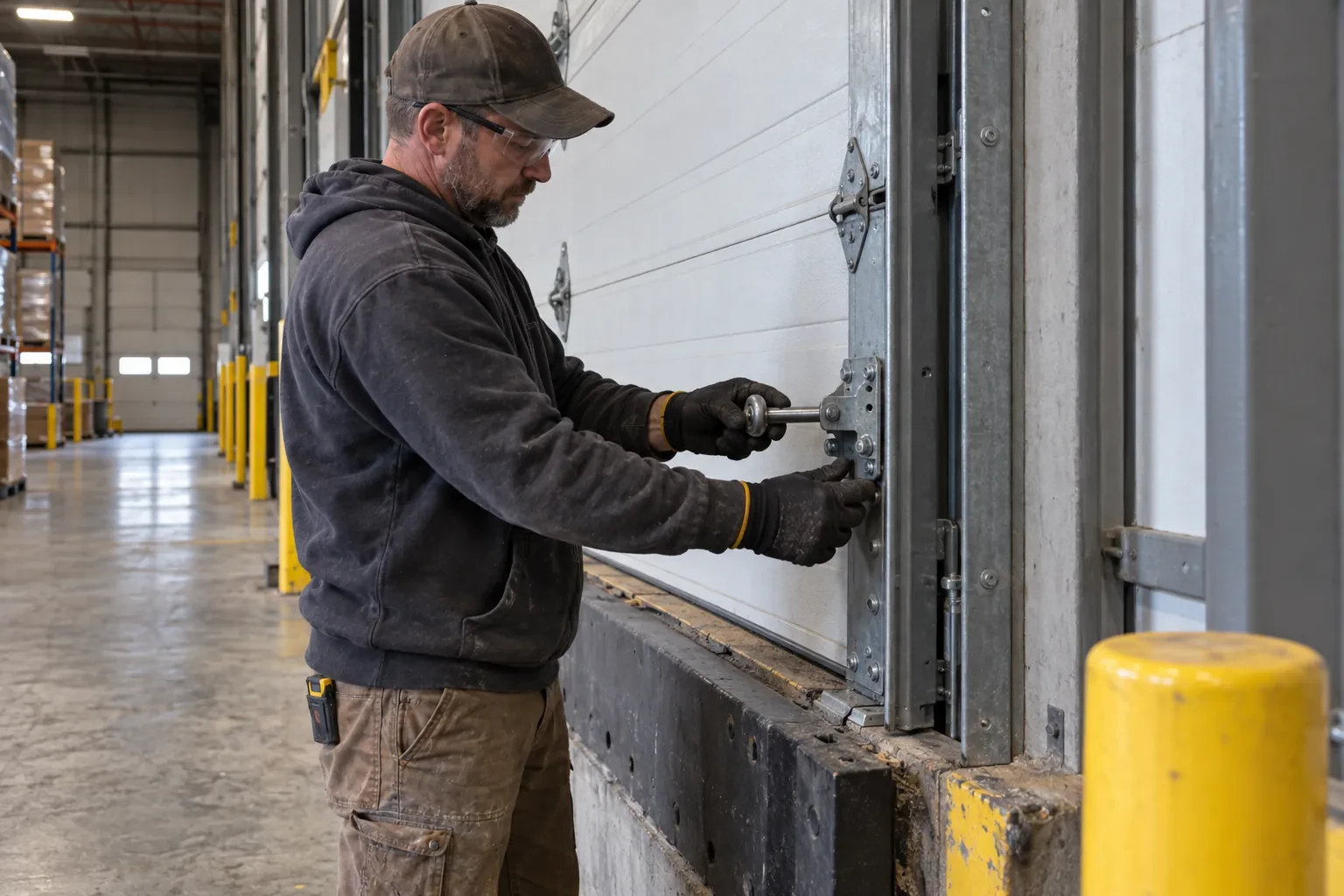
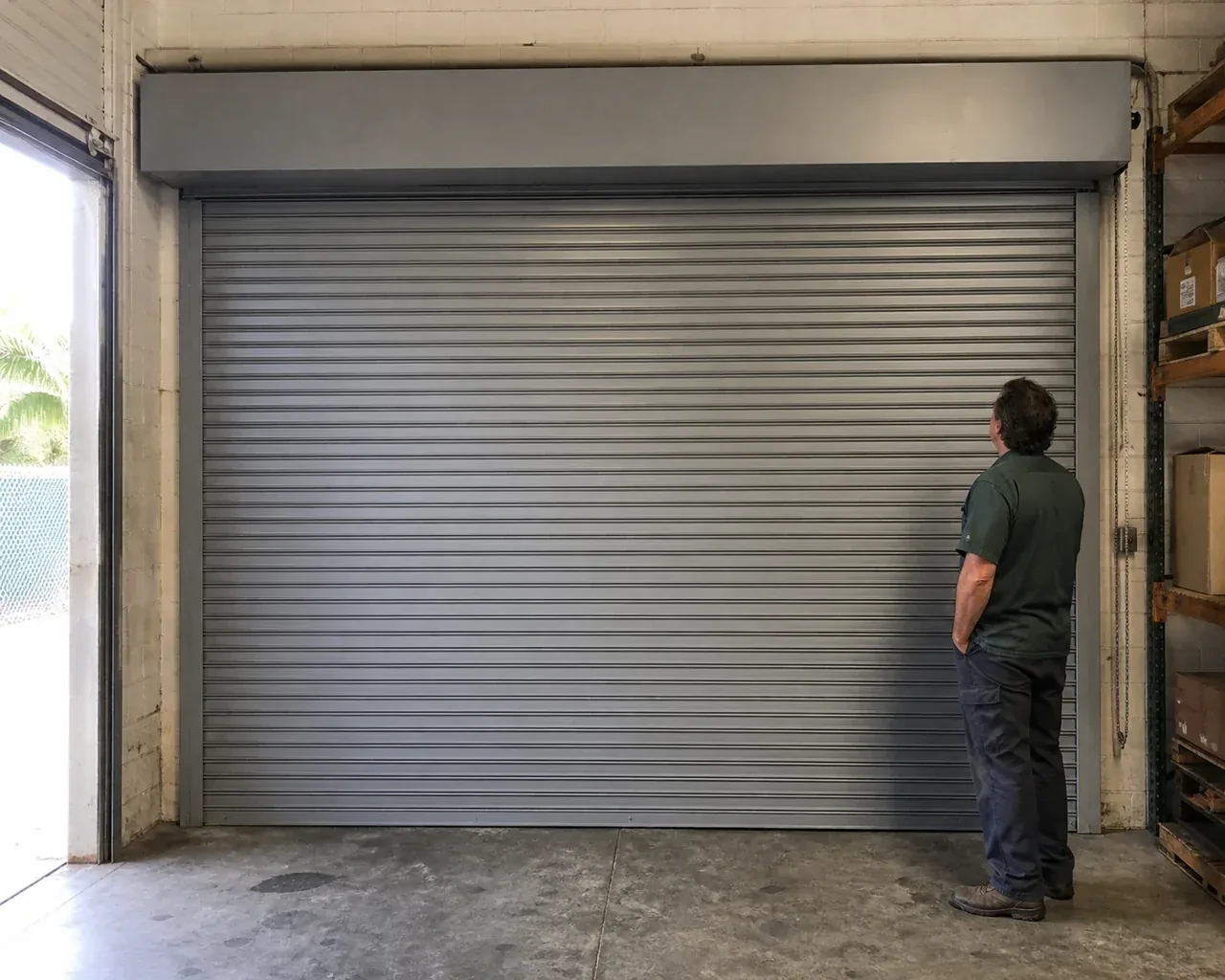
Commercial sectional and rolling steel doors around Woburn take thousands of cycles a year and the occasional knock from a forklift. We service them with heavy-duty springs, industrial operators and hardware chosen for the work they actually do, and we plan the visit around your opening hours. This page also covers Scarborough.
Commercial sectional and rolling steel doors around Woburn take thousands of cycles a year and the occasional knock from a forklift. We service them with heavy-duty springs, industrial operators and hardware chosen for the work they actually do, and we plan the visit around your opening hours. This page also covers Scarborough.
Open, close, repeat, for years.
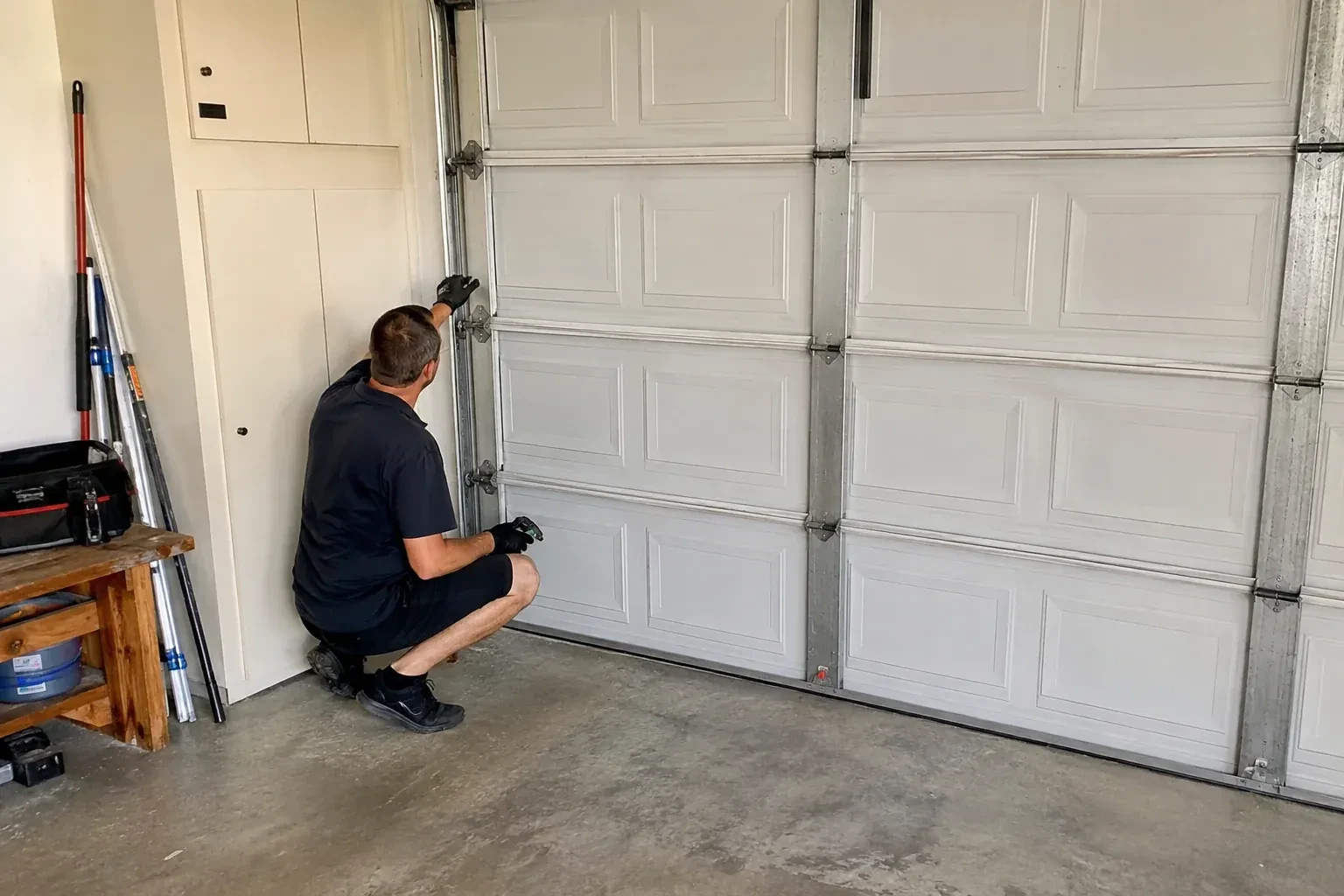
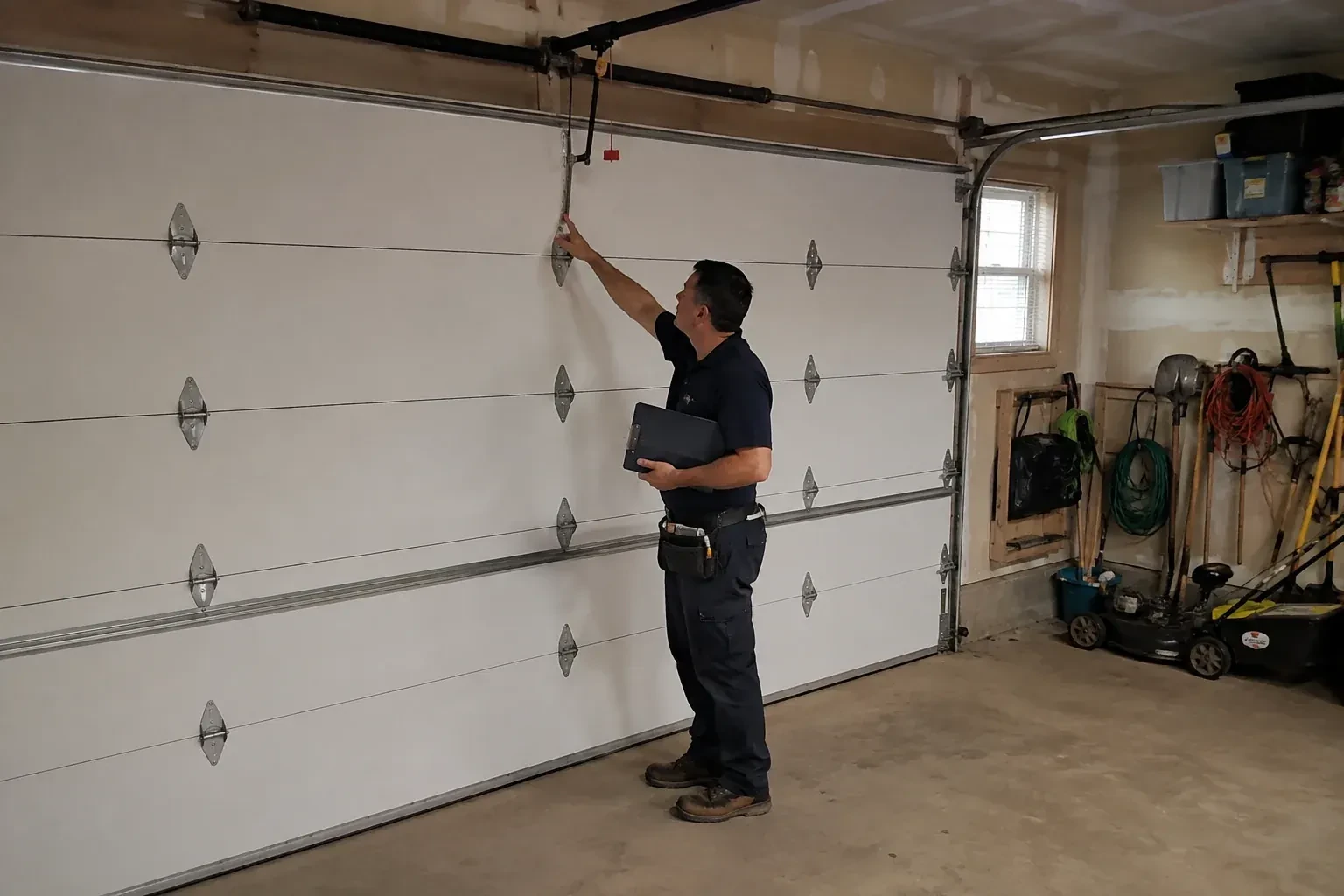
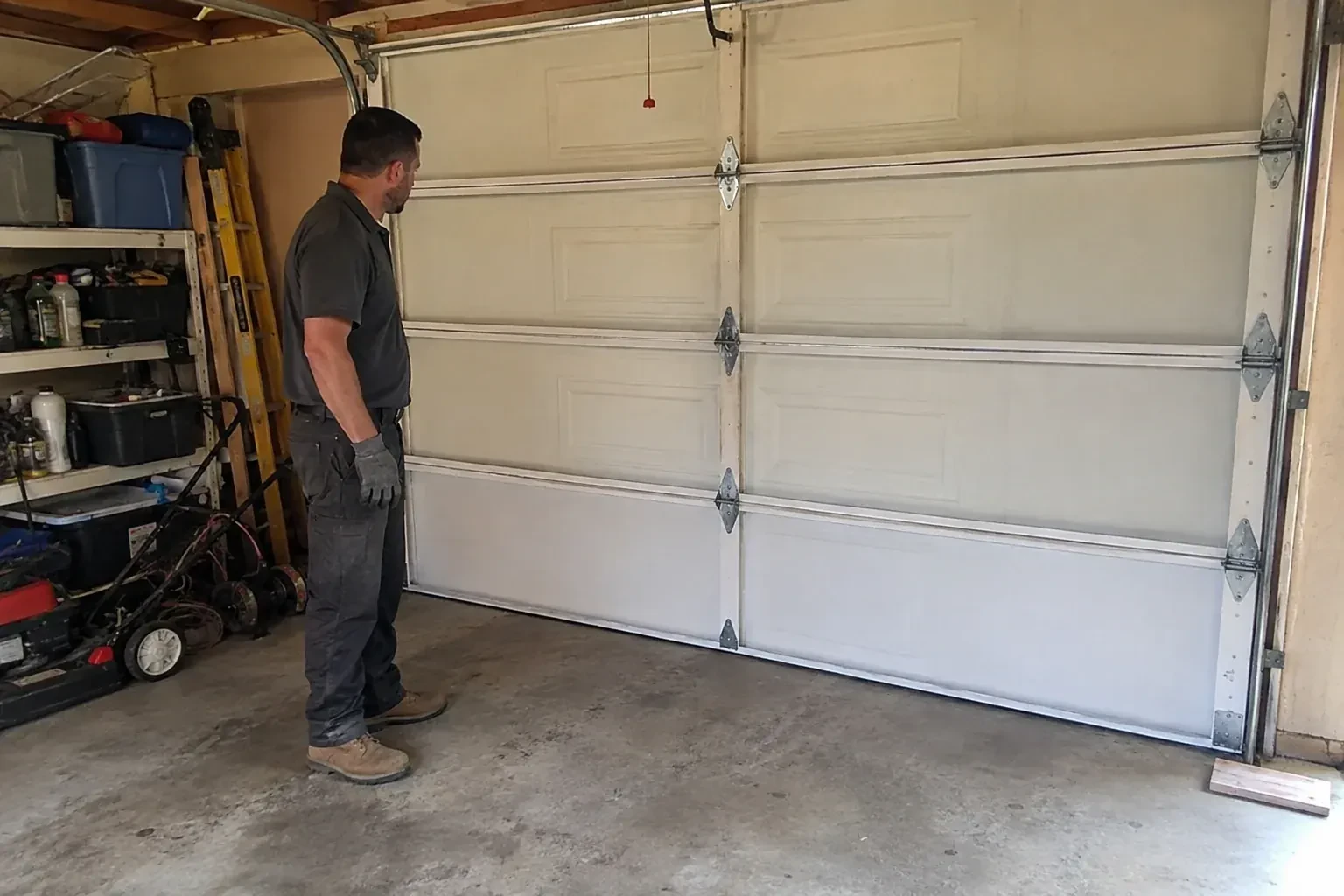
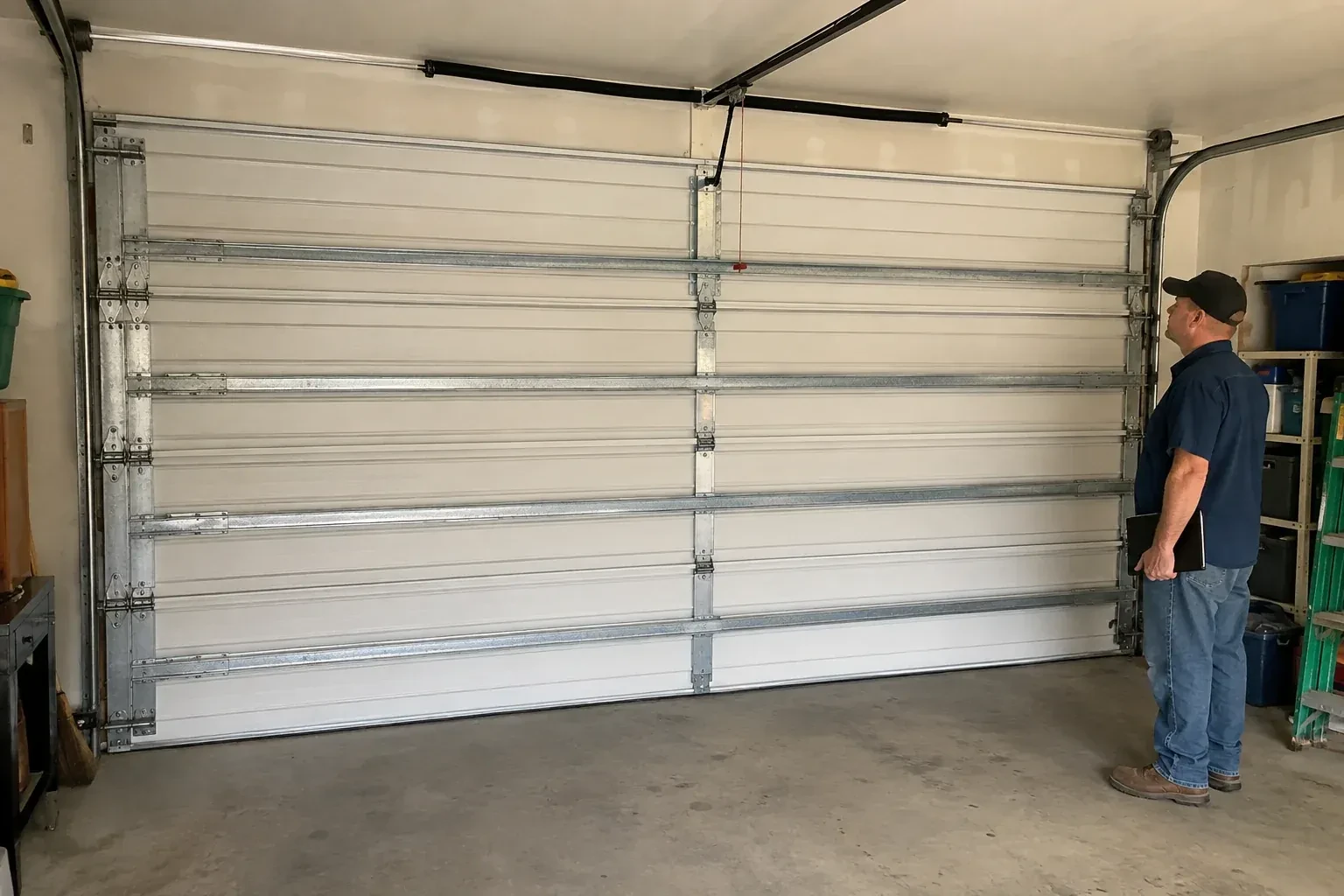
For customers in Woburn the sequence is always the same. Assess the door in person. Explain what was found and why. Price the options on site. Do the agreed work with the door secured and the right tools. Test every part of the travel. Show you what changed. Then clean up and go.
We treat every garage in Woburn as someone's space. Shoes stay clean, tools stay on a mat, and the car is moved only with permission. The technician explains what is about to happen, especially where springs are involved, so nobody is surprised by a sound or a moment of tension. The door is run through full cycles with you watching before we call the job finished.
13years in business
24/7open every day
Told before touched. Nothing is adjusted or replaced until you have heard what we found and agreed with the plan for it.
Neat work, neat exit. New parts fitted cleanly, old ones removed, the floor and door wiped down. The garage is yours again the moment we leave.
Room to choose. We give you the practical picture and step back. Repair now, plan a replacement, or wait and watch: your call.
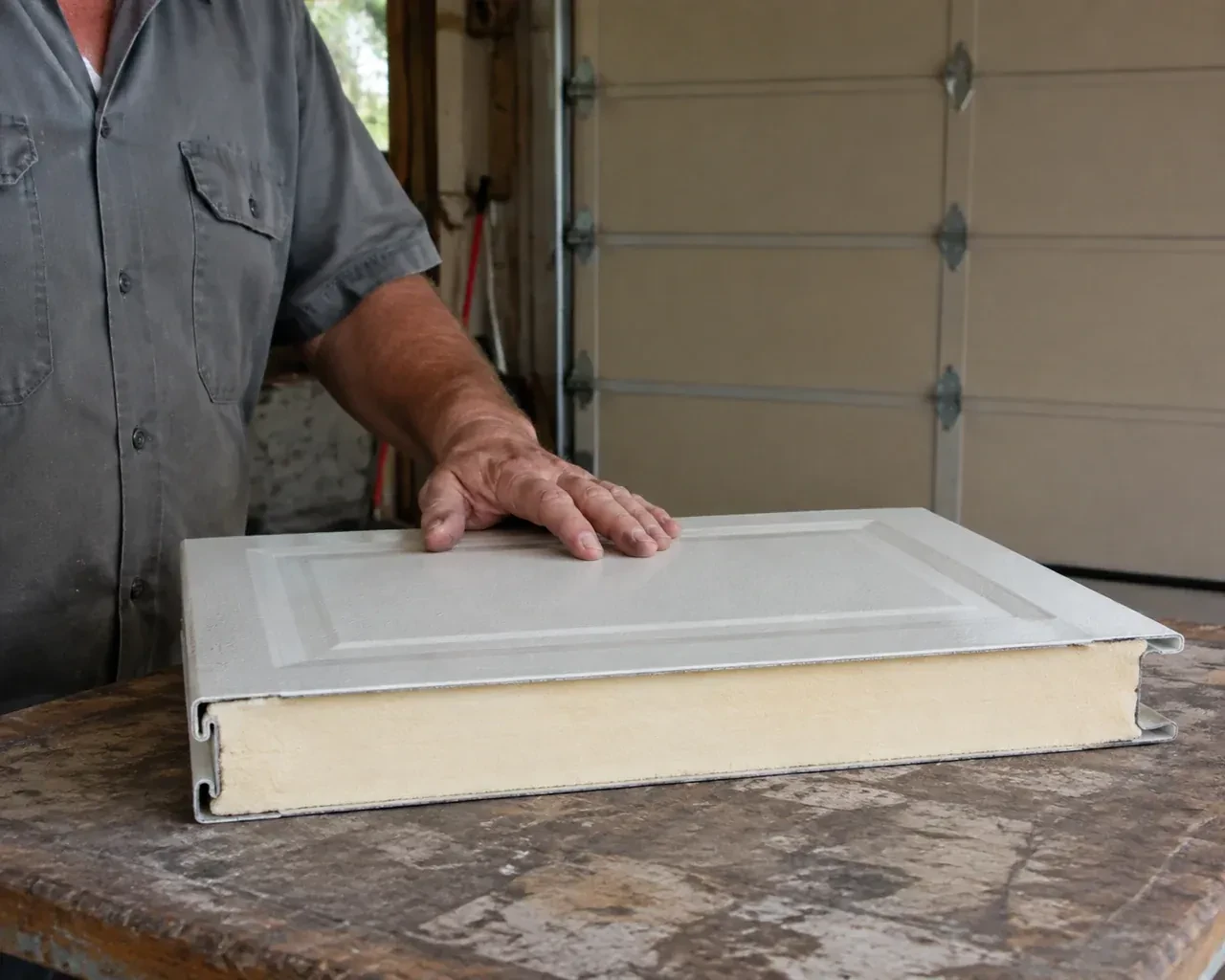
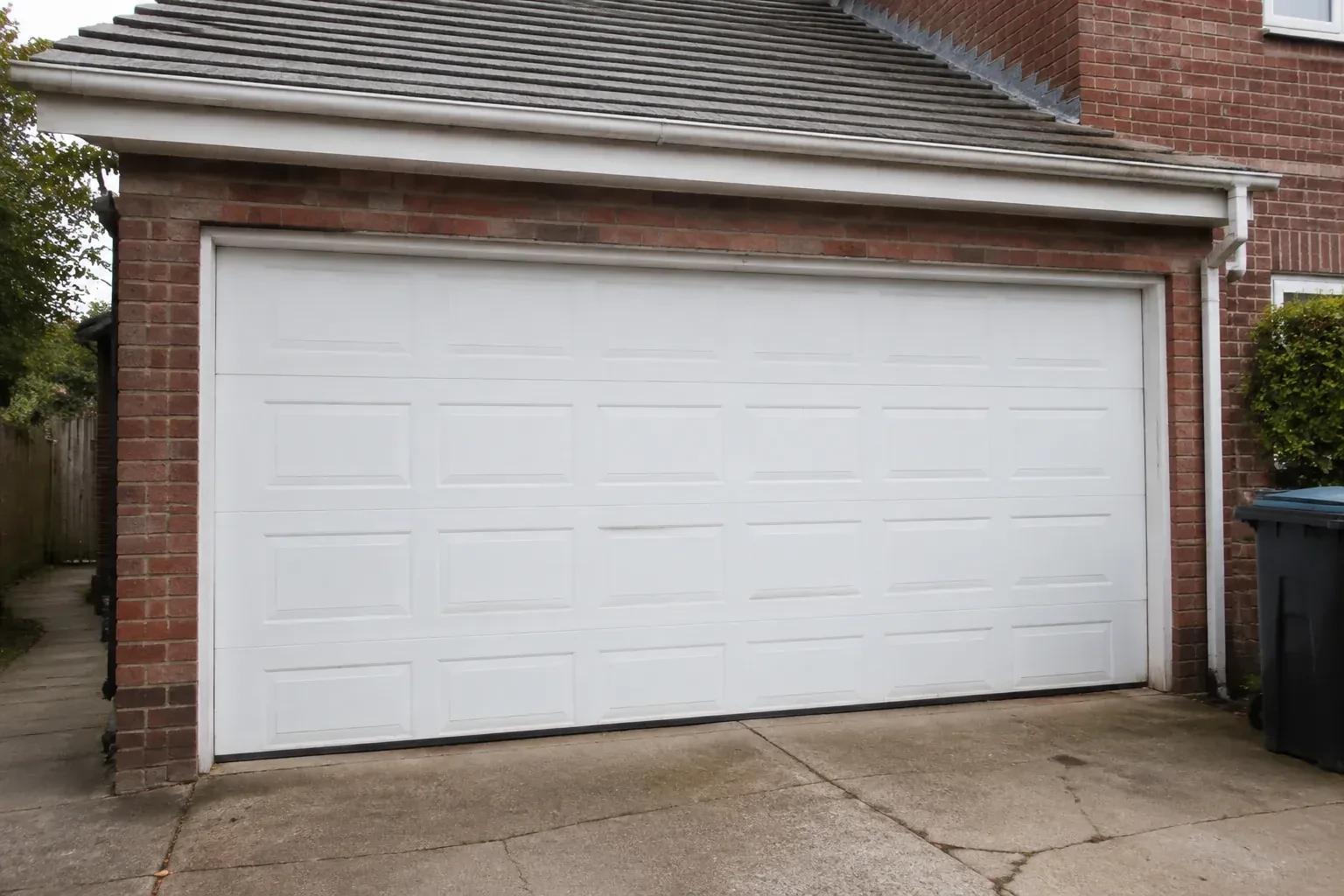
In Woburn we work on garage doors of every age and size: single and double residential doors, insulated and uninsulated, wood and steel, plus commercial rolling and sectional doors. The service pages explain the repairs, replacements and installations that apply to each.
About 58% of homes in Toronto were built in 1980 or earlier, according to the 2021 Census.
Older homes
Wiring in an older garage may be a single outlet on the ceiling shared with the light, so a new opener is chosen with that in mind, and a battery backup covers the door during a power cut. The technician looks at the outlet before recommending a unit.
Single-detached houses make up about 23% of homes in Toronto (2021 Census).
Where most residents live in attached homes, a technician's day includes coordinating with neighbours: parking the van without blocking a shared lane, keeping noisy work to reasonable hours, and finishing a door in one visit so the row is not disrupted twice.
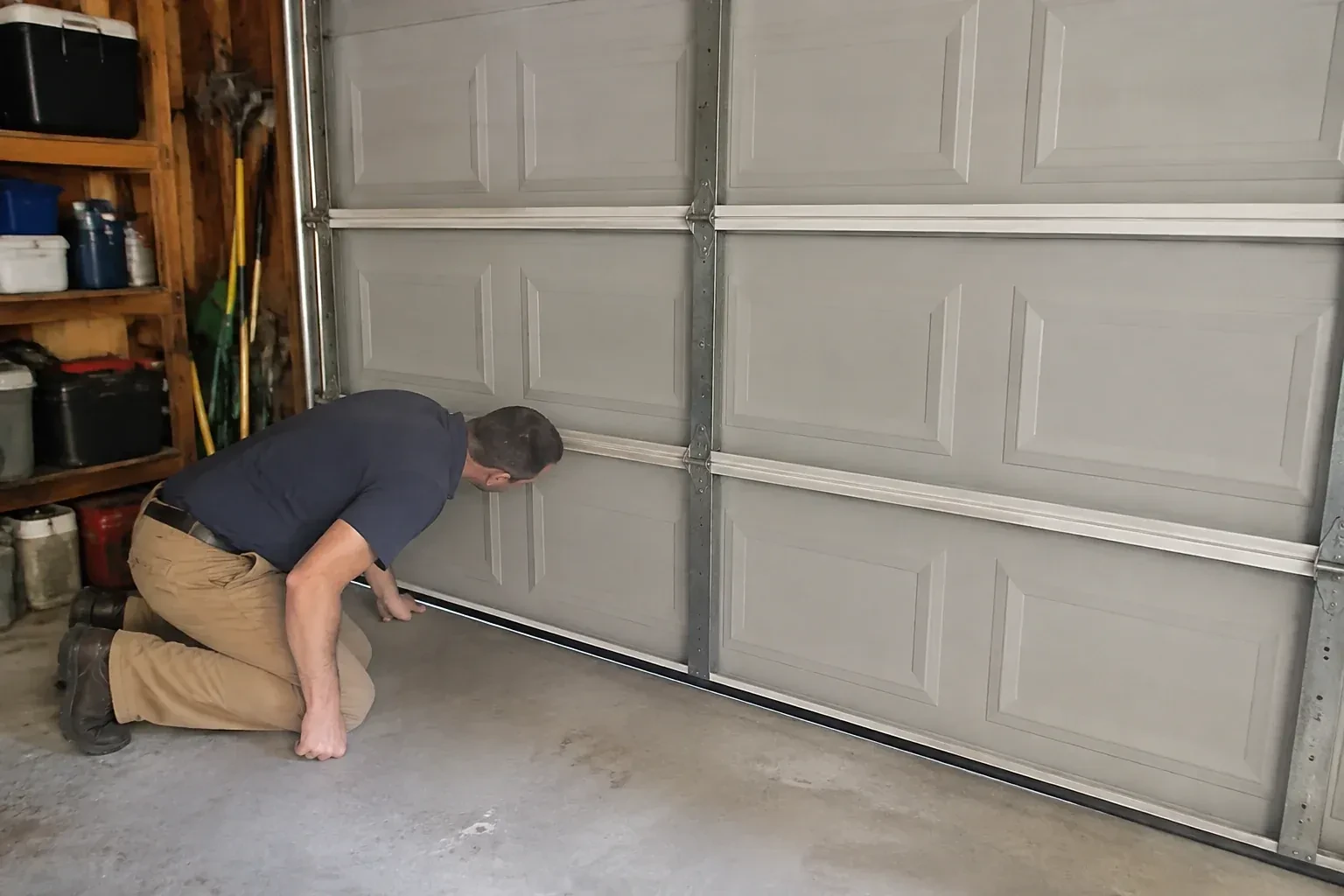
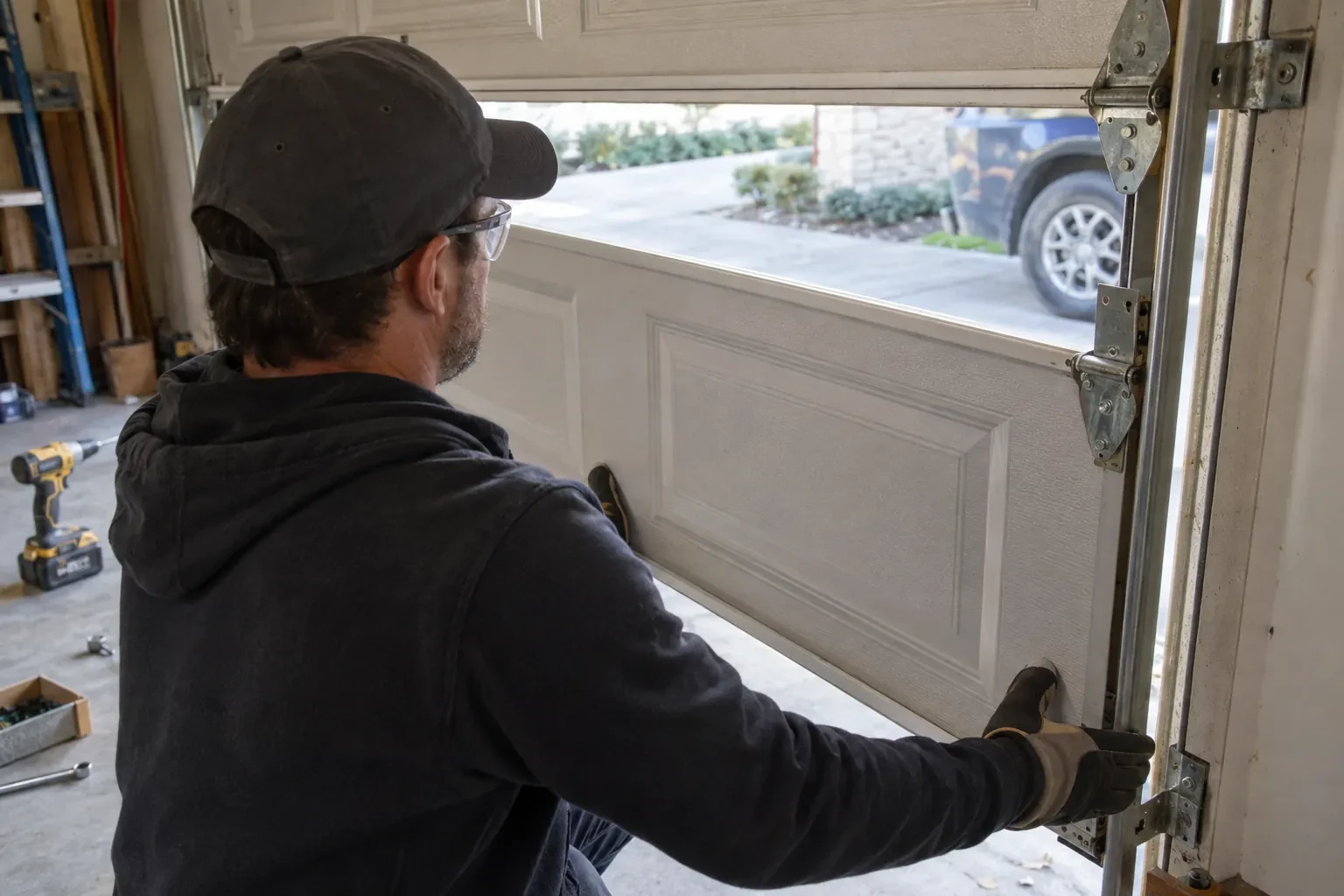
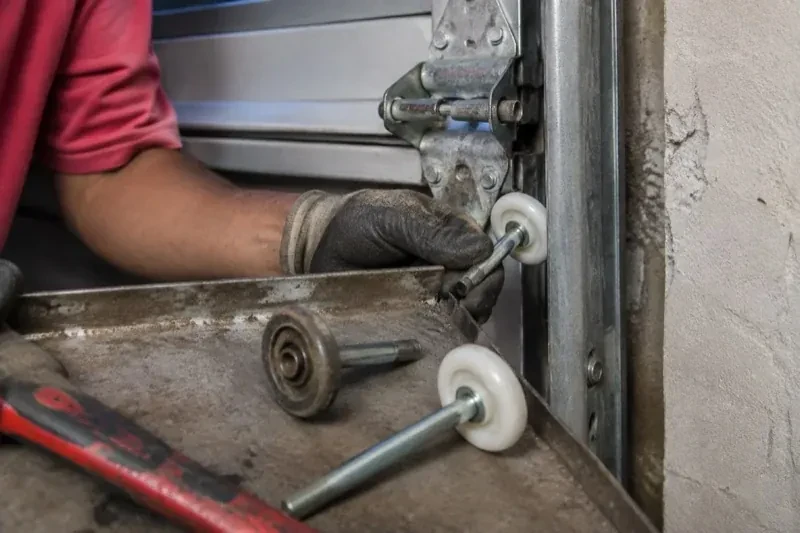
You tapped the door with the bumper while backing in, barely a nudge, and now the bottom corner has swung inward. One roller is dangling outside the rail, the section is twisted, and the door will neither rise nor settle flat.
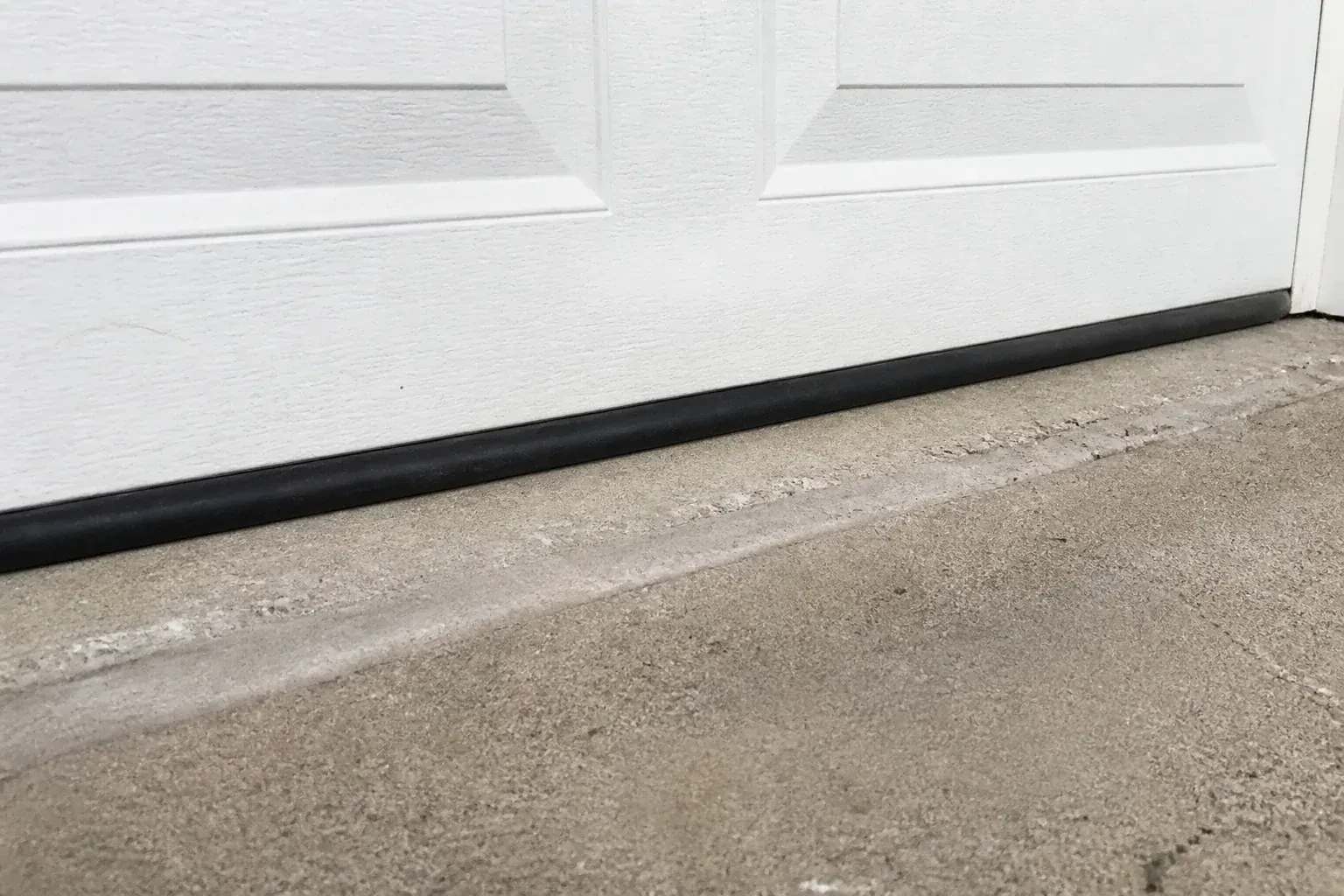
The garage doubles as a workshop, and with the heater running the floor near the door stays cold and the draft finds your ankles at the bench. When the wind is up you can feel the air moving under the door.
A length of weatherstrip along the right jamb has pulled away, nails and all, and it slaps against the trim every time the wind picks up. The wood behind it is dark and soft where it meets the floor.
The door opens about a third of the way and stops. Turning the limit screw on the head has made no difference, and the trolley seems to sit in the wrong place along the rail when the door is fully closed.
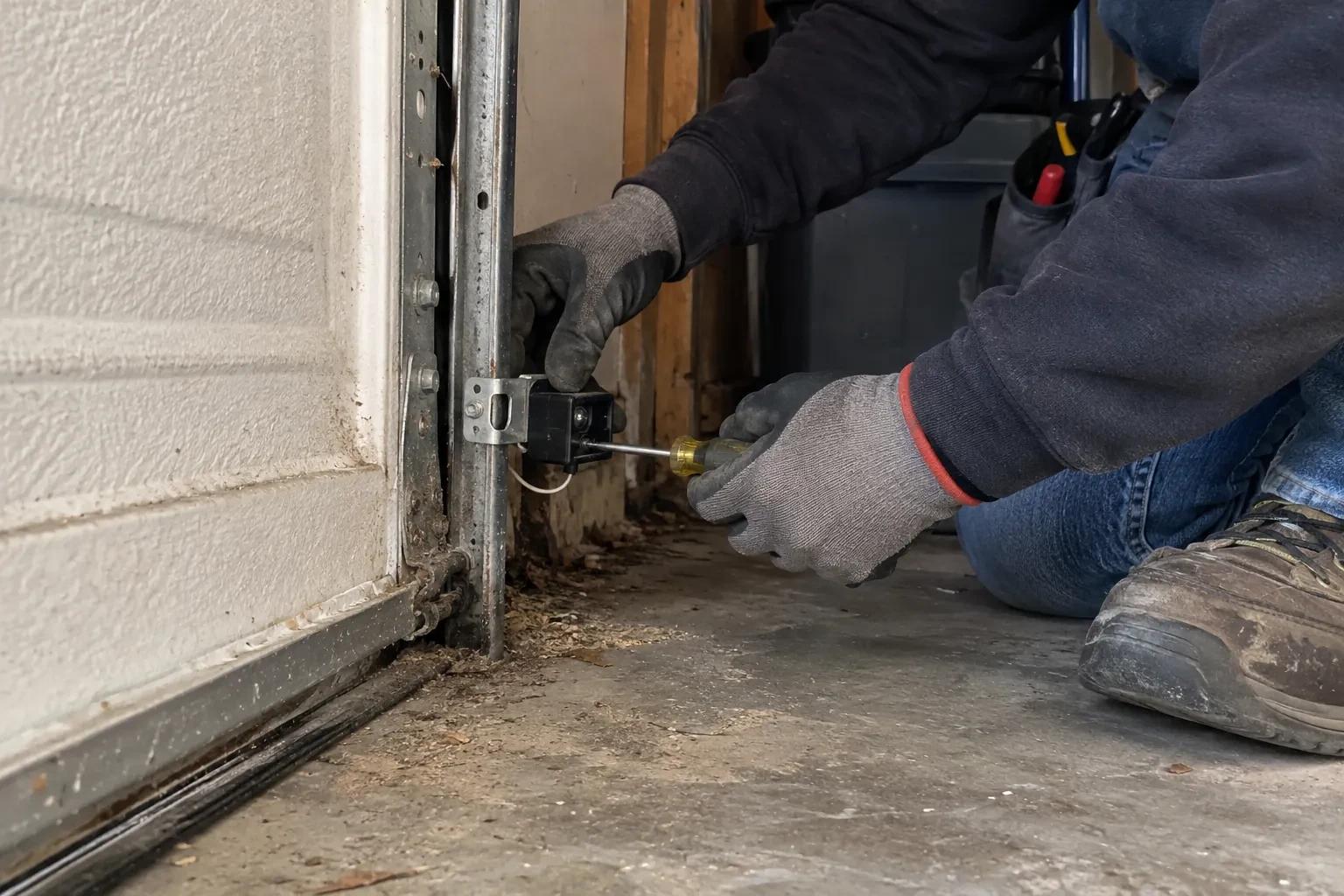
The small light on one of the sensors near the floor has gone dark, or it flickers when someone walks past the track. The other one glows steadily. The door refuses to close from the car.
The house came with a controller already screwed to the garage ceiling and a sensor on the door, but the app insists the device belongs to another account. The seller has moved provinces, the emails go unanswered, and every evening the door still reports to a stranger's phone.
A previous owner knotted the release cord around the rail and stacked storage shelves right beneath it. You only discovered this in the dark, with the power off, a flashlight in your teeth and a car that needed to be somewhere.
Several sections are dented and the bottom edge has begun to rust. Instead of matching another isolated panel, you are ready to choose a complete insulated steel door with new coordinated hardware.
The wall control asks the door to close, but the operator hums and stops. The curtain remains overhead while the control light and the photoelectric sensors suggest that the powered system needs a connected diagnosis.
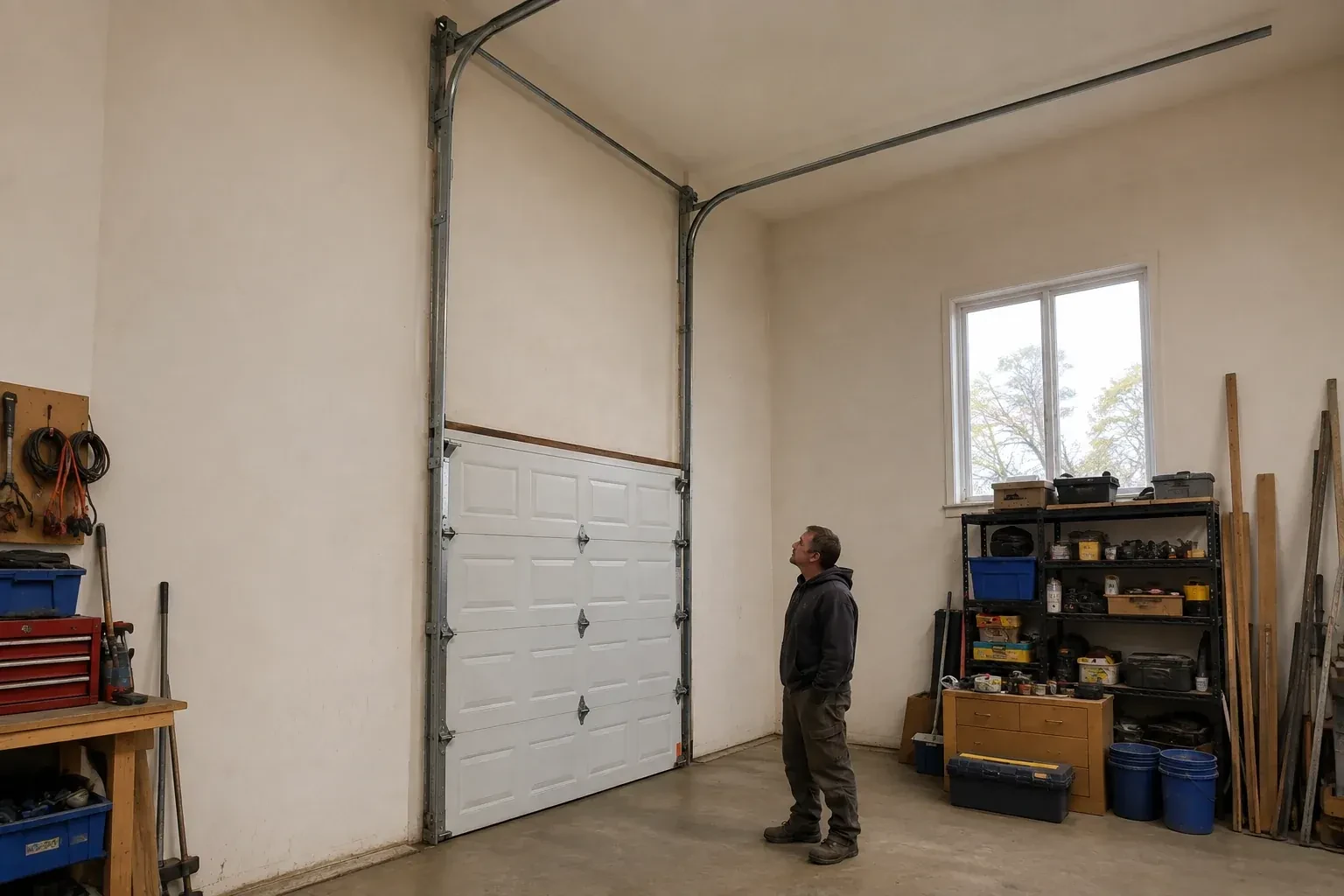
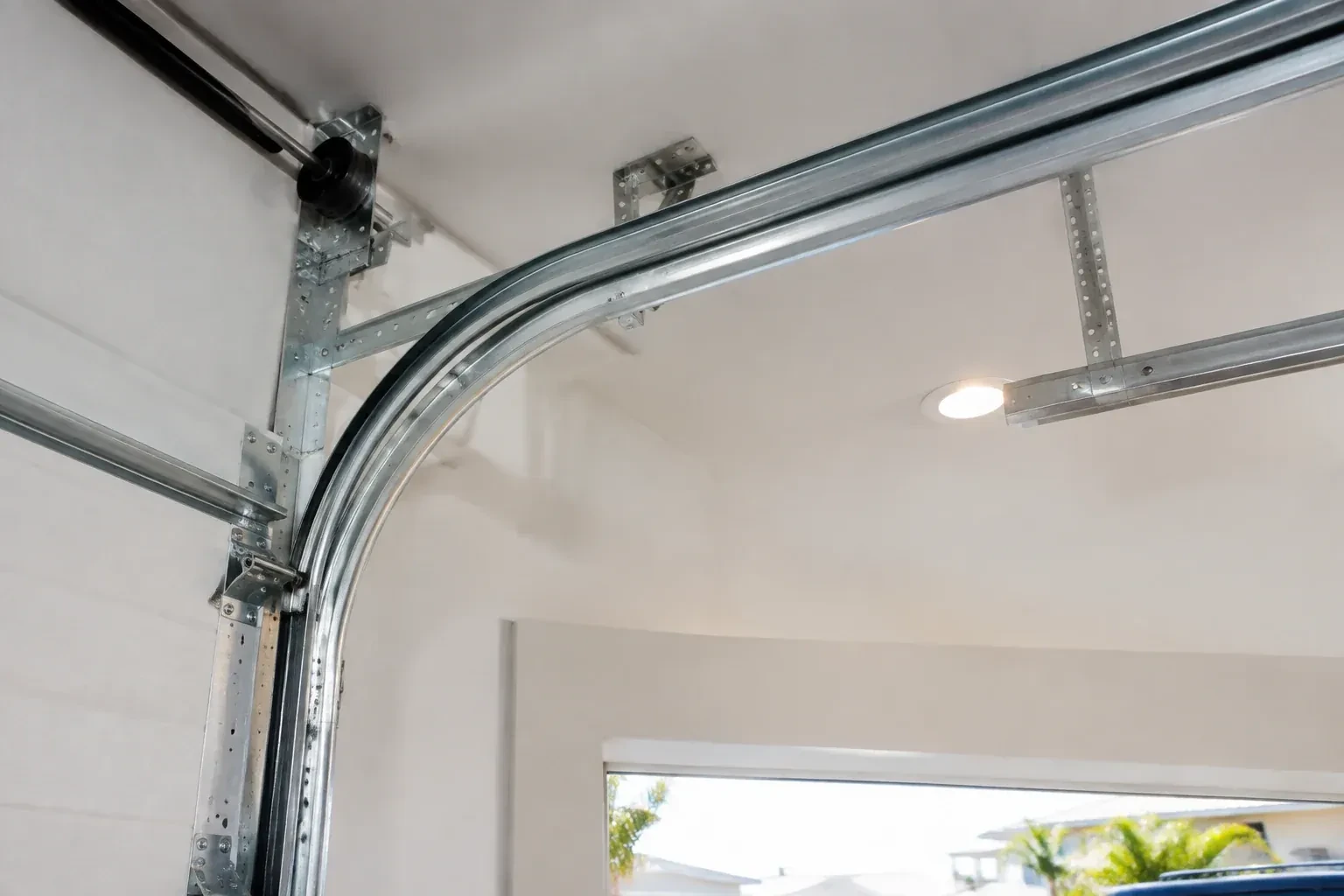
You want to keep the sectional door, but its standard track layout conflicts with a renovation above the parking bay. There is visible room over the opening for the door to climb before it needs to turn inward.
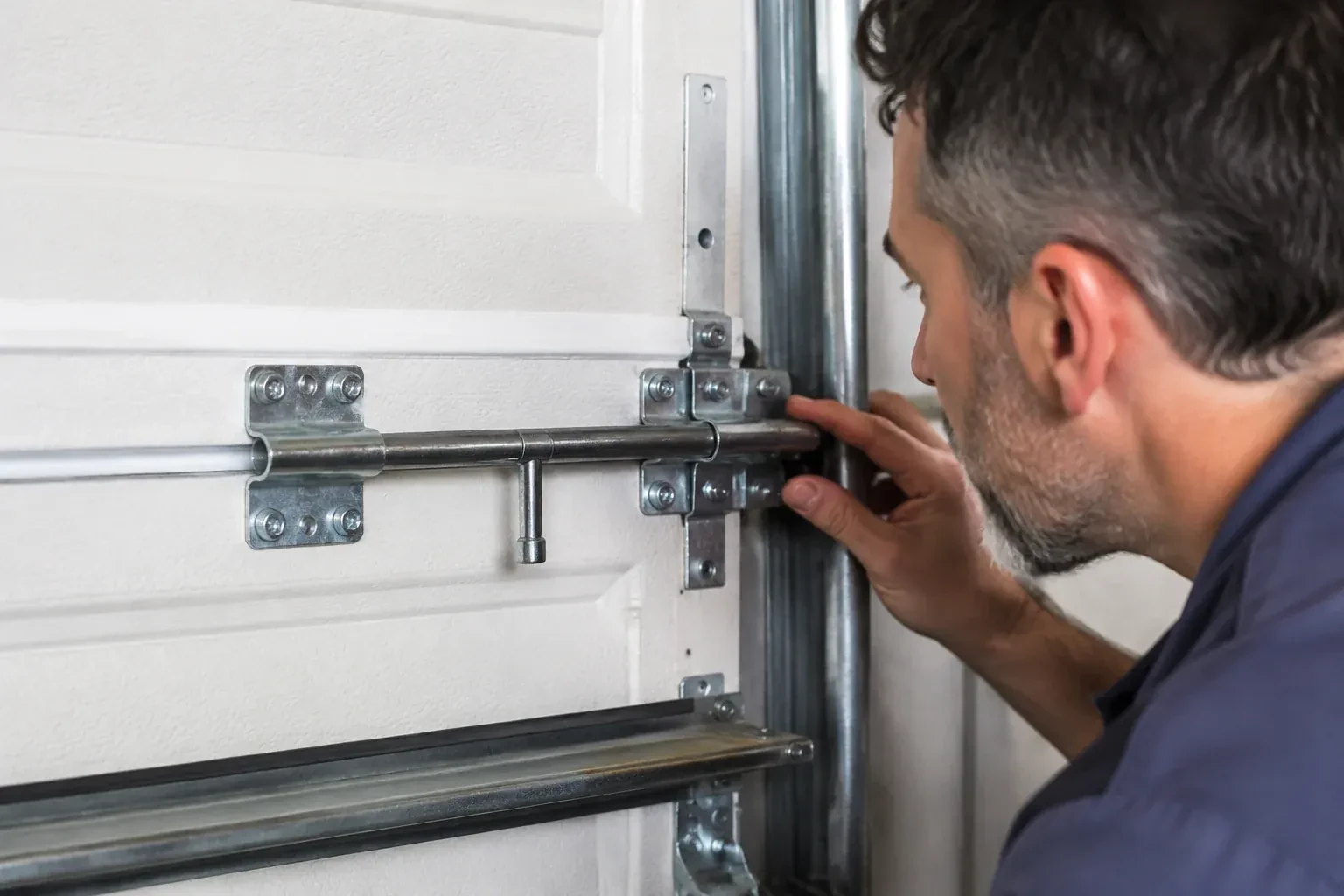
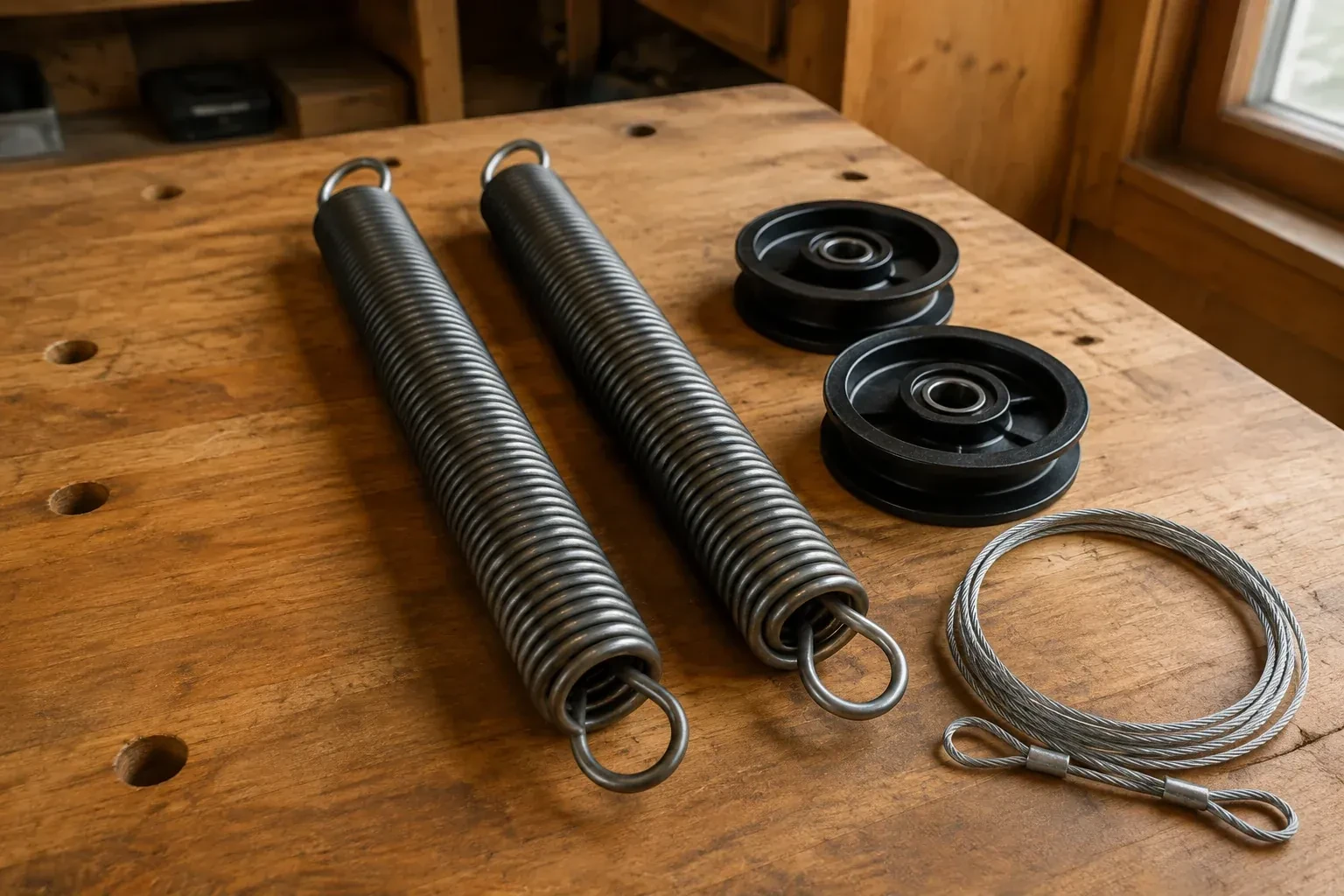
Every installation includes the parts nobody sees: the perimeter seal that stops the wind, the threshold that keeps water out, the struts that hold a wide door rigid and the safety cables on extension springs. We fit all of them.
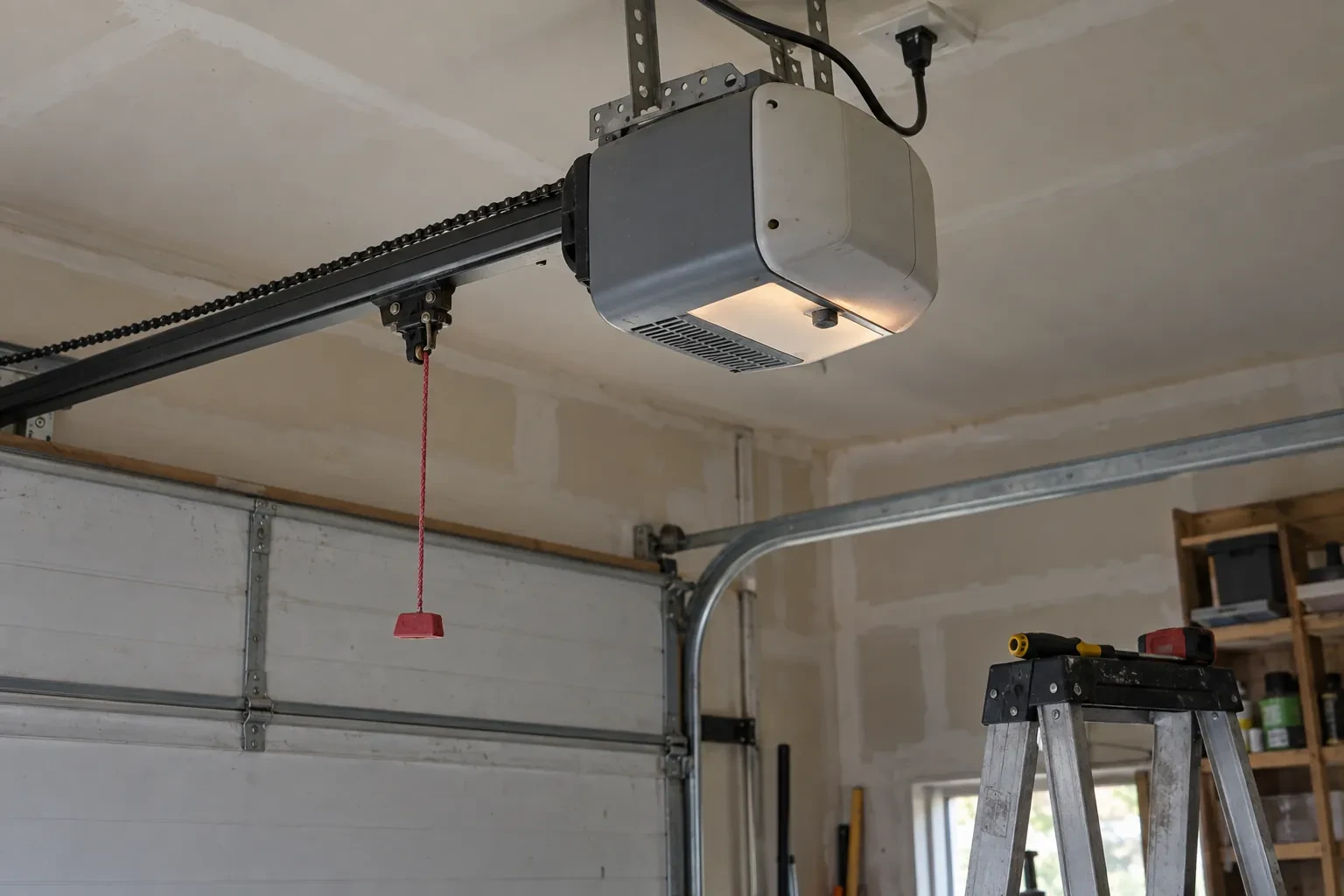
The motor runs, the chain rattles along the rail, and the door does not move a millimetre. You notice the little carriage sliding back and forth on its own.
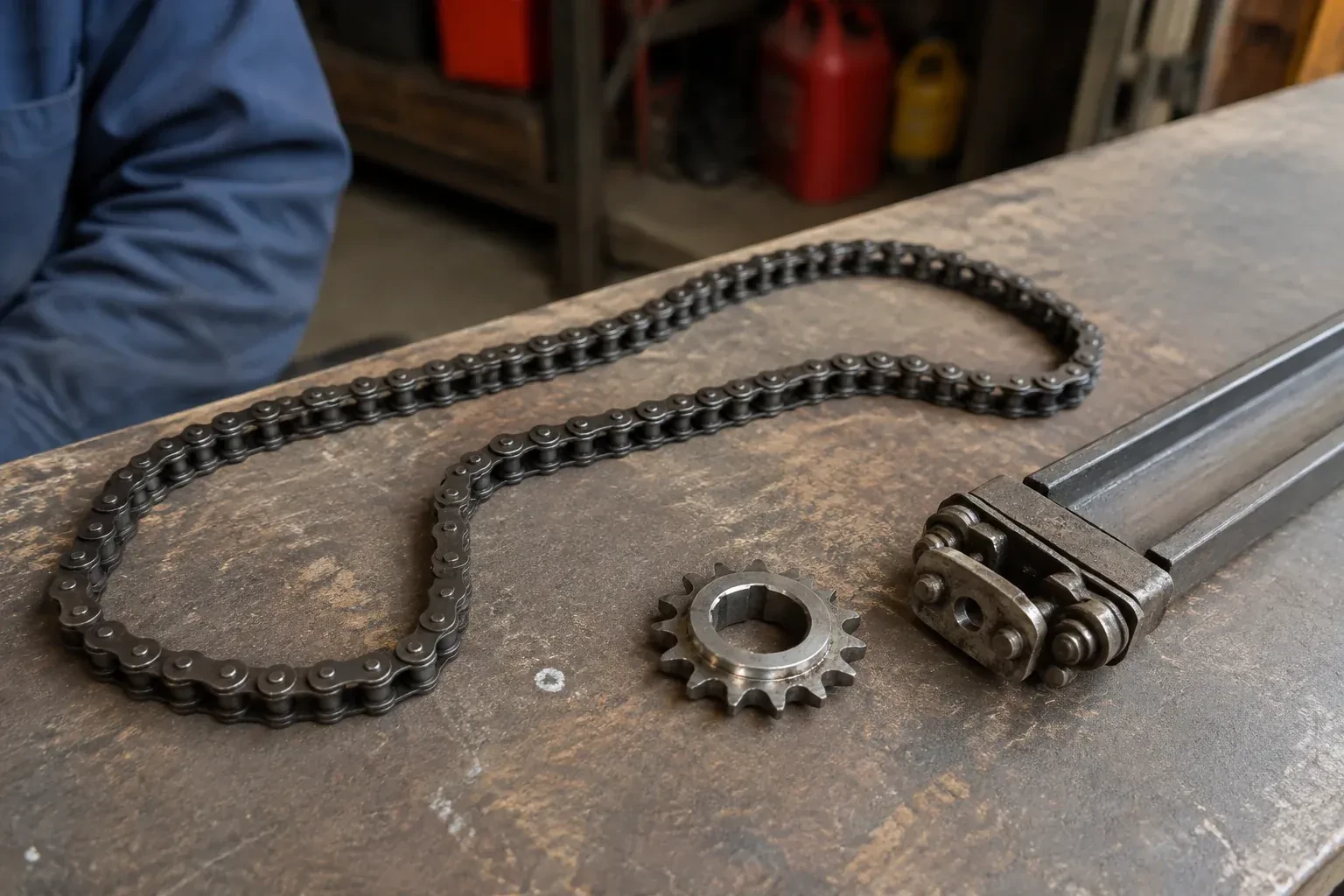
The chain in the detached garage went orange with rust over the winter, the links are stiff, and the opener strains and groans to pull the door up. By afternoon, once the garage warms, it behaves almost normally.
The door used to glide up with a soft hum. Now there is a sharp clack every second or so, and if you stand underneath you can see the belt sagging below the rail and slapping it on the way up.
You swapped the old wooden door for a heavier insulated steel one, and the twenty-year-old opener that was kept has never settled. It strains on the way up, stops partway on cold mornings, and the rail shudders with every cycle.
It is February. You come down in the morning and the garage door has stood open all night; the car is frosted inside, the furnace has run without a pause, and the pipe in the shared wall is your first worry.
Halfway up, the door lets go of the opener with a clunk and sinks back to the floor while the trolley carries on to the top alone. It has happened three times this month, and each time the release lever is found half-cocked.
Which fix fits?
You tapped the door with the bumper while backing in, barely a nudge, and now the bottom corner has swung inward.
WhyThe sensors are only as good as the thin two-conductor wire that links them to the opener.
The house came with a controller already screwed to the garage ceiling and a sensor on the door, but the app insists the device belongs to another account.
WhyFor a household here, the most valuable feature is often the simplest: a message that says the door has been open for ten minutes on a January night.
A previous owner knotted the release cord around the rail and stacked storage shelves right beneath it.
WhyThe operator standard for residential openers in this country asks for a manual release that is coloured red, easy to tell apart from the rest of the mechanism, and reachable from the floor, with the handle no more than about 1.8 metres up.
Several sections are dented and the bottom edge has begun to rust.
In a reset the rail is sound and the work is putting rollers, cables and sections back where that rail expects them, with minor alignment corrections. In a track repair the rail itself is the problem and must be straightened, re-hung or partly replaced first. One visit can include both, and the technician tells you which you need after looking at the door rather than guessing from the description.
Is this something I can do myself?
Many homeowners do, and a technician's value lies in the parts that go wrong: identifying the exact profile so the seal seats, freeing a strip that has fused into its channel, spotting a retainer or door-level problem behind the gap, and resetting the opener's limit and force so the door lands gently and still reverses on an obstruction. If you would rather have it measured, fitted and tested in one go, that is what the visit is for.
How should I look after the new seal?
Four times a year, check for daylight from inside with the lights off and press the fin to feel that it is still soft. Wipe the seal with a damp cloth to clear grit and salt, keep paint off the fin, apply a silicone wipe before winter, and keep slush and bins away from the bottom of the jambs. Press any lifted corner back and call if a length has come loose.
How and how often is the rail lubricated?
On the interval the opener's own manual calls for, often every two to three years. With the power off, the old grease is wiped from the rail along the path the trolley travels, and a thin layer of white lithium grease is applied in its place. The door is then run a few times so the trolley spreads it. The door's own tracks, where the rollers run, are never greased; they stay clean and dry, and the rollers, hinges and bearings take a garage door lubricant once a year instead.
How do I test the sensors each month?
Start the door closing and, while it is moving, swing a broom handle through the beam low across the opening; the door should halt and travel back up. Next, put a 2x4 flat beneath the door's centre and run the door onto it; it should back off as soon as it touches. If either test fails, close the door first if you can, use it by hand with the manual release, and book a visit; do not release it if it feels heavy.
What should I have ready before the visit?
A photo of the label on the opener and of the learn button, your Wi-Fi network name and password to hand, the phone you will use with the app charged and updated, and the email address the account should live under. If the house came with an existing controller, any paperwork or the seller's contact details help. Knowing which family members need access saves time at the end.
My opener is old. Is the release worth repairing, or should the opener go?
The release itself is a simple mechanical part and is usually worth repairing on any opener that still has parts available. What changes the answer is the opener as a whole: a unit with no photo-eye sensors near the floor predates the current safety standard, and the industry recommends replacing it rather than patching. The technician tells you which case you have, and a new opener comes with a fresh release, cord and handle already set up.
What does an R-value tell me?
An R-value describes resistance to heat flow under stated test conditions. It is useful only when you know whether the figure applies to insulation material, a section or the complete door assembly. Ask for the published basis for the exact model. Air movement at joints, windows, perimeter seals and floor gaps also affects how the garage feels in real weather.
What does it mean when the door feels unusually heavy?
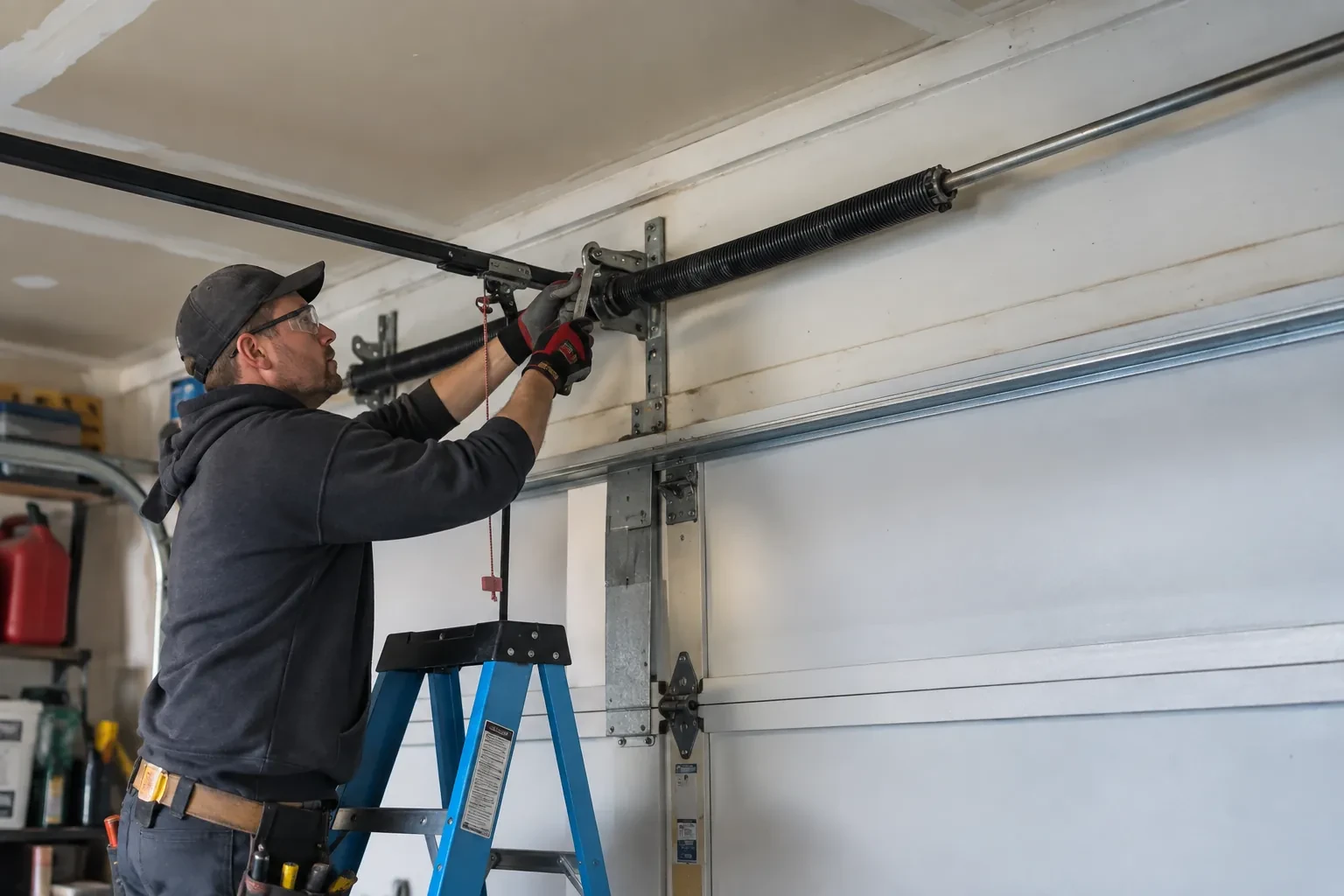
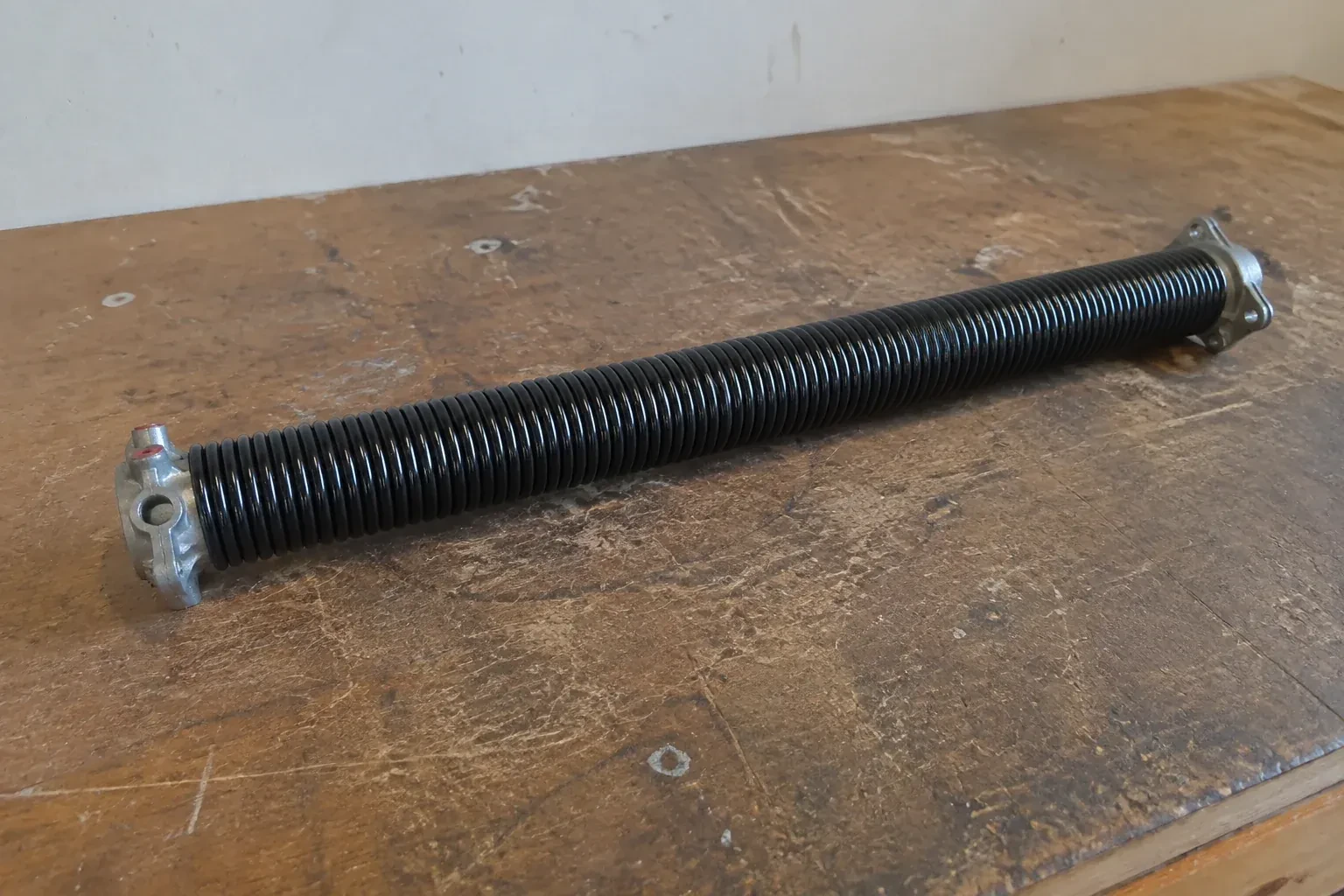
A marked increase in manual effort often calls for a counterbalance and mechanical-path assessment. Spring setting, barrel bearings, guide friction, curtain damage and drive parts can all contribute. Because the counterbalance contains substantial stored energy, the curtain is secured and the assembly is adjusted with the identified procedure and proper winding tools.
What information helps assess feasibility from photos?
Useful photos show the full inside opening, both track sides, the wall above the header, the complete ceiling run, spring and shaft area, opener, beams, lights and other obstructions. Include a wider image showing the planned vehicle lift or equipment zone. Measurements remain necessary, but clear images help identify questions and prepare an efficient site assessment.
Request a visit
For customers in Woburn the sequence is always the same. Assess the door in person. Explain what was found and why. Price the options on site. Do the agreed work with the door secured and the right tools. Test every part of the travel. Show you what changed. Then clean up and go.