Springs · Toronto
Garage Door Track Repair or Replacement
The door has started rubbing the frame on the left, leaving a shiny stripe down the weatherstrip.
In plain words
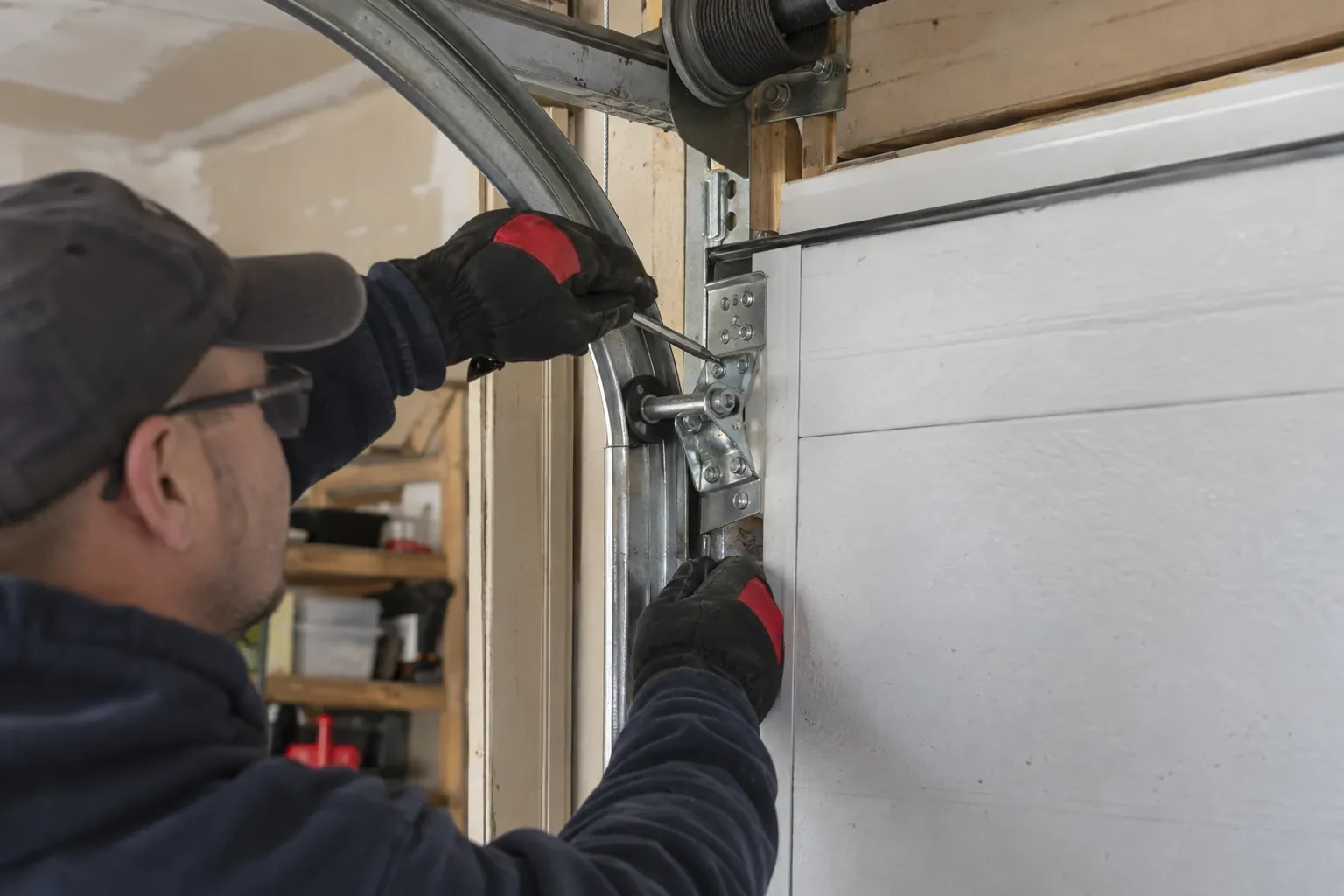
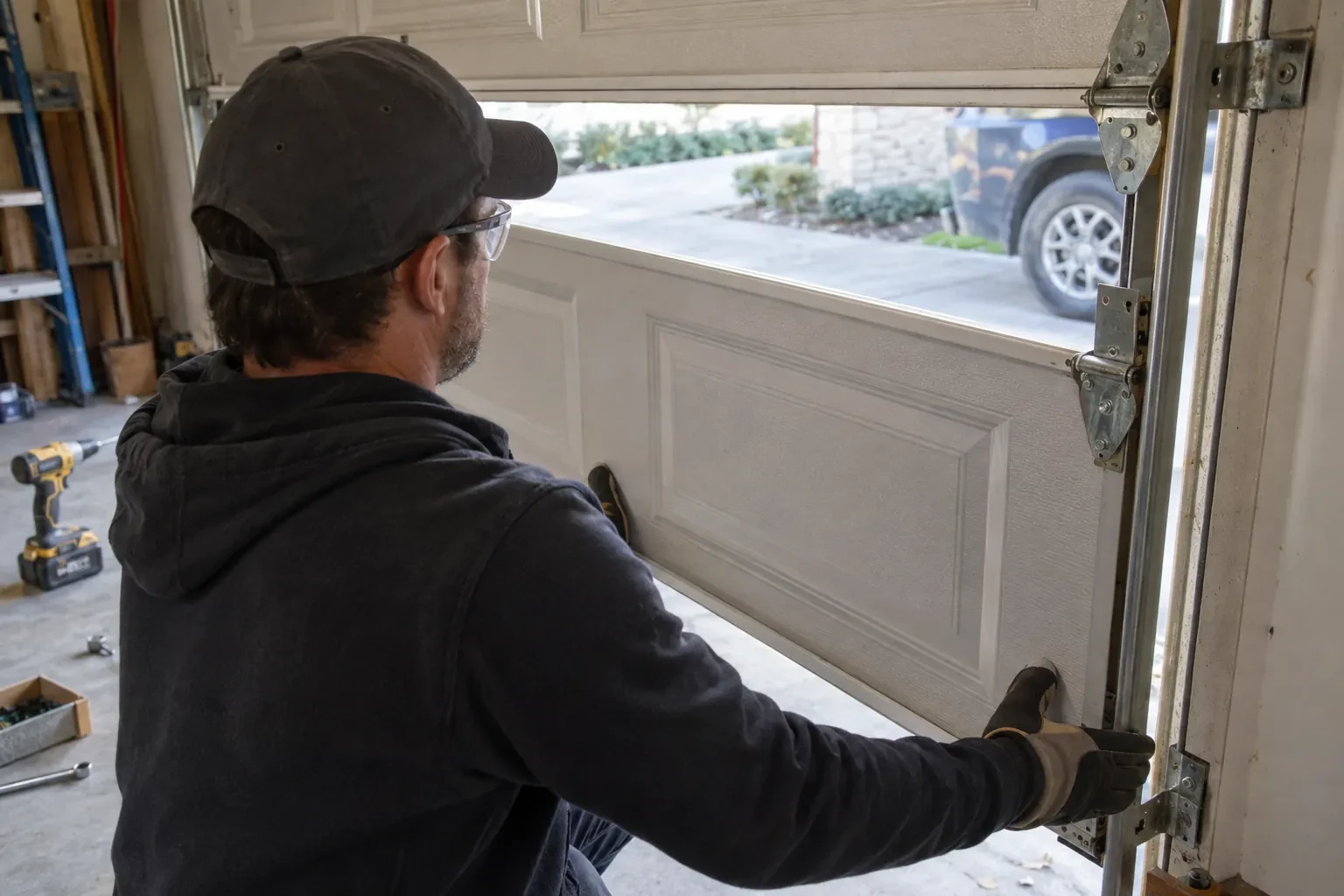
A track visit follows a set order. The opener is disconnected and the door clamped so it cannot move while hardware is loose. Then the whole path is checked: plumb and spacing of each vertical run, the state of the jamb wood and lag screws, the curve, the level of the horizontal run and the hangers holding it, and each roller's seat in the channel. Damaged pieces are dressed or replaced, brackets and hangers are refixed into solid framing, and the two sides are set square to each other. Rollers are reseated, spring tension is returned, and the door is run by hand, balanced, and the opener tested.
How the visit goesYou bought the house with a door that sticks near the top of its travel. The vertical track was screwed tight against the jamb, so the door drags along its stop moulding on every trip instead of swinging clear.
Garage Door Track Repair or Replacement
How the visit goes
The horizontal run and its hangers
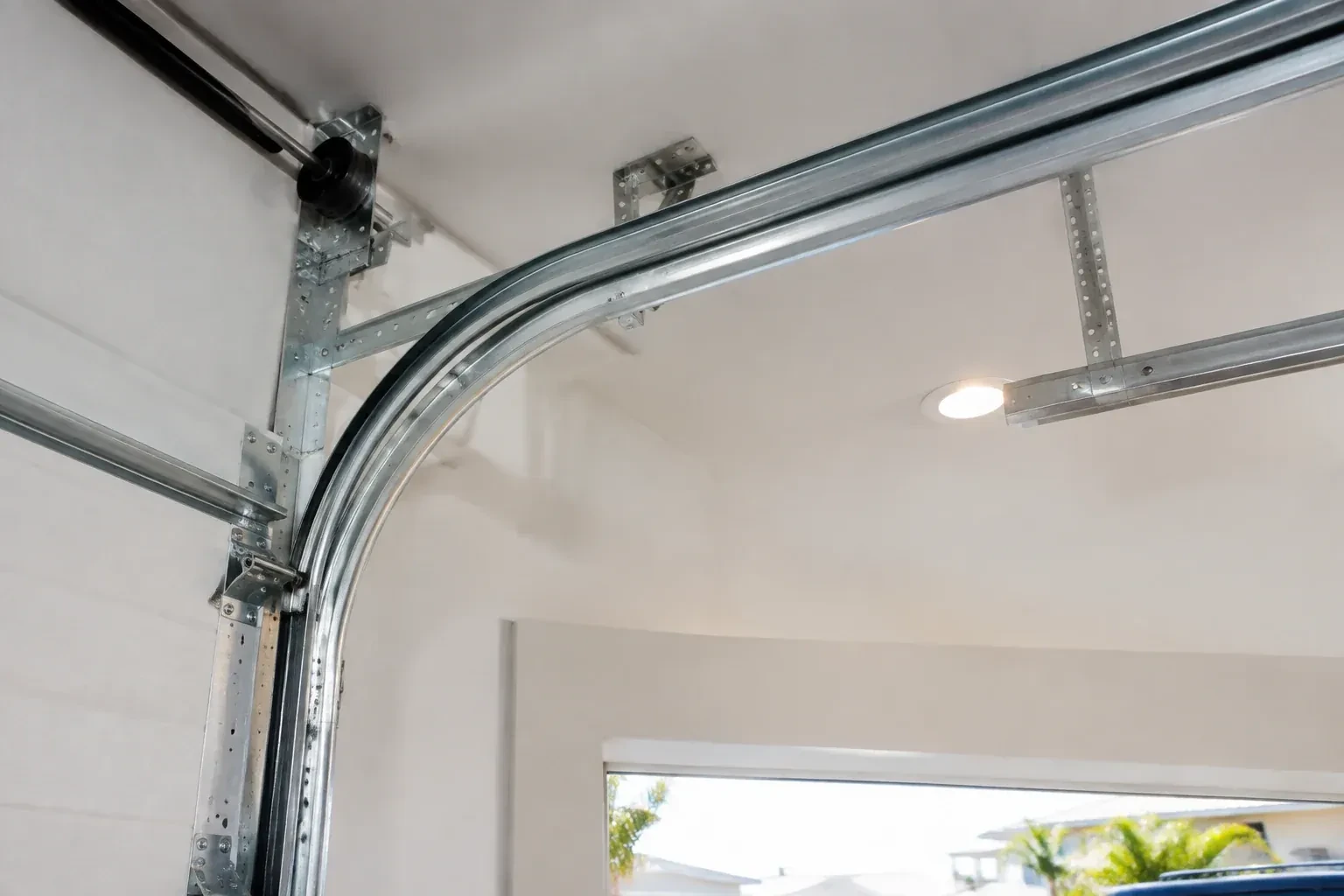
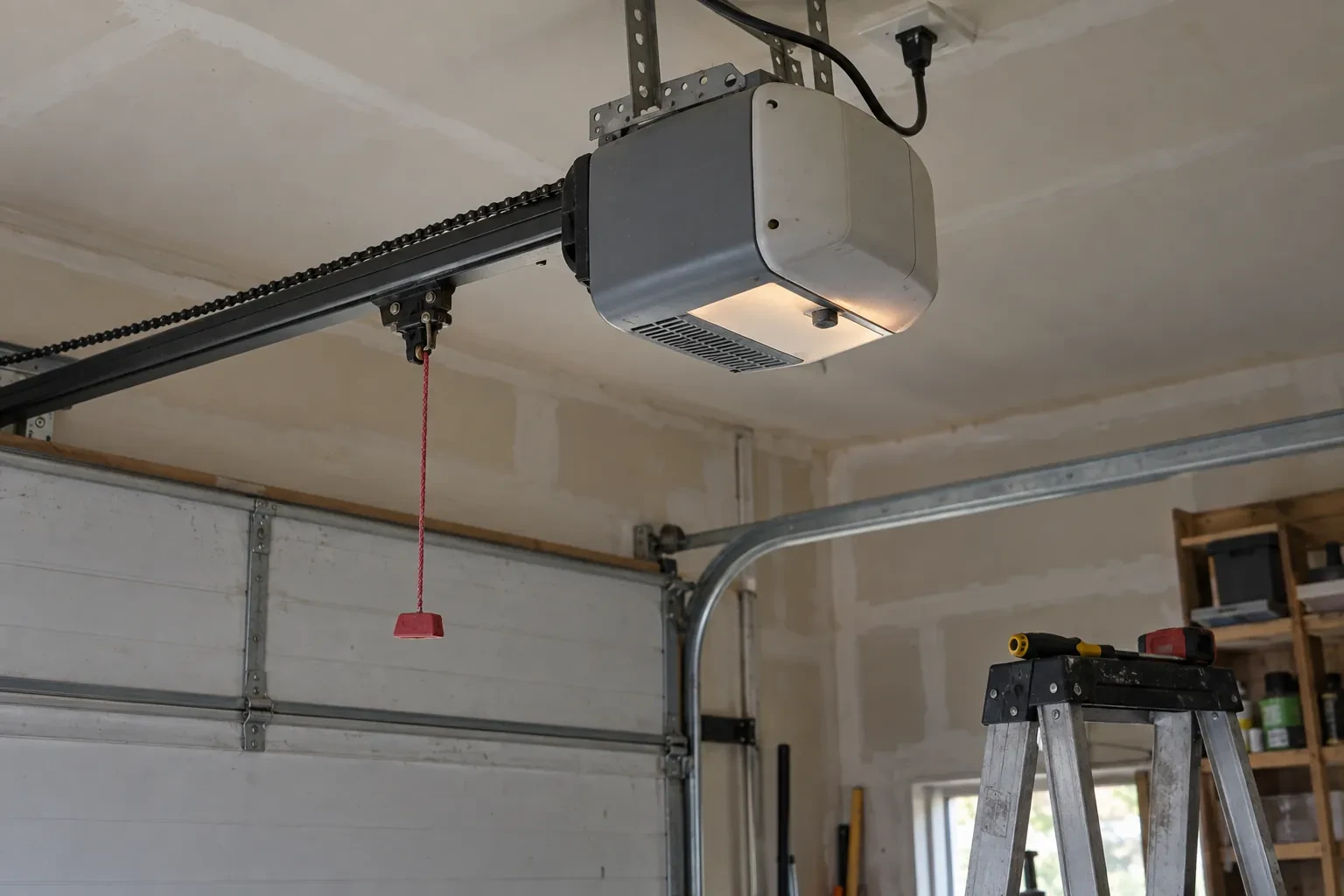
Overhead, the horizontal tracks should be level with each other, or set to the same pitch, held from the ceiling by back hangs of perforated angle screwed into joists. The technician sights along each run for sag, twist or a spread channel, checks the stiffening angle riveted to the track is intact, and puts weight on each hanger to check for flex. A run that droops at the rear slopes the wrong way rather than level or its intended pitch; one knocked sideways by a ladder or stored goods twists the top section as it travels. A door drifting back toward the opening once raised points to balance instead. Any hanger anchored into drywall alone is flagged for a joist.
Tension back, balance and opener tests
Once the track is fixed and every roller is seated, the springs are wound back to the turns the door calls for and the clamps come off. The technician lifts the door by hand through its full travel, watching each roller through the curve and along the horizontal run for any catch, and checks that the door holds itself at roughly waist height. It is run up and down several times by hand before the opener is reconnected, and the opener's travel limits and force settings are then adjusted to the newly aligned door, with the reversing test done against a block on the floor. You watch the finished door make the trip before the tools are packed.
A monthly look at the brackets and hangers
Track problems announce themselves early to anyone who looks. Once a month, with the door closed and the light on, run your eye down each vertical track: the brackets should sit flat against the wood with no gap behind them and no screw heads standing proud. Then look up at the horizontal runs and the angle hangers holding them; a hanger that has begun to lean or a run that no longer looks level with its partner is worth a call while it is a small adjustment. Finish by watching the door open once, checking that every roller stays in its channel through the curve, which is the same check the industry checklist asks for.
Garage Door Track Repair or Replacement
In the van
Jamb lumber and construction screws
Replacement rollers and hinges
Lag screws and track bolts
Perforated angle back hangs
Horizontal track with curve
Garage Door Track Repair or Replacement
What affects the quote
How the door is sitting
A door resting closed is straightforward. One jammed partway on a bent section, or with rollers out of the channel, has to be supported and freed before the track can be measured.
Which part of the run
A vertical section below the curve is the simplest change. The curve itself, or the horizontal run overhead, involves the flag bracket and hangers and takes longer to set.
Springs that have to be unloaded
Work at the flag bracket or on the curve means winding the torsion springs down and back up. That adds time, and the quote says whether it applies to your repair.
What to have ready
- Do you have the door's manual or a label with its model?
- Do you know what caused it, such as a car, a ladder or stored items?
- Is the wood beside the door soft, split or discoloured at the floor?
Garage Door Track Repair or Replacement: questions
QuestionsWhat happens during the visit?
The opener is disconnected and the door clamped. The technician identifies the track type and layout, checks each vertical run for plumb, spacing and fixing, looks at the jamb wood, the curve, the flag brackets, the horizontal runs and their hangers, and how each roller sits. Damaged pieces are dressed or replaced, brackets refixed into sound wood, the geometry reset, rollers reseated, springs re-tensioned if they were unloaded, and the door balanced and the opener tested.
Can worn rollers damage the track?
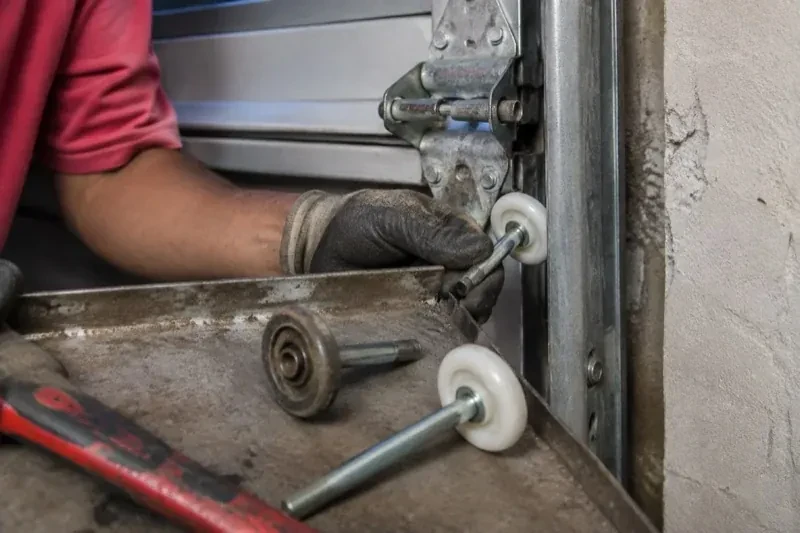
They can, and it is one of the slower ways track goes wrong. A wheel that no longer turns on its bearing skids along one lip of the channel, and over thousands of trips that pressure pries the lip open until a roller can slip out. When a spread section is closed up, the rollers that caused it are replaced at the same time, otherwise the new profile opens again within a season.
Why does the door catch at the same spot every trip?
A catch that repeats in one place is the signature of a local track fault: a dent, a spread section, a step at a joint, or a bracket that has let the track drift. Each roller reaches the flaw at the same point in the travel and bumps over it. The technician finds the spot by running a roller through the channel by hand, then dresses or replaces that length and checks the rest of the run for the same problem.
Related services
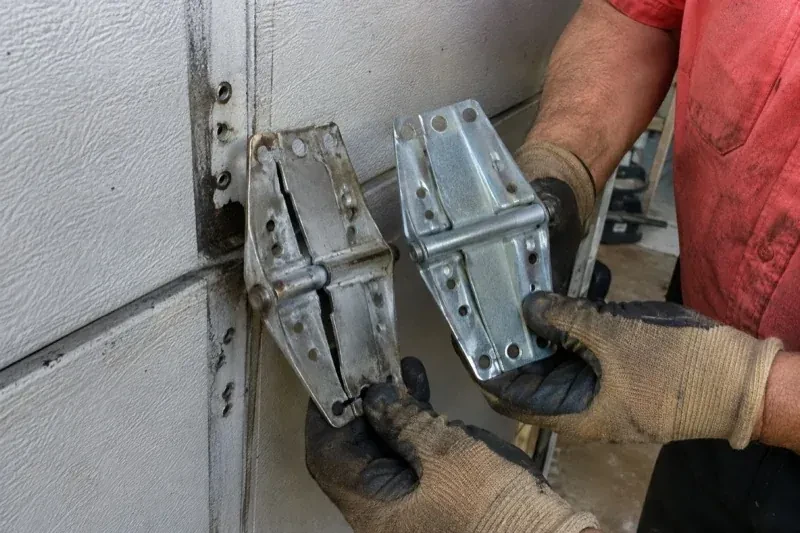
- Garage Door Hinge ReplacementThe roller at the top of the second panel is leaning outward and only half of the wheel is still in the track.
- Garage Door Cable ReplacementThe cable has wrapped itself around the shaft above the door instead of sitting on its drum.
- Torsion Spring ReplacementOn a cold morning the remote does nothing useful: the light comes on, the motor turns briefly, the door stays shut.