Garage Doors in Ionview, OntarioThe whole door,not just the loud part.
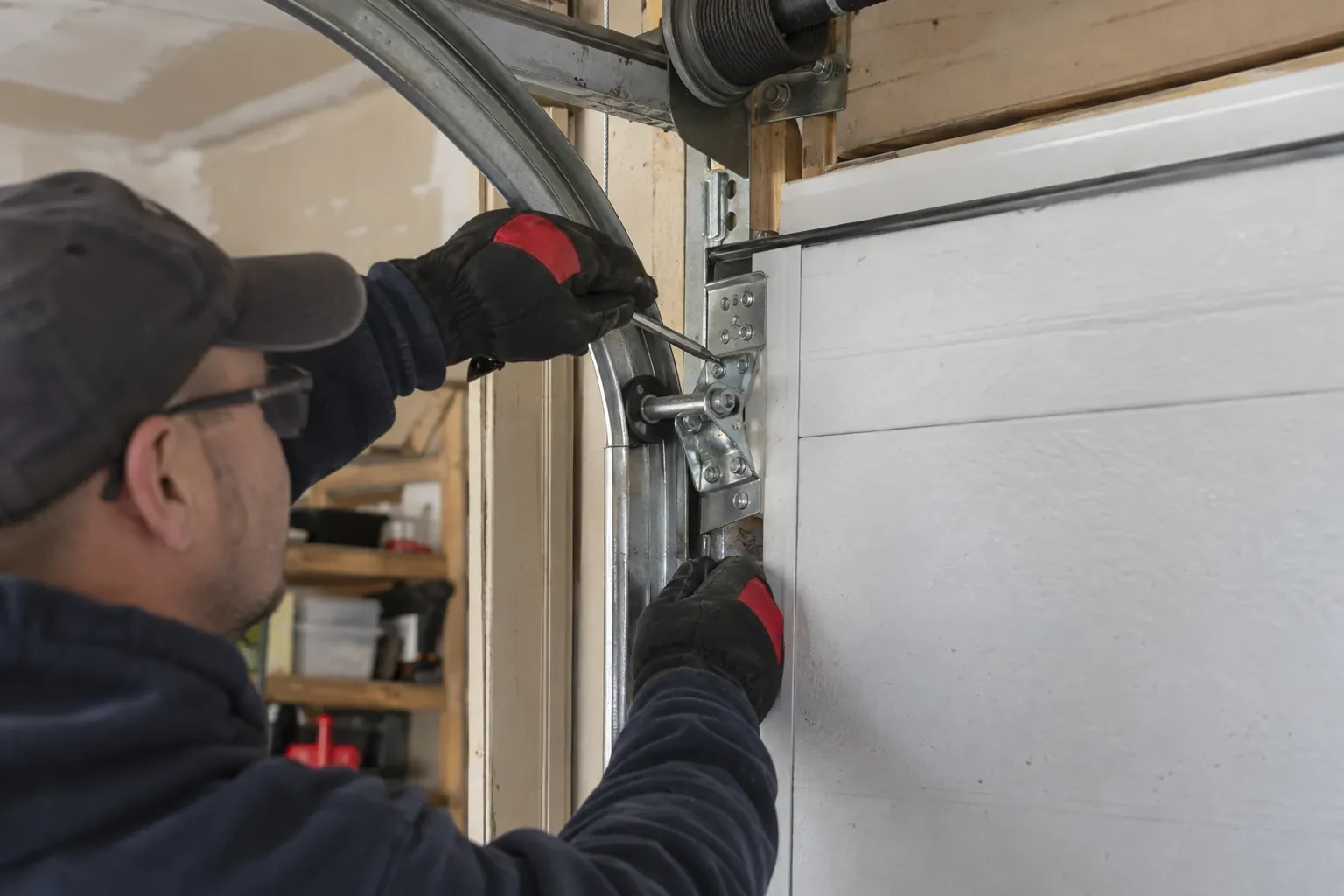
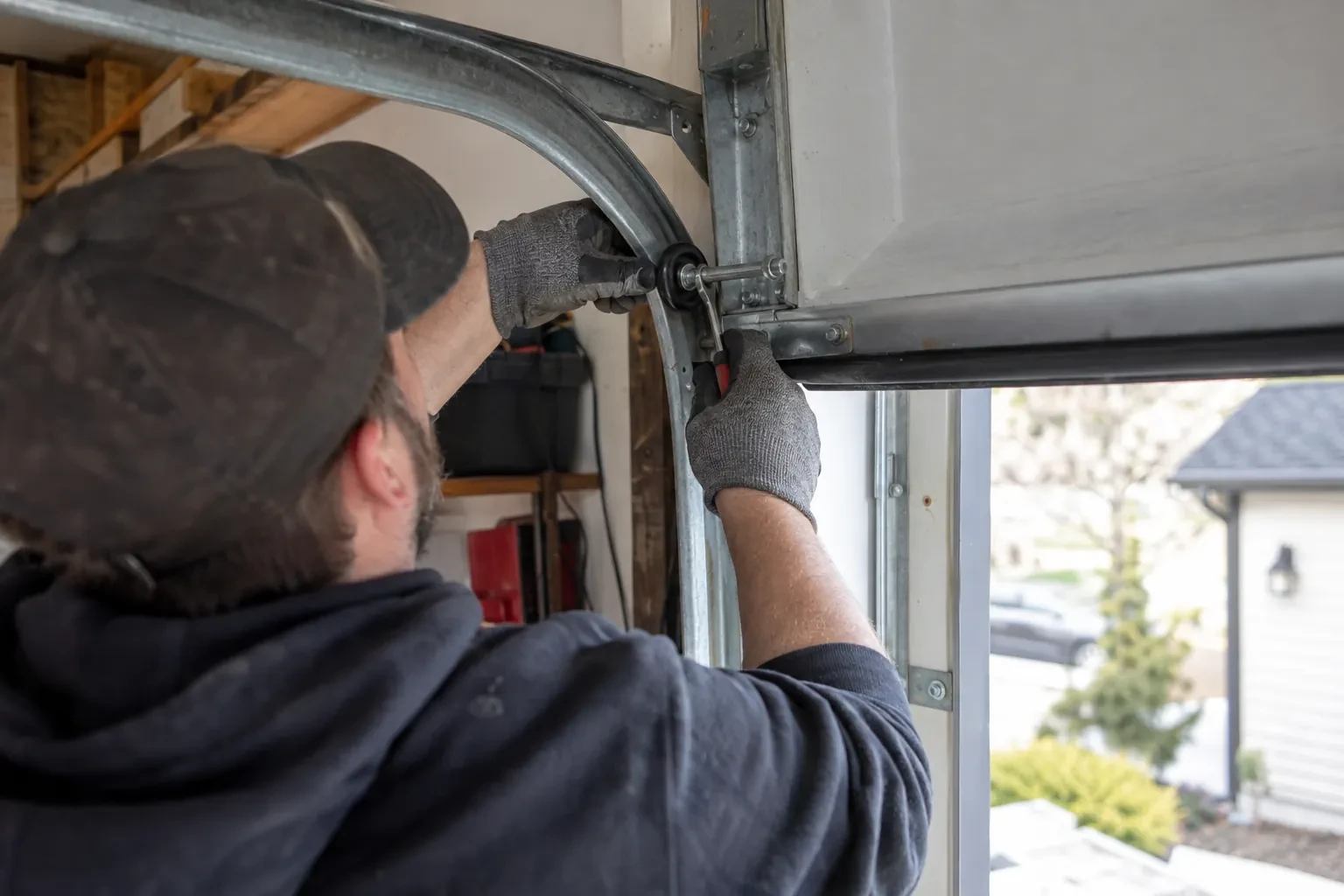
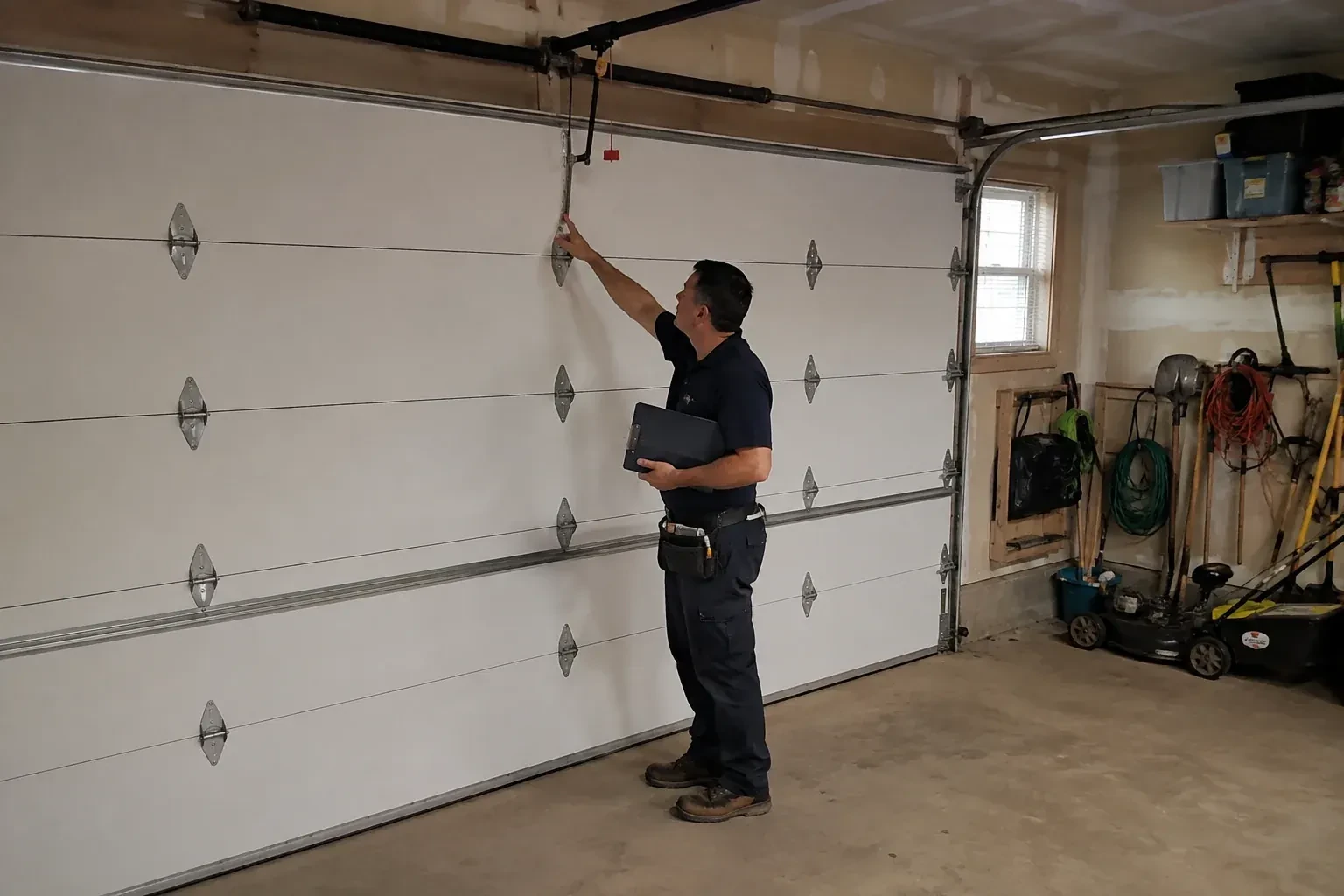
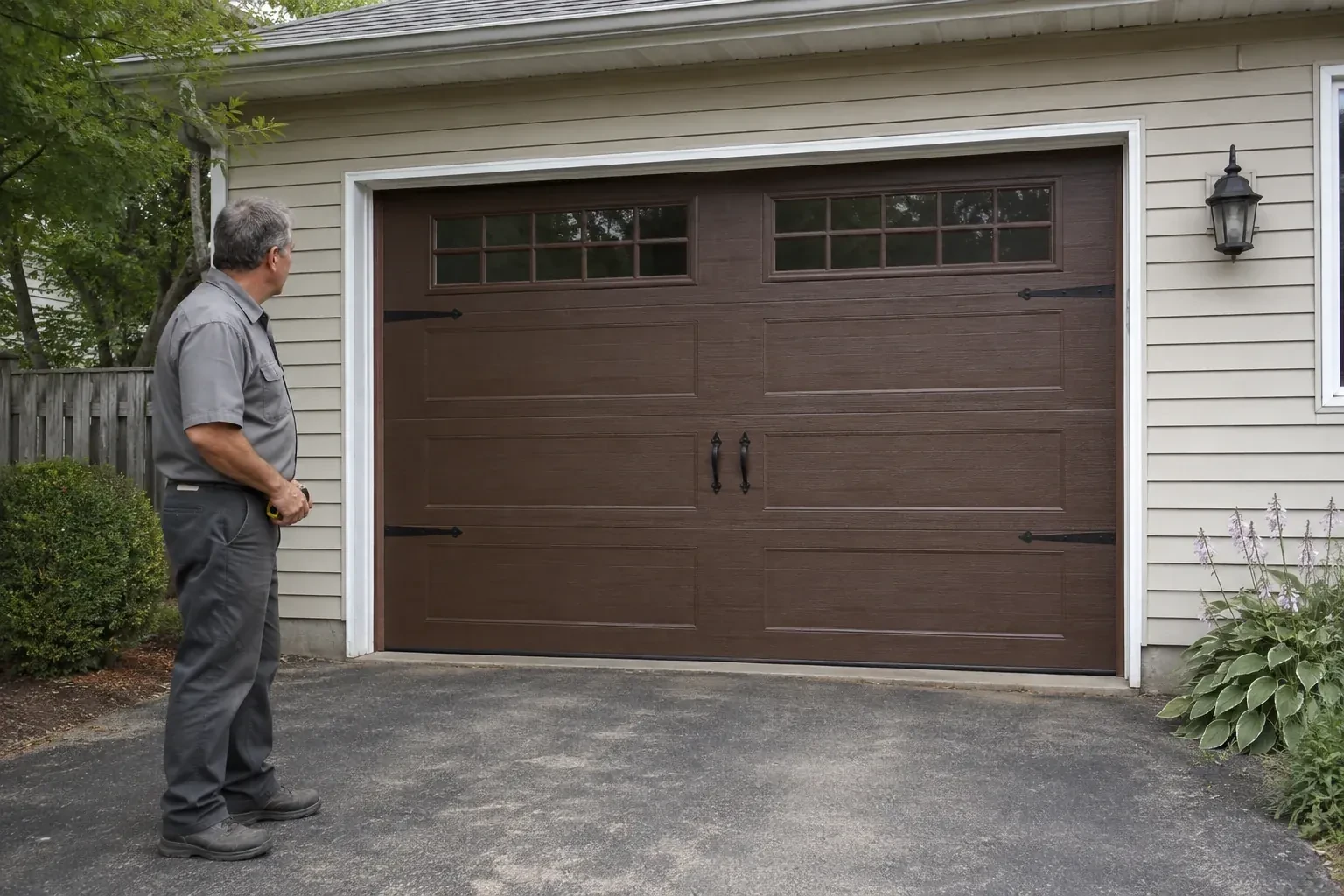
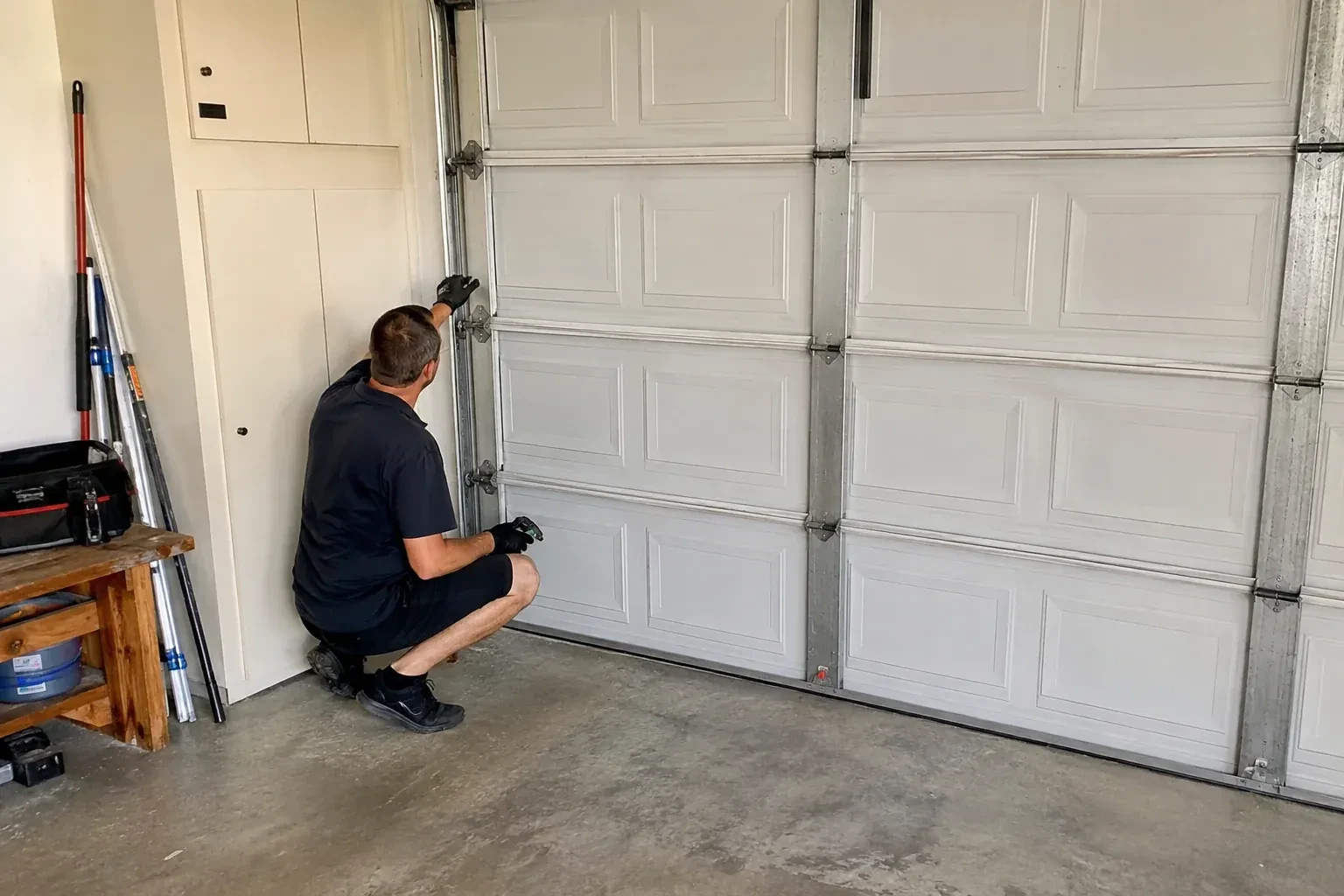
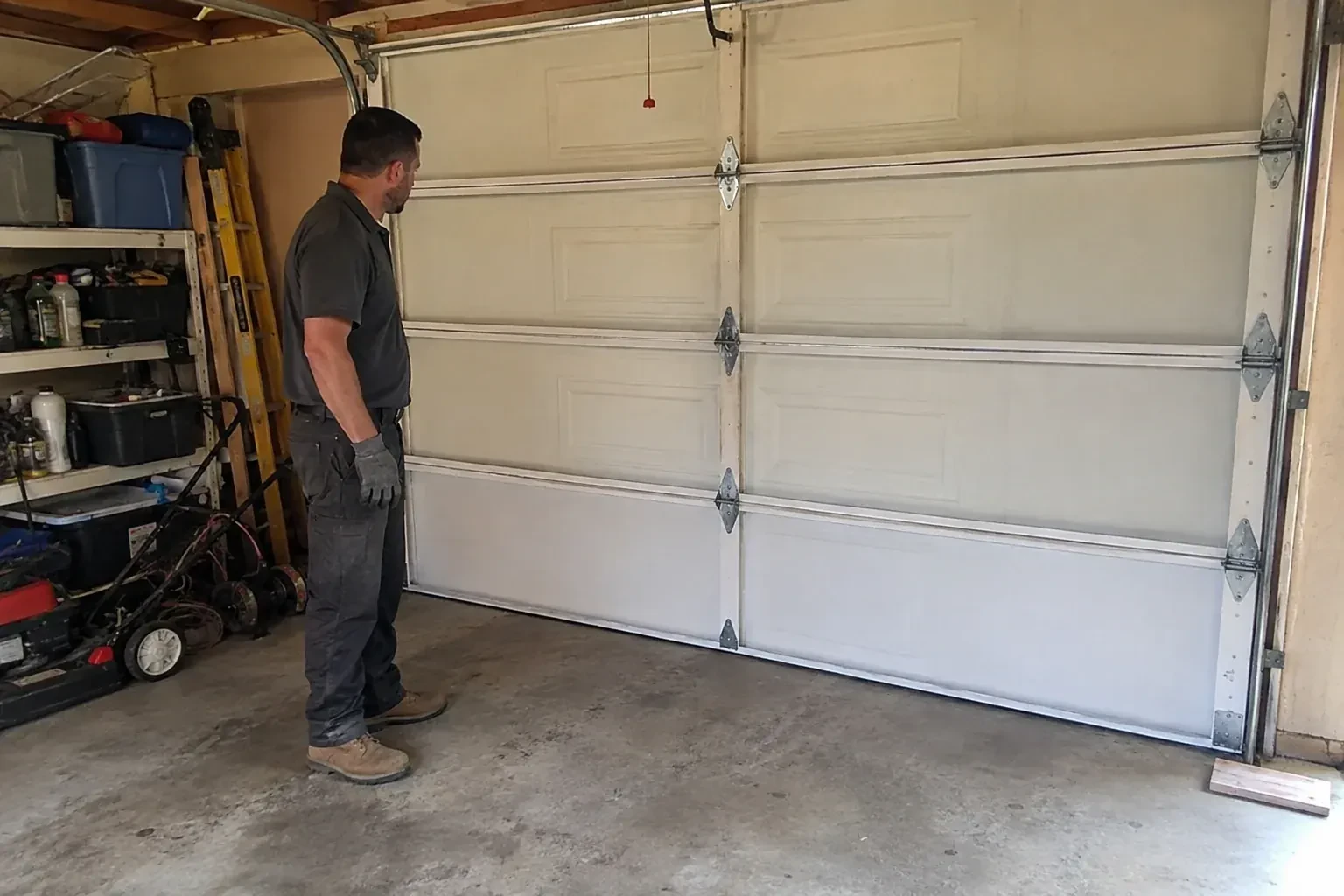
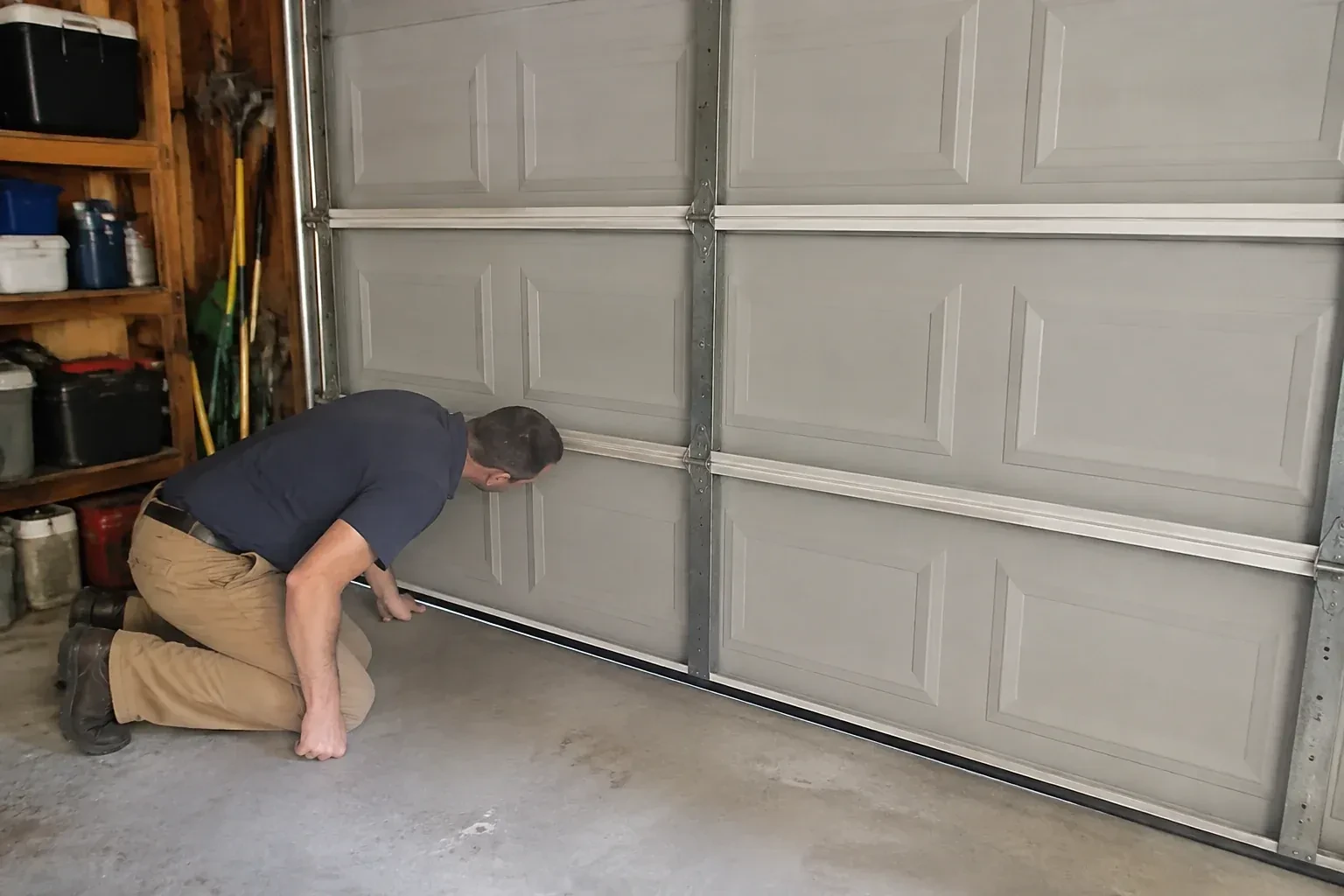
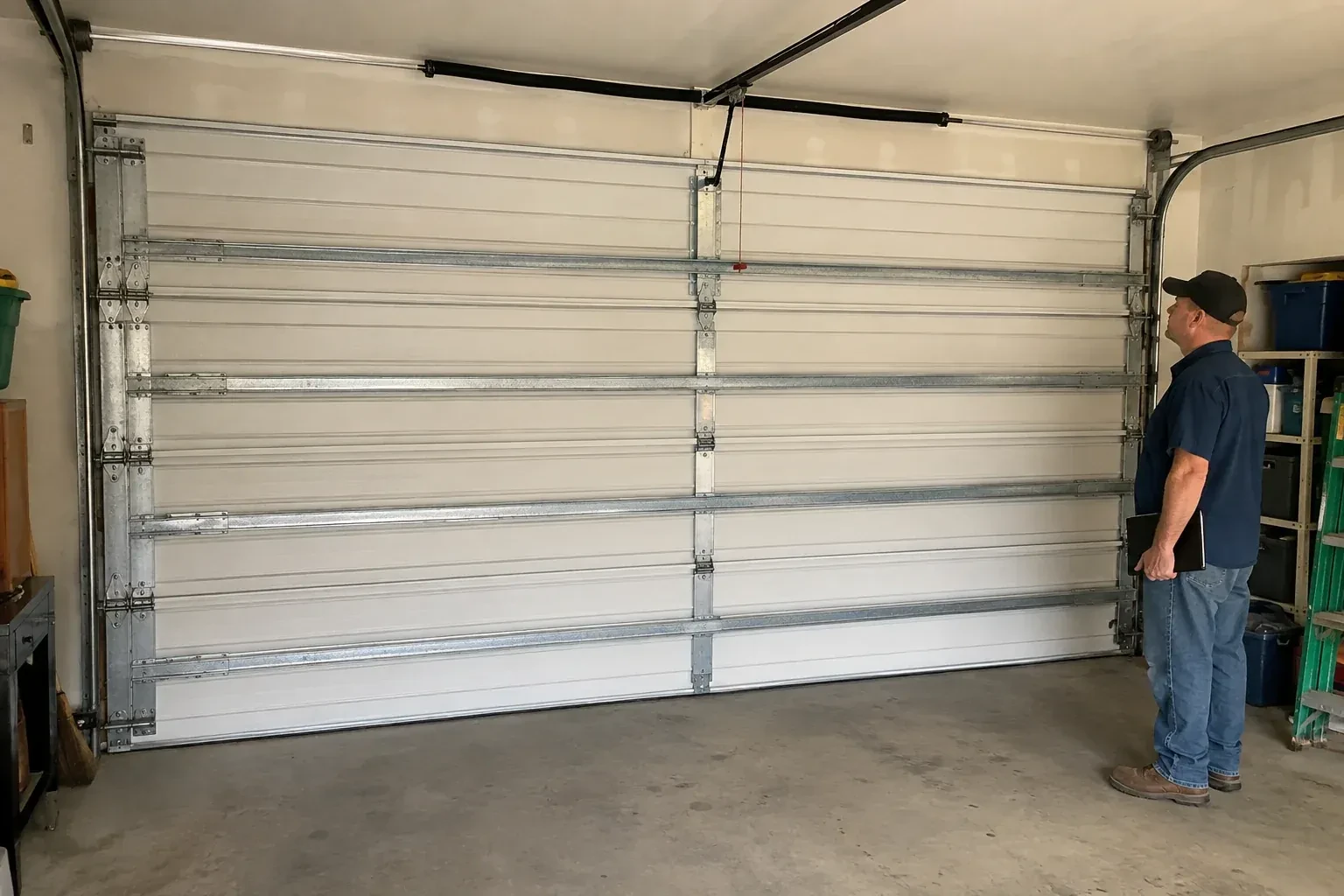
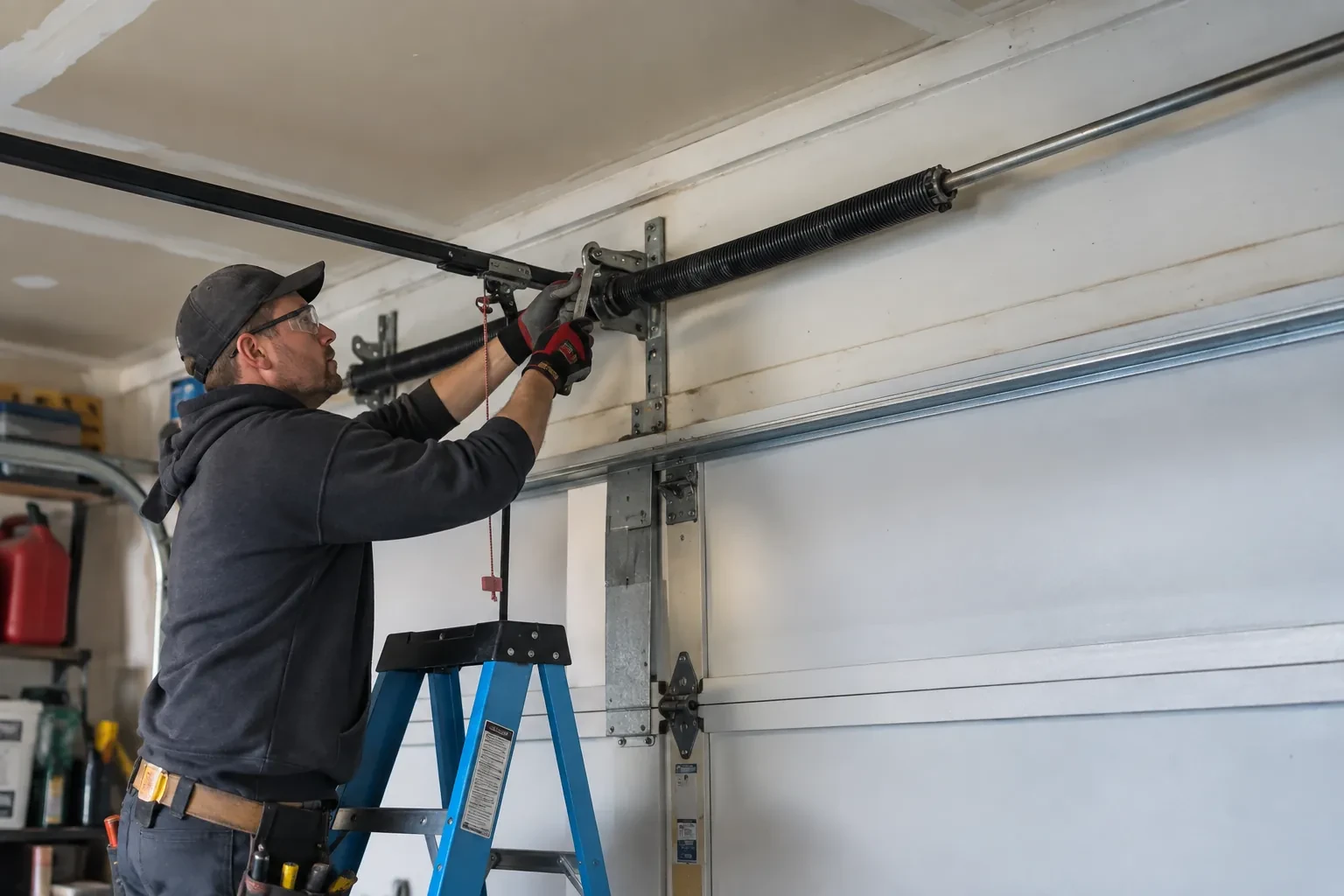
When a technician arrives at a house in Ionview, the first job is to walk the whole door, from the bottom seal to the header bracket, because the part that made the noise usually has a worn neighbour. Fixing both on one visit means the door stays fixed instead of failing again next month.
When a technician arrives at a house in Ionview, the first job is to walk the whole door, from the bottom seal to the header bracket, because the part that made the noise usually has a worn neighbour. Fixing both on one visit means the door stays fixed instead of failing again next month.
Open, close, repeat, for years.
Landlords and property managers in Ionview get a written summary after every visit: the address, what was found, what was replaced, and what is likely to need attention next. Tenants get a door that works and remotes that behave. Everyone knows where things stand without a second phone call.
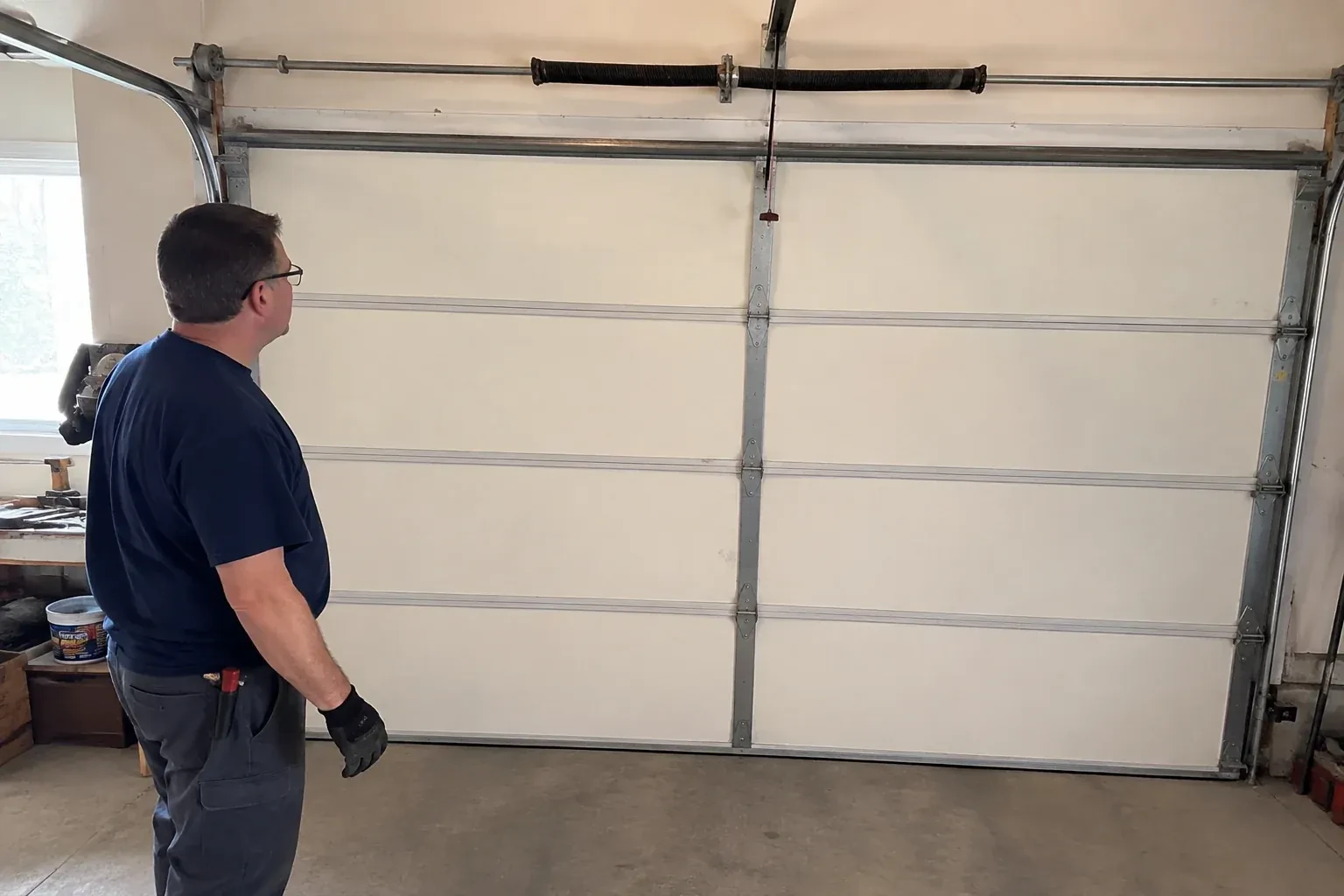
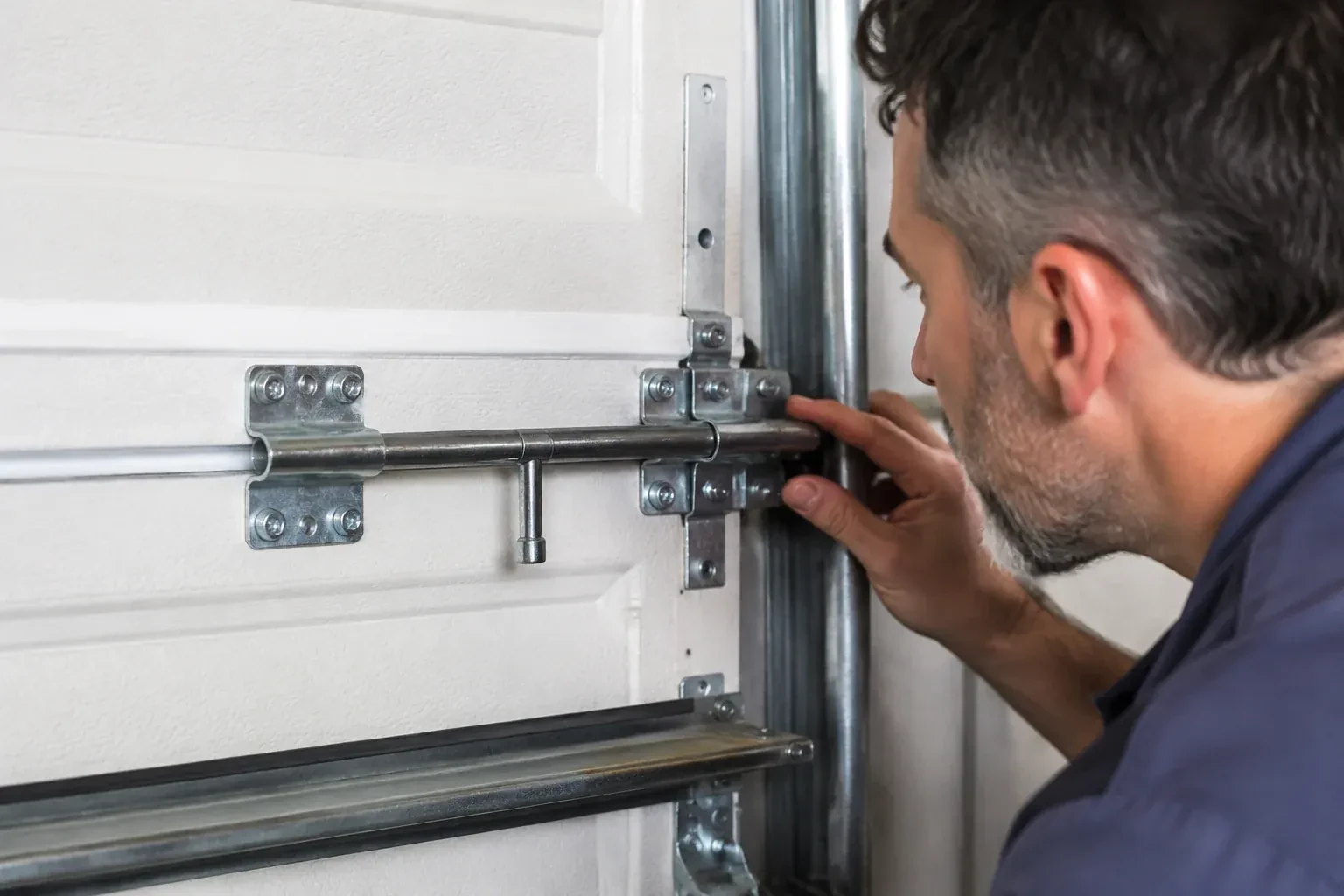
Maintenance is a quiet part of our work in Ionview, and we like it that way. A yearly look at the door, with the balance tested, hardware tightened, rollers and hinges lubricated and sensors checked, keeps small wear from becoming a snapped spring in January. We remind households when the season comes around and handle any repair that turns up along the way.
13years in business
24/7open every day
Told before touched. Nothing is adjusted or replaced until you have heard what we found and agreed with the plan for it.
Neat work, neat exit. New parts fitted cleanly, old ones removed, the floor and door wiped down. The garage is yours again the moment we leave.
Room to choose. We give you the practical picture and step back. Repair now, plan a replacement, or wait and watch: your call.
Schedule a garage door visit for your Ionview property.
Whether the door on your house in Ionview needs a single roller or a whole new opener, the services listed here cover it. Repairs come first, because most doors can be saved; springs, cables and hardware follow; then openers and remotes; and finally new doors for homes and commercial buildings.
About 58% of homes in Toronto were built in 1980 or earlier, according to the 2021 Census.
Older homes
Older garages are frequently used as workshops or storage as much as parking, which means the door opens many times a day and collects dust on the sensors. Sealed rollers, protected photo-eyes and a tune-up schedule suit that pattern well.
Single-detached houses make up about 23% of homes in Toronto (2021 Census).
Townhouse and condo owners often share responsibility for the door with a board or property manager, so we provide a clear written report after each visit: what was found, what was replaced and what is likely to need attention next, ready to pass along.
End bearings and the centre bearing let the torsion shaft turn freely. When they seize, the cables squeal and the spring works against friction it was never meant to fight. Fresh bearings are a small job that changes how the door feels.
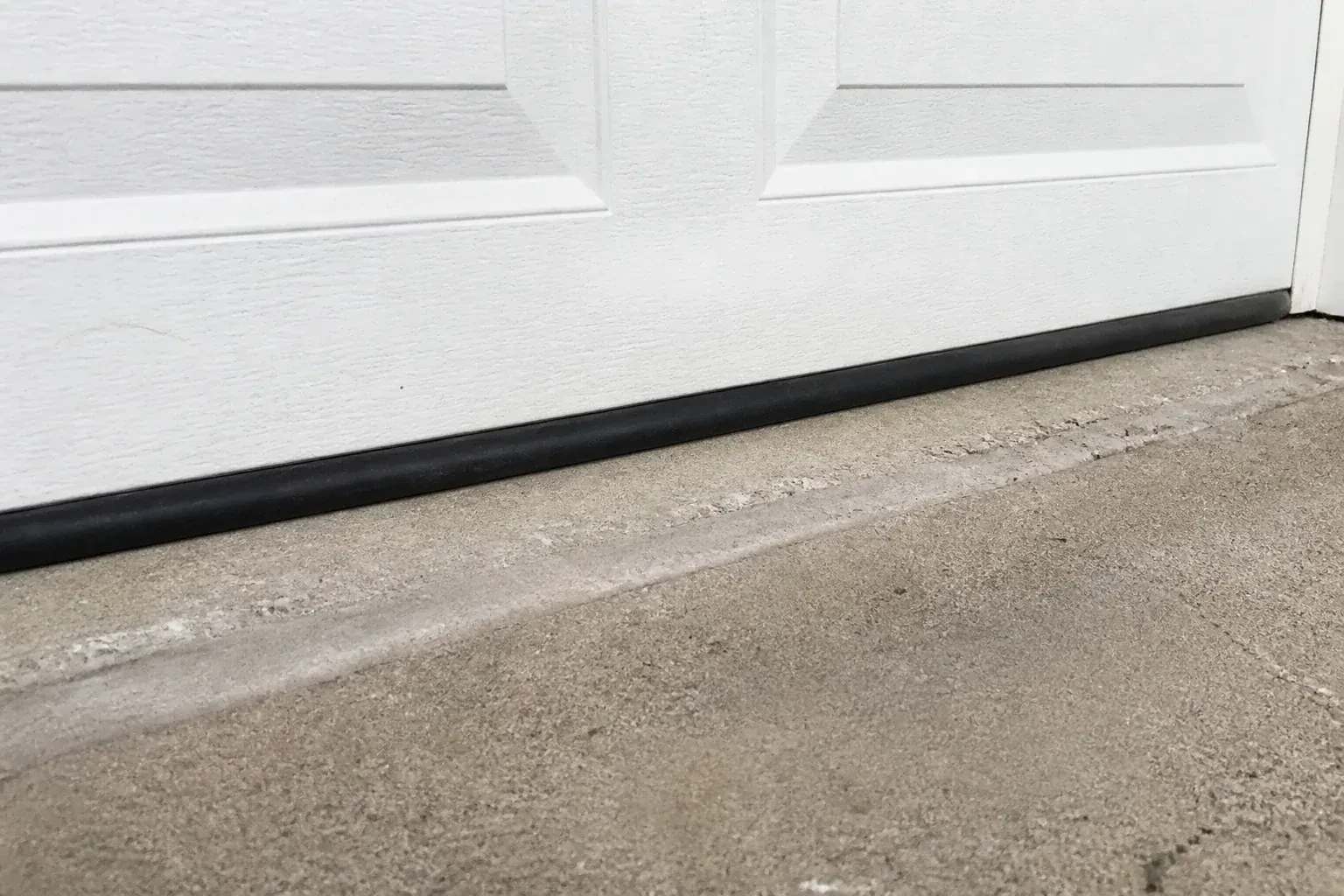
Every installation includes the parts nobody sees: the perimeter seal that stops the wind, the threshold that keeps water out, the struts that hold a wide door rigid and the safety cables on extension springs. We fit all of them.
The motor runs, the chain rattles along the rail, and the door does not move a millimetre. You notice the little carriage sliding back and forth on its own.
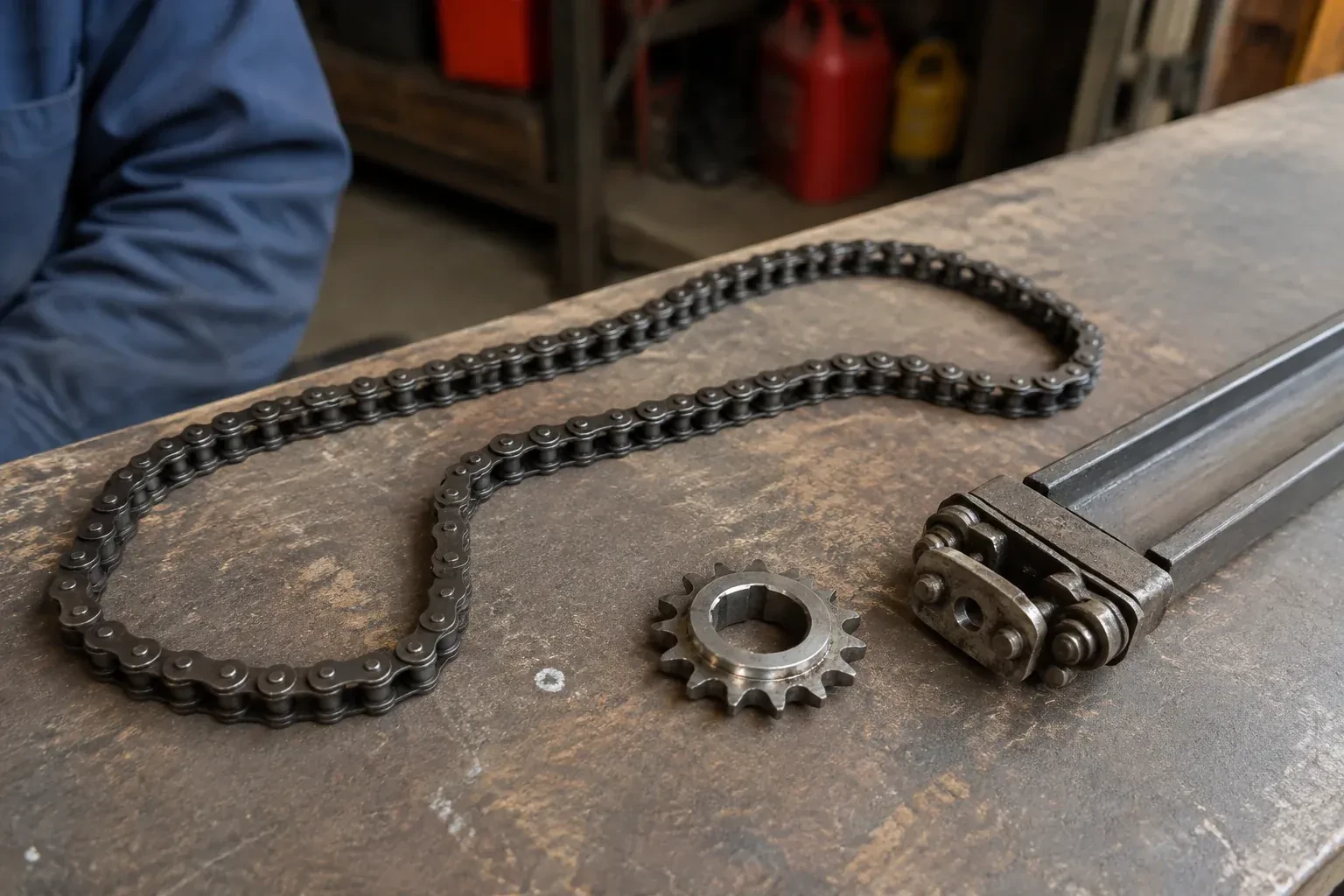
The chain in the detached garage went orange with rust over the winter, the links are stiff, and the opener strains and groans to pull the door up. By afternoon, once the garage warms, it behaves almost normally.
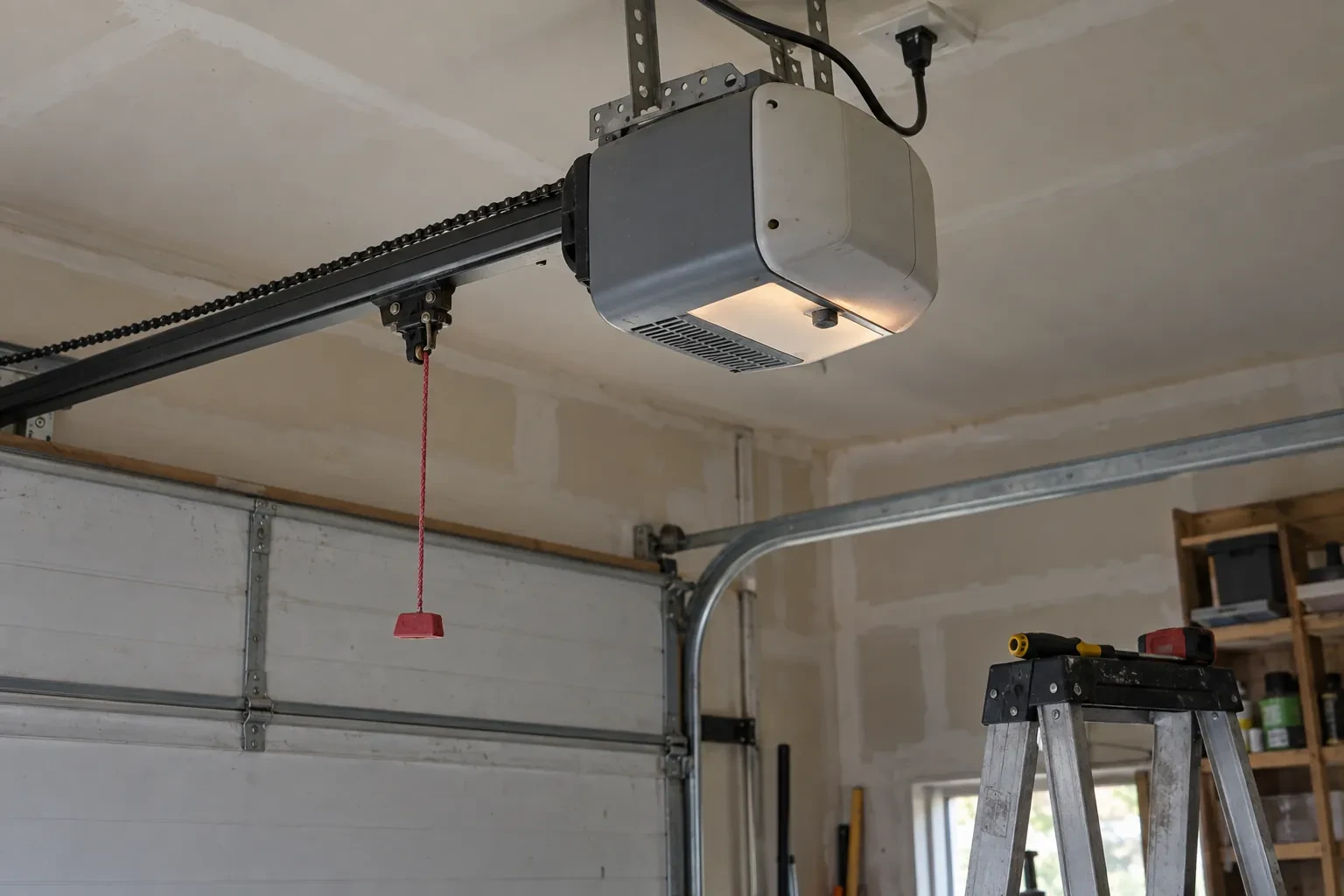
The door used to glide up with a soft hum. Now there is a sharp clack every second or so, and if you stand underneath you can see the belt sagging below the rail and slapping it on the way up.
You swapped the old wooden door for a heavier insulated steel one, and the twenty-year-old opener that was kept has never settled. It strains on the way up, stops partway on cold mornings, and the rail shudders with every cycle.
It is February. You come down in the morning and the garage door has stood open all night; the car is frosted inside, the furnace has run without a pause, and the pipe in the shared wall is your first worry.
Halfway up, the door lets go of the opener with a clunk and sinks back to the floor while the trolley carries on to the top alone. It has happened three times this month, and each time the release lever is found half-cocked.
Which fix fits?
The door lands with a thud you can feel through the kitchen floor, and sometimes it bounces back up a few centimetres before settling.
WhyThe opener deserves as much attention as the track.
An entrance. Not an afterthought.
1/10Garage Door Tune-Up
The door lands with a thud you can feel through the kitchen floor, and sometimes it bounces back up a few centimetres before settling. The bottom section has a small dent where it keeps slamming the concrete.
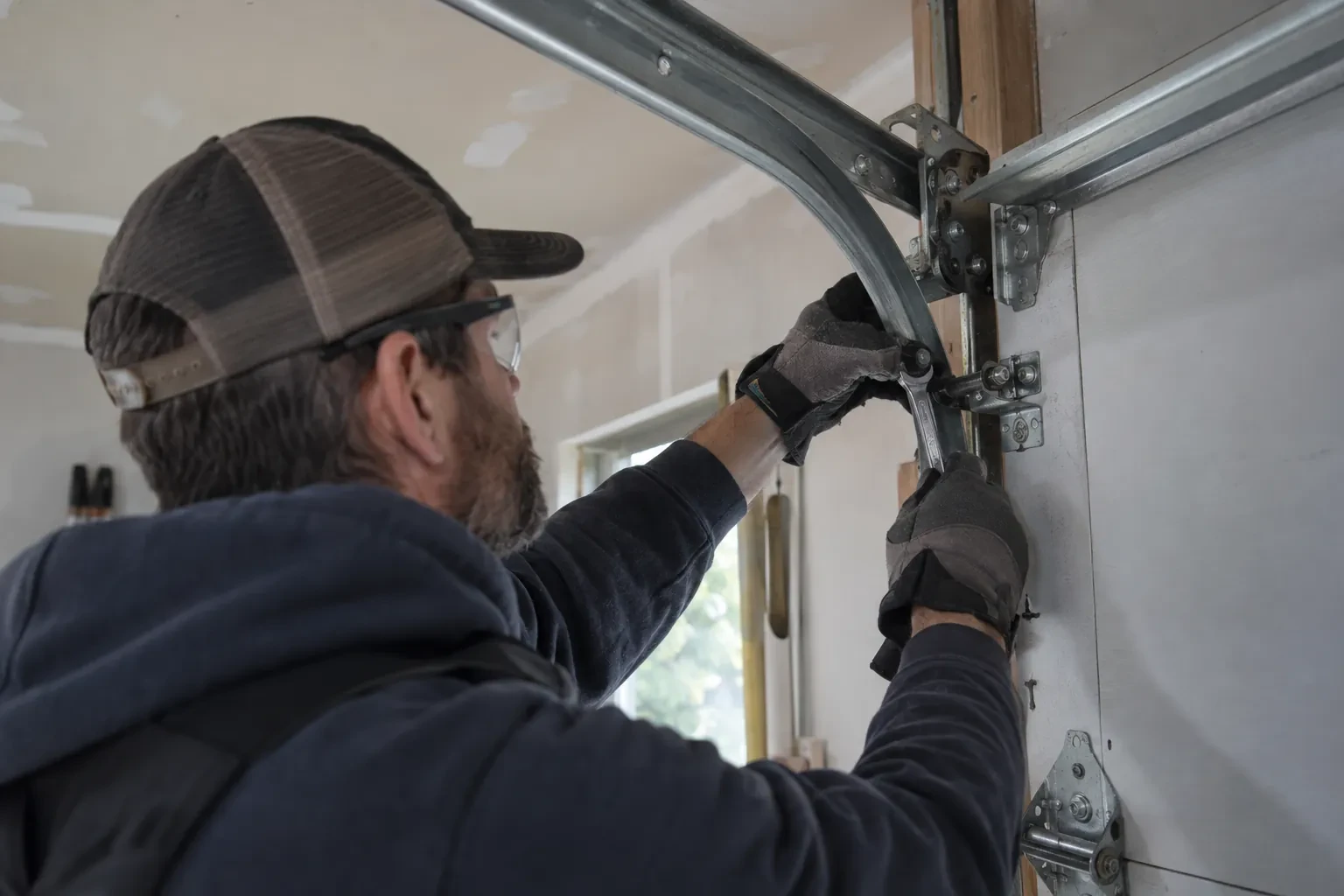
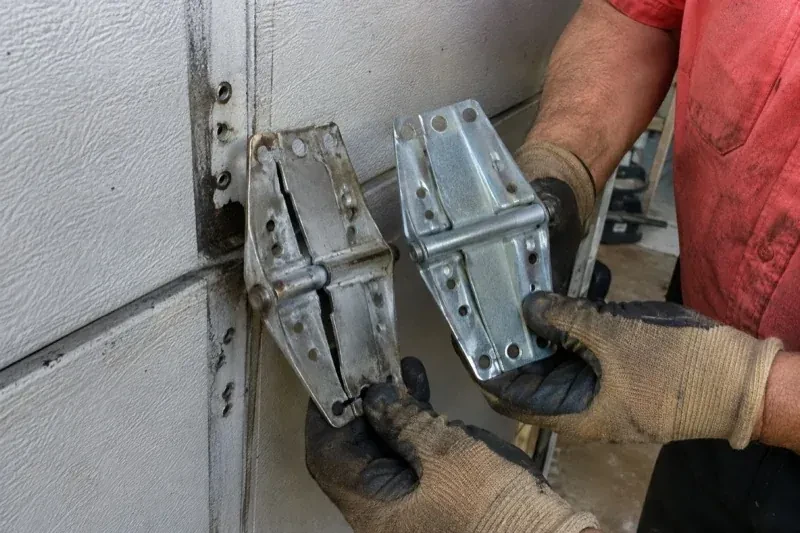
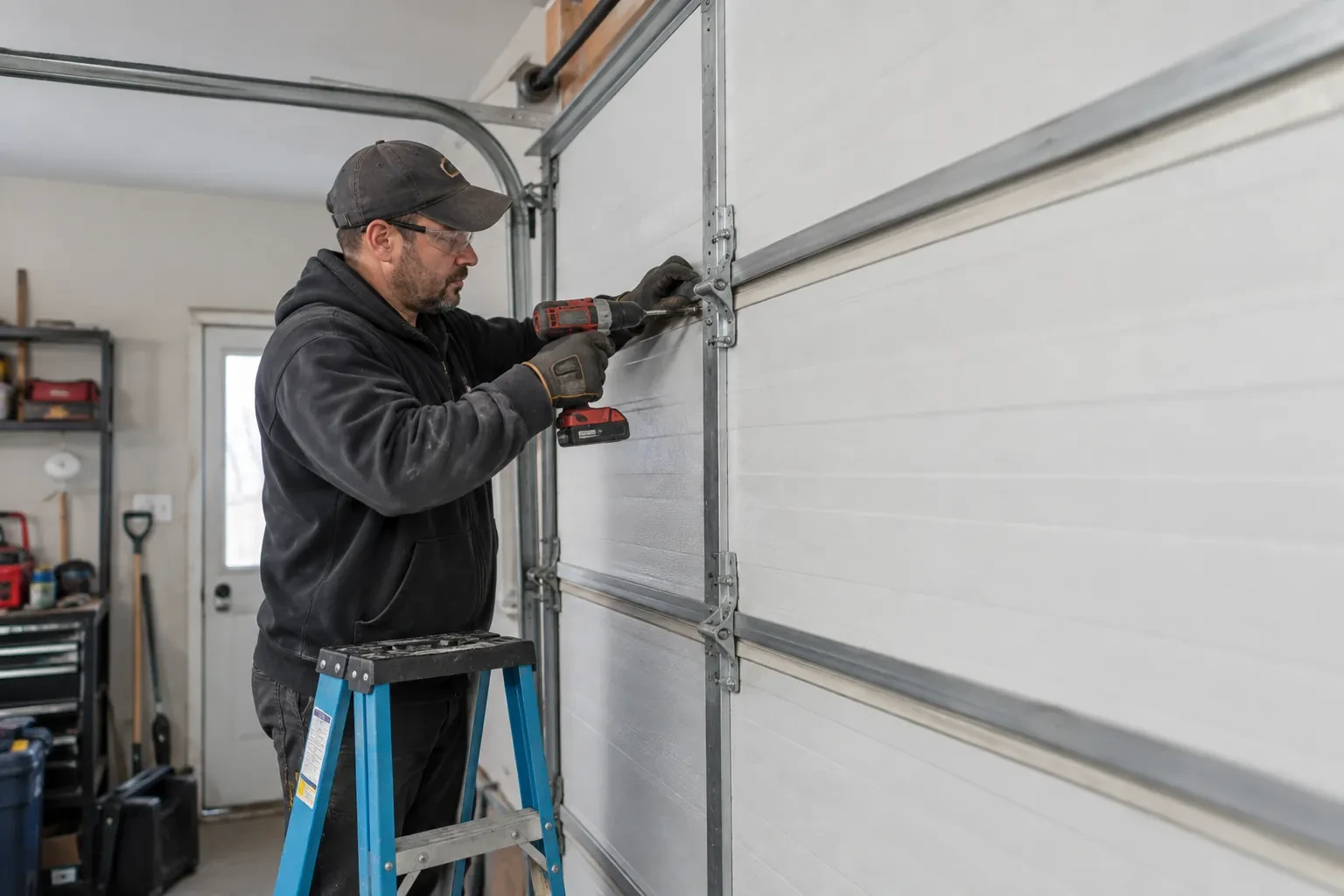
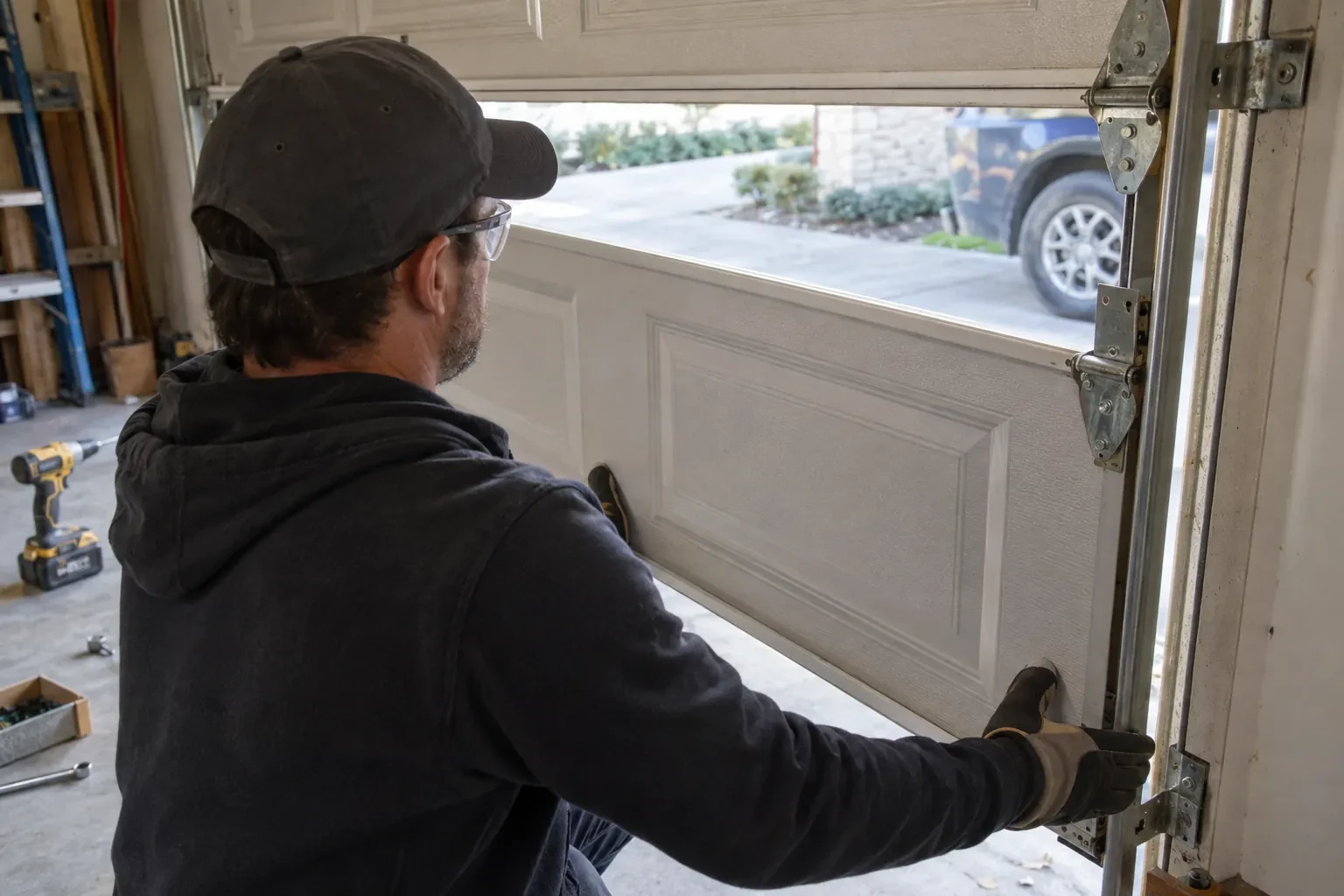
On the old wood door, one hinge has pulled away from the panel, dragging a screw and a chunk of soft timber with it. The panel sags slightly at that joint and the door bumps at the curve instead of gliding.
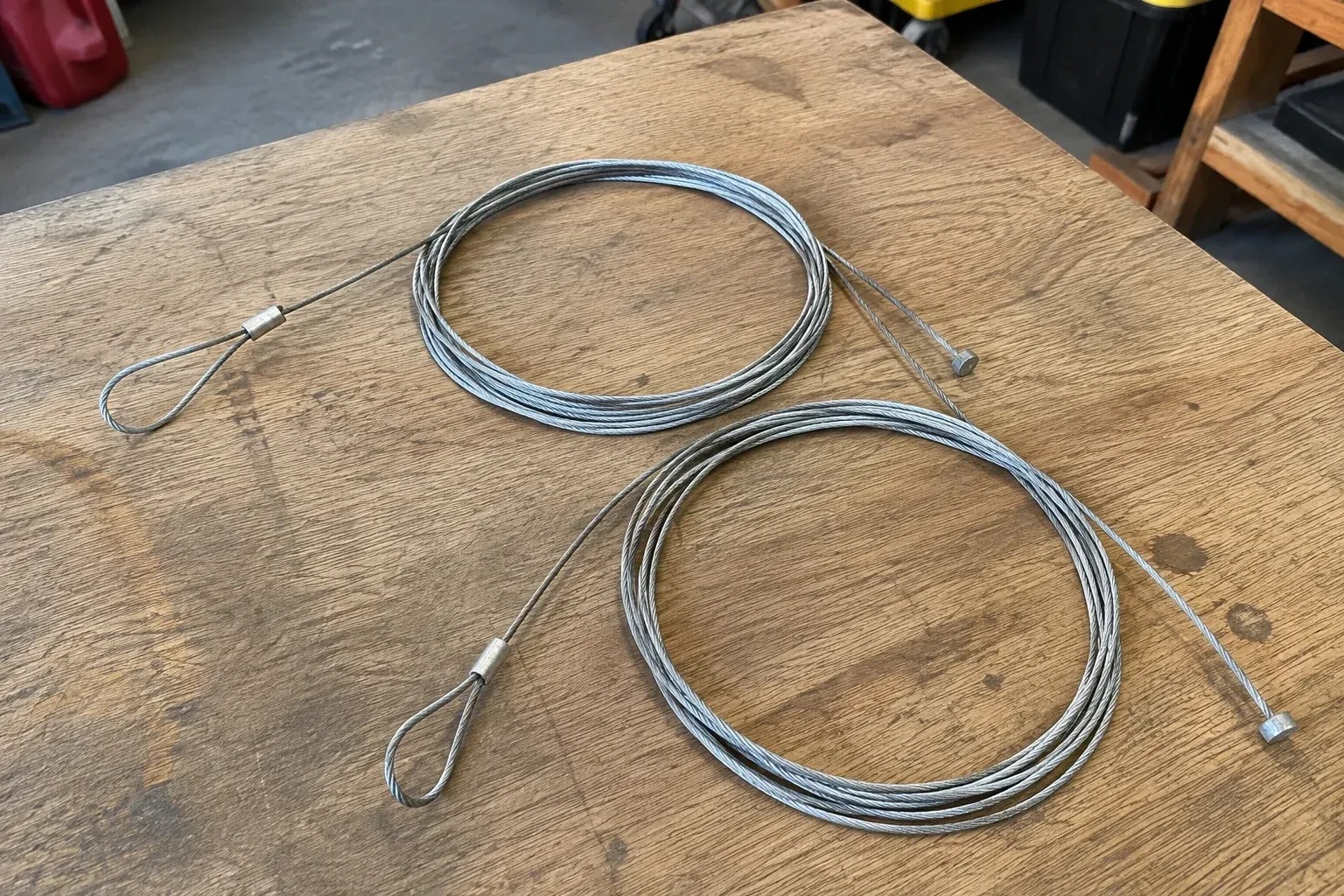
The car bumper kissed the door on the way in. The bottom panel has a dent, the bracket in that corner sits crooked, and the cable on that side has jumped and gone slack, so the door reverses every time it tries to close.
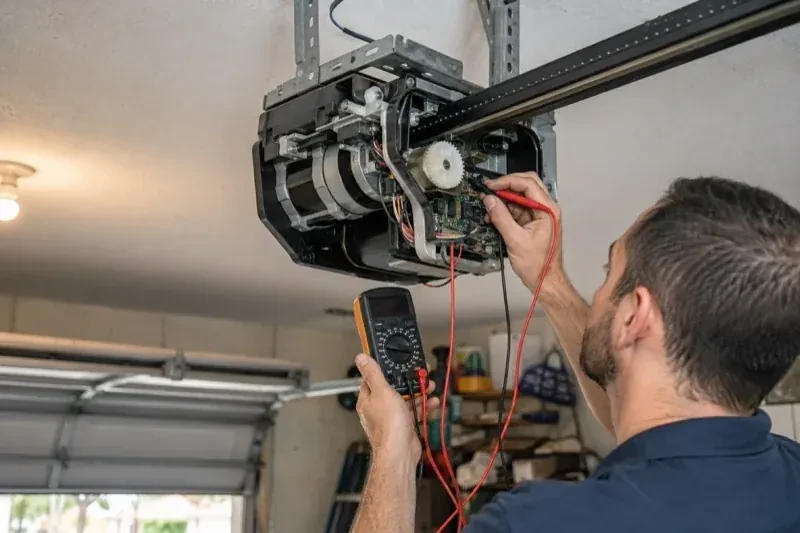
The motor runs, you can hear it working, but the door never moves. When you look up, the sprocket on top of the head is barely turning, and there is a little drift of pale plastic dust on the cover.
The bedroom above the garage shakes every morning at six when the chain drive fires up. Everyone in the house knows the moment someone leaves for work. The door itself is fine; the racket comes from the operator and its steel chain.
Your renovation changes how the ceiling space will be used. The existing track conflicts with new storage and lighting, so the replacement needs a measured track arrangement that follows the available headroom and backroom.
Your garage door works, yet its broad plain panels feel disconnected from the brick, gables and entry details around them. You want the opening to contribute the warmth and character of the home's exterior.
Power and low-voltage wiring are being roughed in while the garage is open. The operator location, ceiling supports, wall control and photoelectric sensors need to align with the door before finishes close everything in.
The door reaches the floor, then reverses before staying closed. The threshold is clear, but a sensing edge is distorted and one photoelectric sensor has moved out of line with its partner.
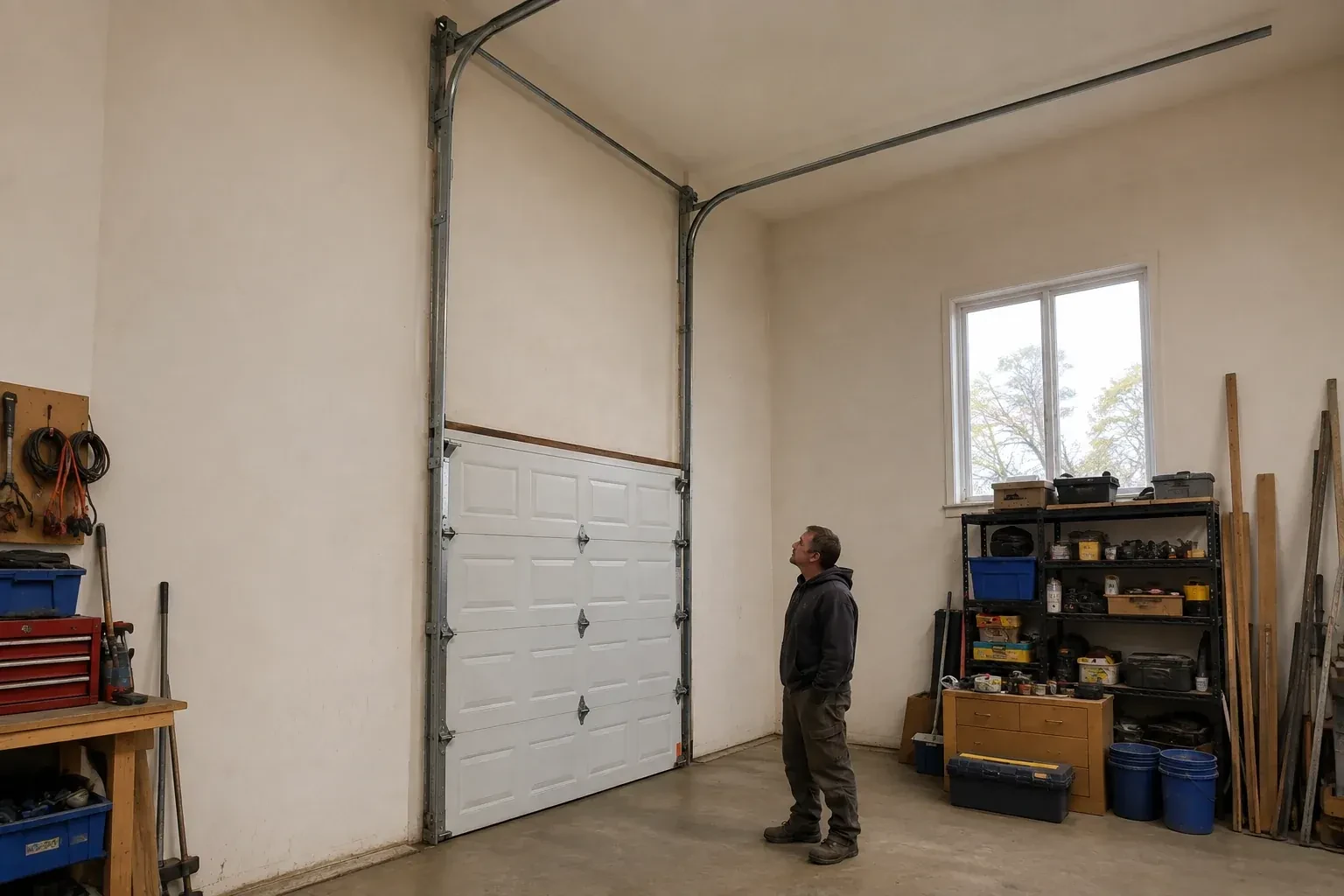
Your new vehicle lift fits the floor plan, but the open garage door crosses the space above it. The ceiling is high enough; the standard track simply turns too soon and leaves the panels hanging over the raised vehicle.
Residential sectional doors of every common construction: steel, insulated steel, aluminum and glass, wood and composite, single and double width, with torsion springs above the header or extension springs beside the horizontal tracks. Openers of all the usual types are covered too, including chain drive, belt drive, screw drive and wall-mounted jackshaft units. If the door is a one-piece tilt-up or a commercial rolling door, mention that when booking so the right hardware comes along.
How many hinges does a typical door have?
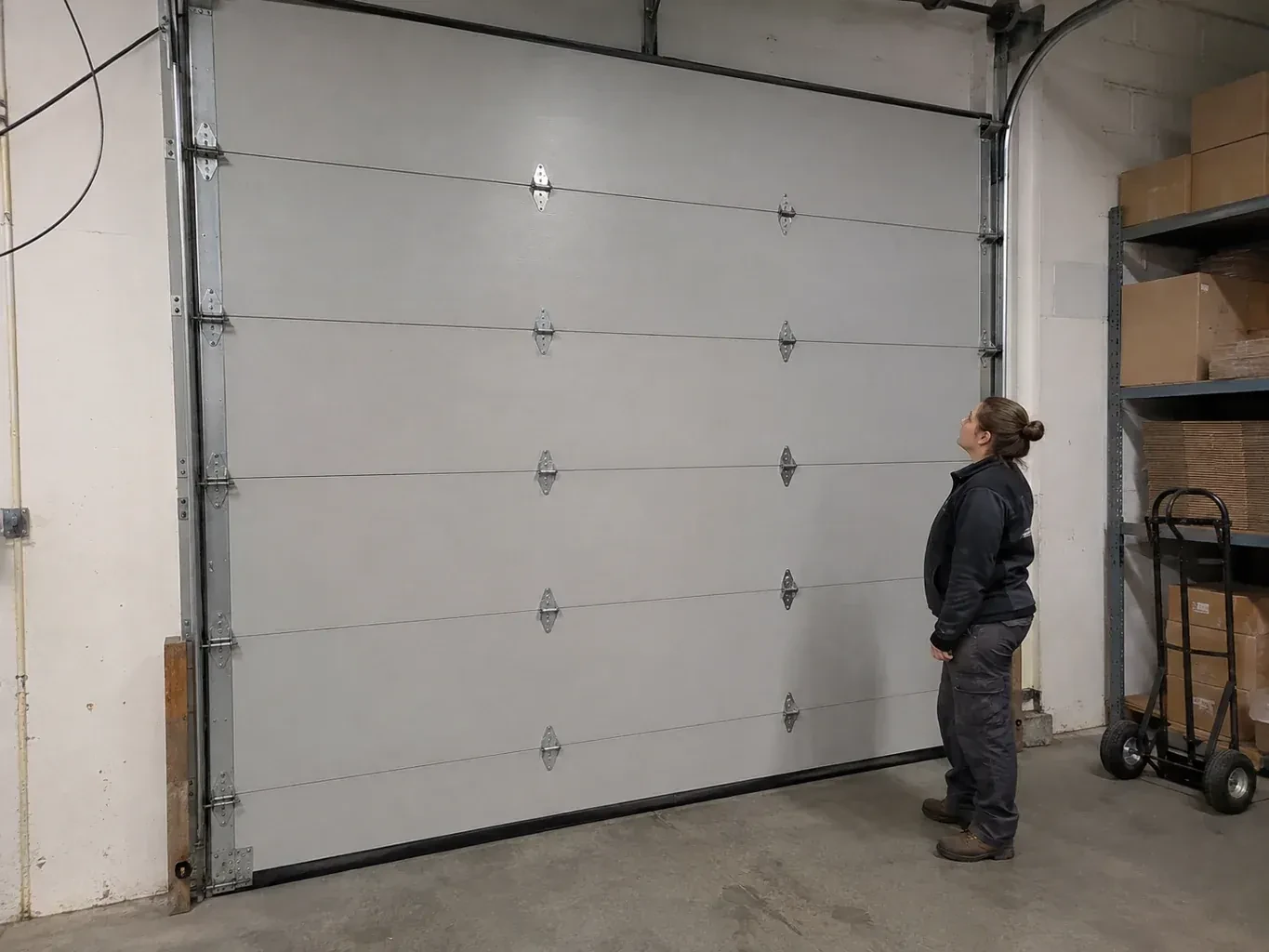
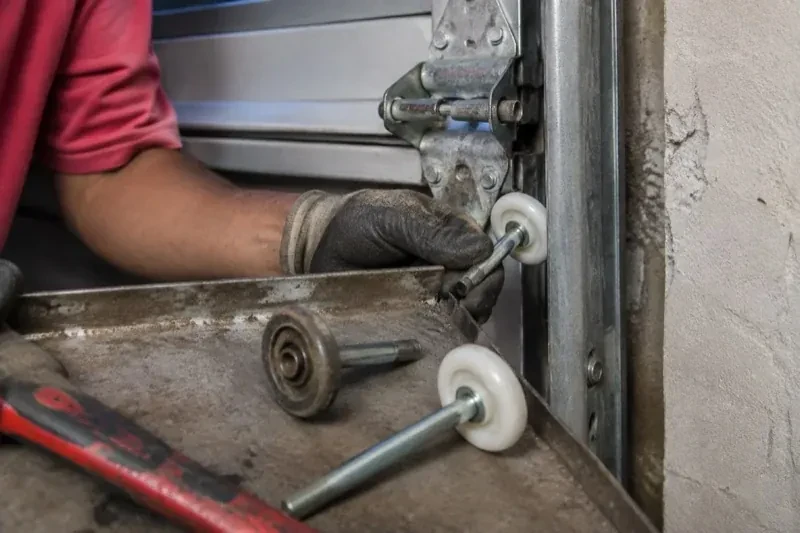
Count the joints between panels and multiply. A single door usually carries two edge hinges and one centre hinge per joint, so a four-panel door has three joints and nine hinges. A double door adds one or two more centre hinges per joint to keep the wider panels flat. The top panel uses adjustable top fixtures rather than hinges, and the bottom corners use bottom brackets, which are different parts.
Should I lubricate the cables?
A light film, yes. A mist of silicone or a lubricant made for garage doors on the cables, especially the lowest stretch near the brackets, sheds moisture and slows rust. Avoid heavy grease or oil, which holds grit and salt against the strands. The springs, hinges, roller bearings and bracket pins take the same product a couple of times a year, and the tracks are simply wiped clean.
How and how often is the rail lubricated?
On the interval the opener's own manual calls for, often every two to three years. With the power off, the old grease is wiped from the rail along the path the trolley travels, and a thin layer of white lithium grease is applied in its place. The door is then run a few times so the trolley spreads it. The door's own tracks, where the rollers run, are never greased; they stay clean and dry, and the rollers, hinges and bearings take a garage door lubricant once a year instead.
Should an opener from before the mid-1990s be replaced rather than repaired?
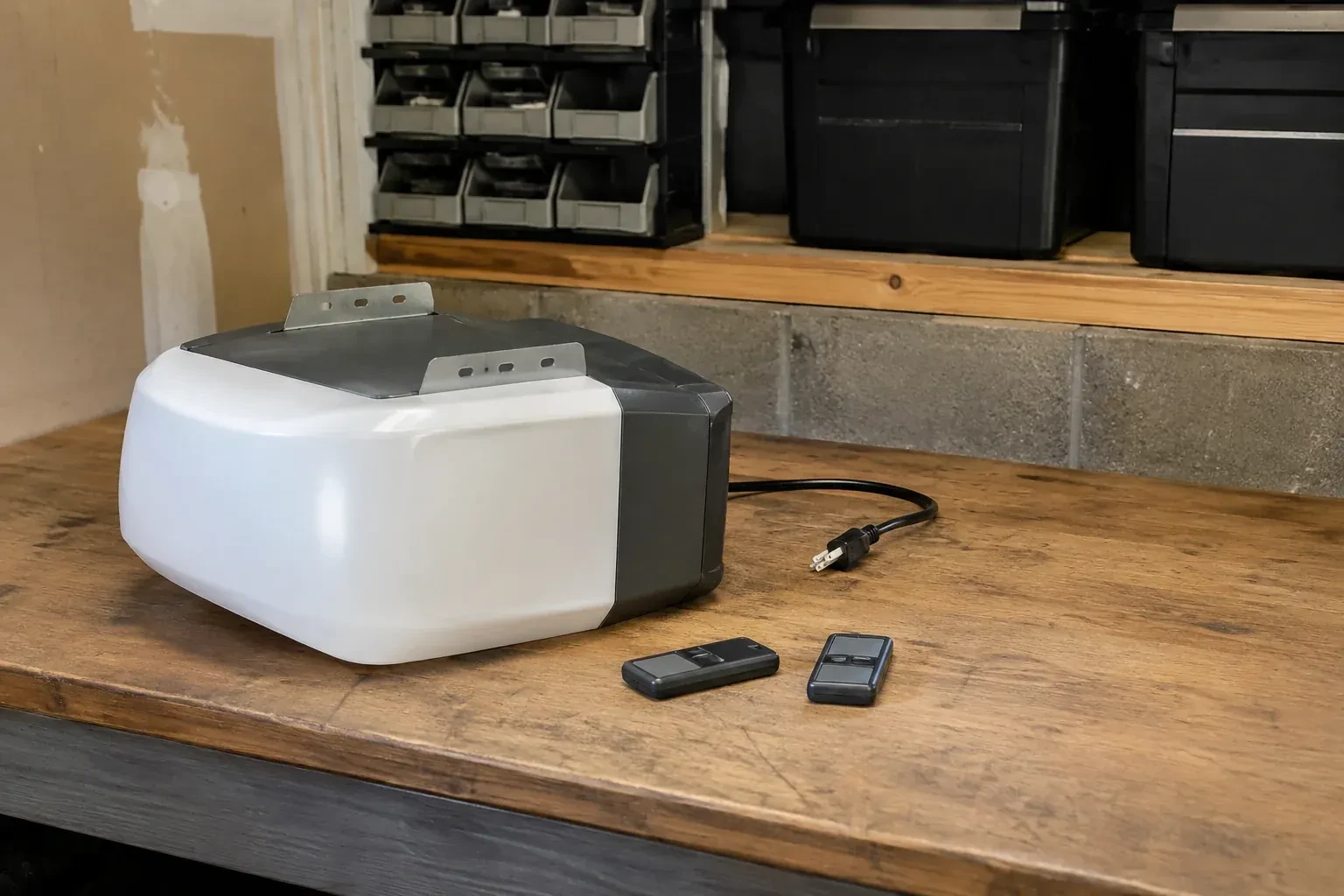
Manufacturers recommend replacing units made before 1993, since most lacked external entrapment protection such as a photo-eye pair, a sensing edge or a constant-contact close control. Identify the model rather than guessing its age or remote type, since a fixed-code remote with small switches is not proof by itself. Replacing rather than repairing brings the sensor beam, a contact-sensitive force setting, remotes whose code changes on every press and a console lock button.
What makes a sectional door different from a one-piece door?
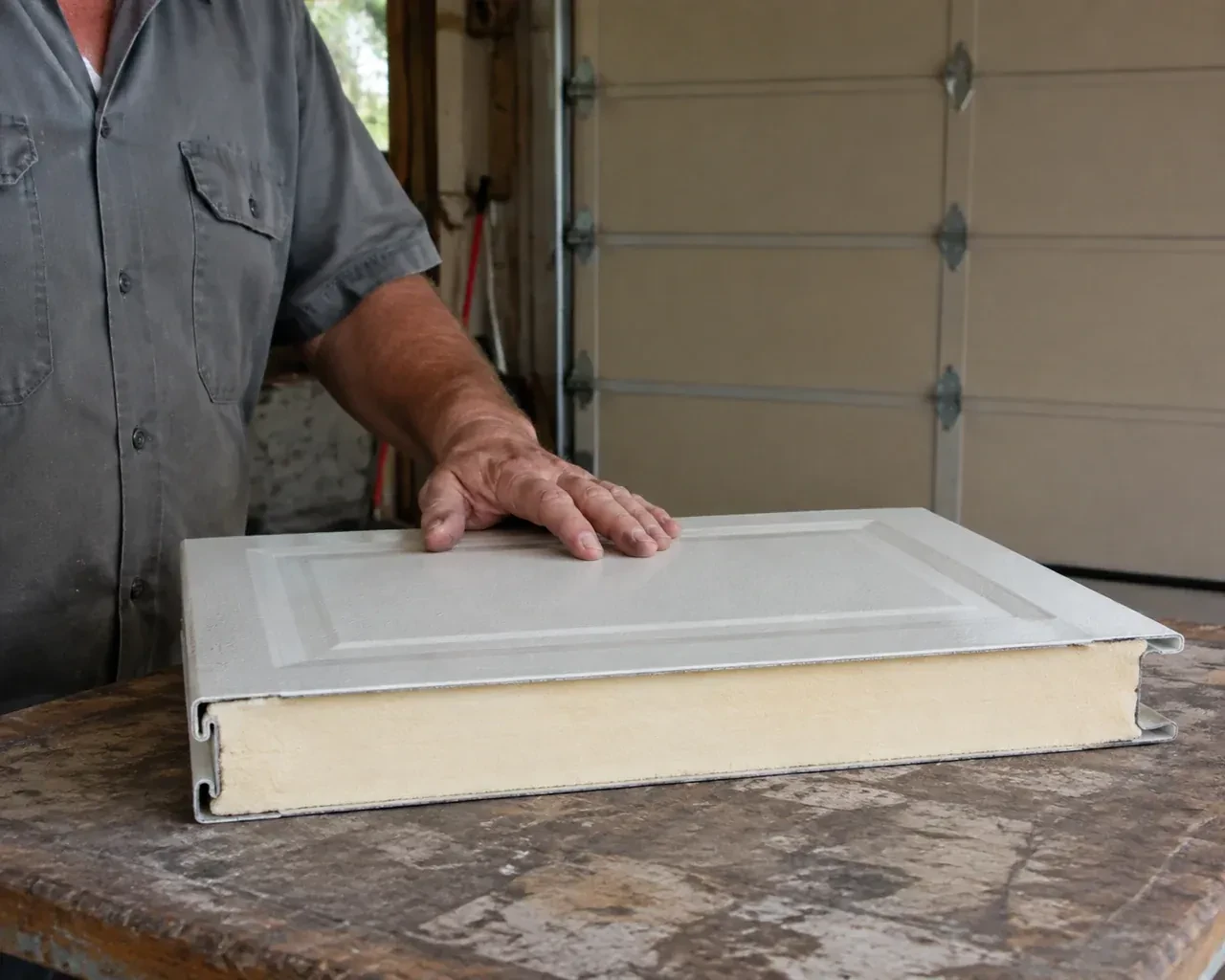
A sectional door is built from horizontal panels joined by hinges. Rollers guide those panels up vertical track, around a curve and into horizontal track overhead. Because the sections bend at their joints, the door can travel close to the ceiling rather than swinging outward as one rigid slab.
May the new door use my existing tracks?
Only when the new door instructions and field assessment establish compatibility. Track spacing and curves relate to section thickness, roller position, door weight, headroom and opener layout. A track that suited the former door may place the new sections incorrectly. Treating tracks and sections as one designed system provides a clearer basis for alignment, balance and future parts identification.
Is an electric operator part of every installation?
No. The door system can be installed and balanced for manual operation, while an electric operator is an additional selected component. When included, the scope should name the operator type, controls, sensors, support and electrical preparation. The door is commissioned by hand before powered travel is set. This sequence confirms that the motor is connected to a freely moving, properly counterbalanced assembly.
Can several doors be assessed during one facility visit?
Yes. Numbering each opening and providing a short symptom list keeps the assessment organized. The technician can define the requested repair for the affected door and record visible conditions on comparable doors separately. Shared model data and installation history may help with parts planning, while each opening still receives its own mechanical and control checks before any work is scoped.
What information helps assess feasibility from photos?
Useful photos show the full inside opening, both track sides, the wall above the header, the complete ceiling run, spring and shaft area, opener, beams, lights and other obstructions. Include a wider image showing the planned vehicle lift or equipment zone. Measurements remain necessary, but clear images help identify questions and prepare an efficient site assessment.
Request a visit
Landlords and property managers in Ionview get a written summary after every visit: the address, what was found, what was replaced, and what is likely to need attention next. Tenants get a door that works and remotes that behave. Everyone knows where things stand without a second phone call.