Openers · Toronto
Garage Door Opener Diagnosis and Repair
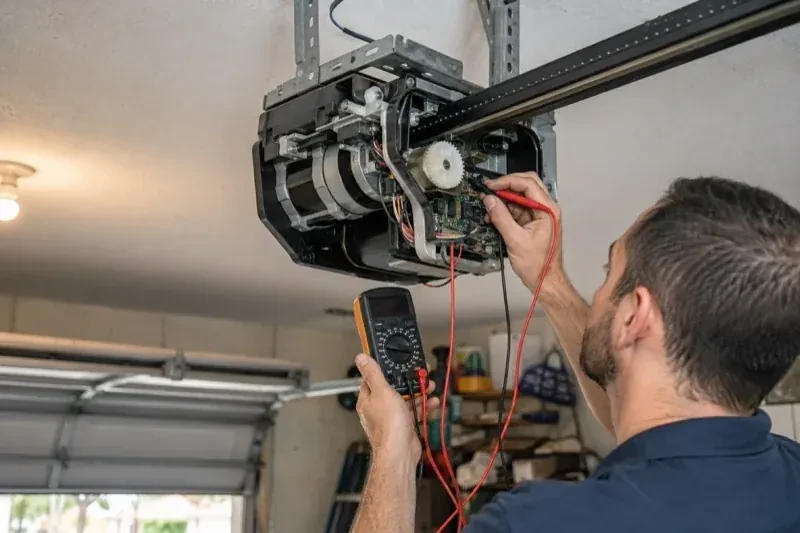
The motor runs, the chain rattles along the rail, and the door does not move a millimetre.
In plain words
Every diagnosis ends with the same two tests, because an opener that moves the door is only half fixed. First, a length of 2x4 is laid flat on the floor under the centre of the door and the door is closed onto it; it must reverse on contact and return to fully open. Second, with the door closing, an object is passed through the photo-eye beam near the floor; the door must stop and reverse. These tests are how the opener standard defines a working unit, and they are how the technician proves that the fault found was the fault fixed.
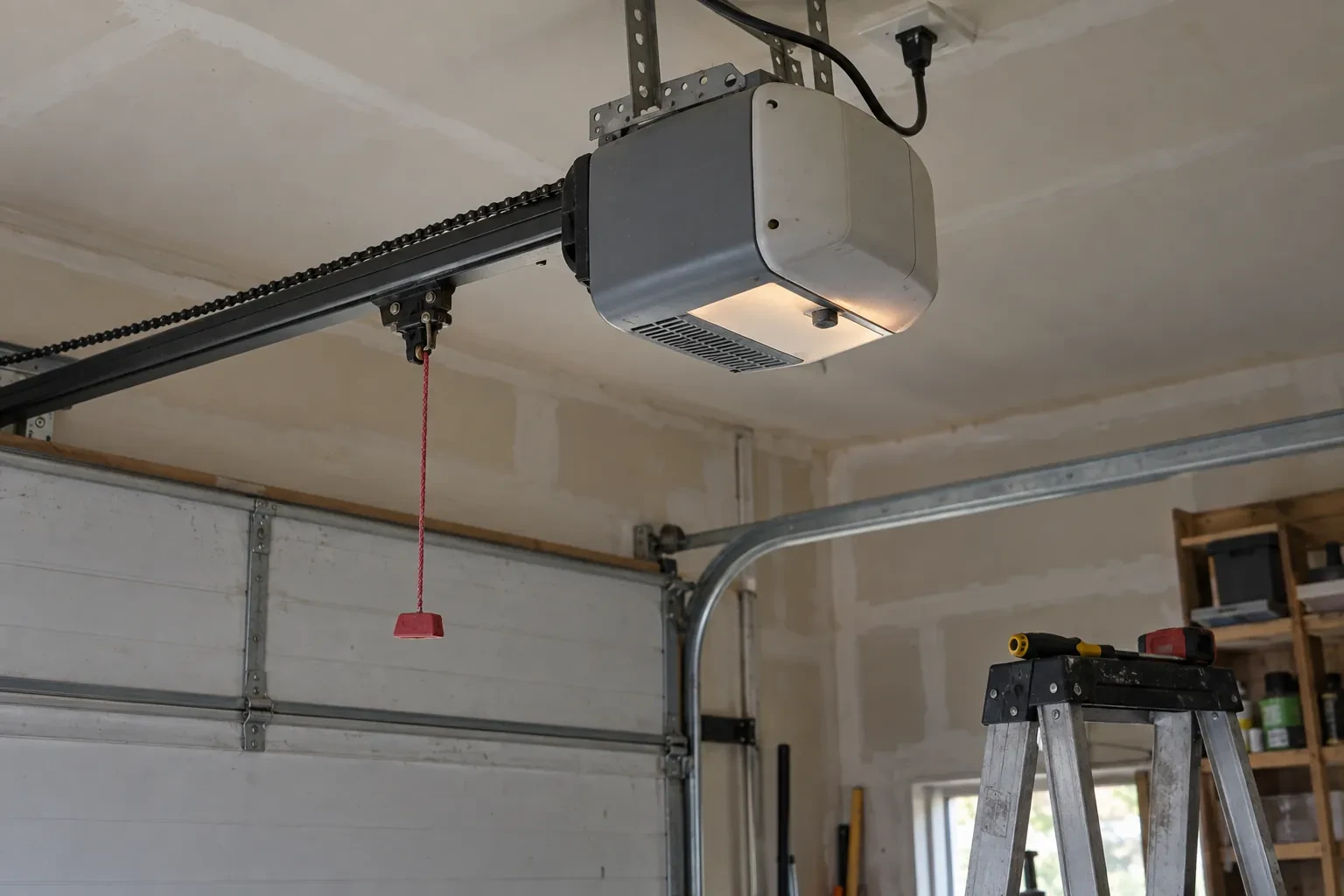
How the visit goesThe motor runs, the chain rattles along the rail, and the door does not move a millimetre. You notice the little carriage sliding back and forth on its own. Last week the power was out and someone pulled the red cord to get the car out.
Garage Door Opener Diagnosis and Repair
How the visit goes
The two small eyes near the floor
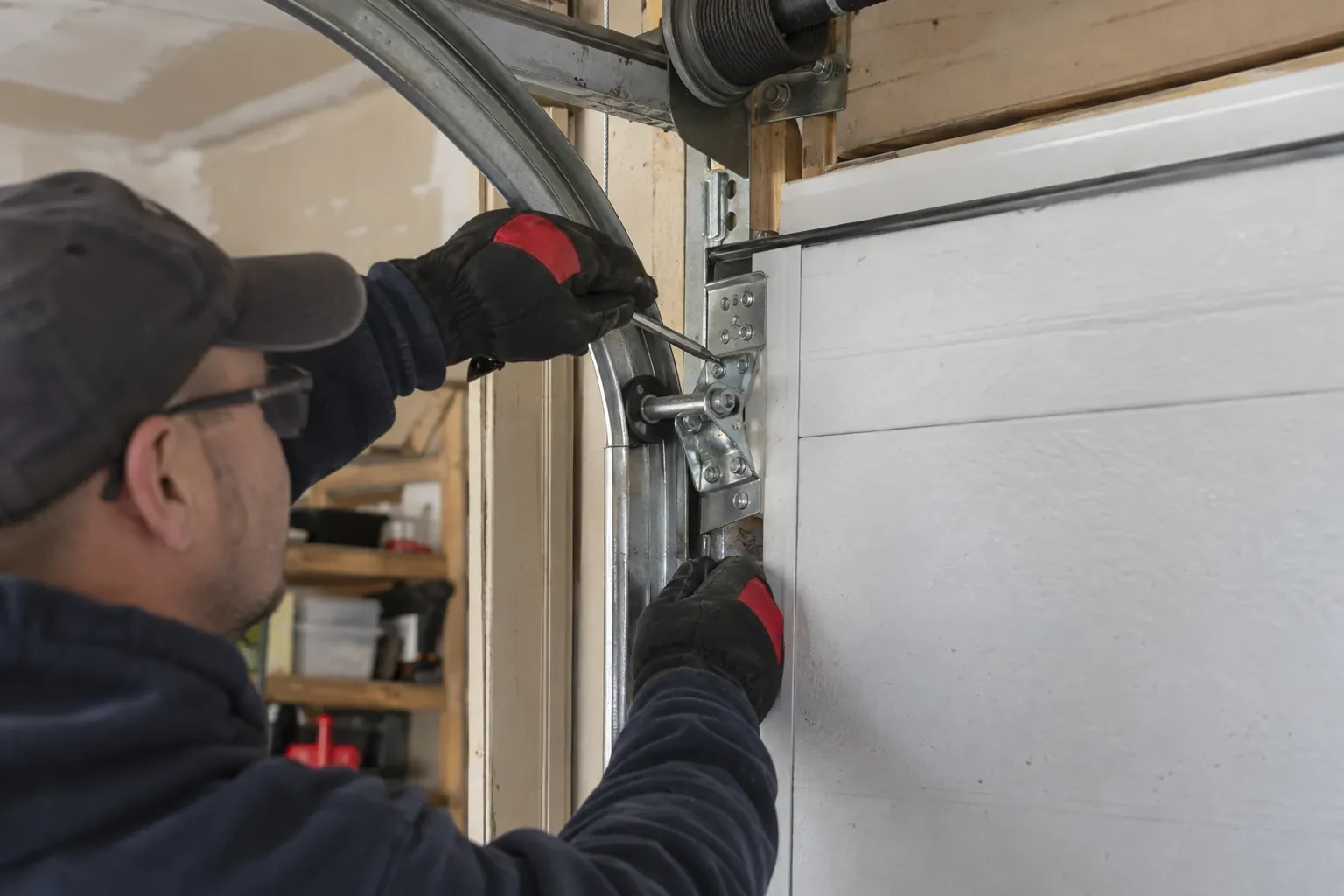
The photo-eye sensors are inspected together with their wiring. Each sensor carries a small indicator; a steady light on both means the beam is aligned, while a flicker, a dark light or one that goes out when the bracket is nudged points to misalignment, a loose mount or a damaged wire. The technician sights along the beam, looks for obstructions, cobwebs, frost and low sun on the receiving lens, checks that the sensors sit no higher than about fifteen centimetres off the floor, and traces the wire back to the head unit for staples, kinks and chew marks. Sensor faults are the single commonest reason a door refuses to close.
Setting travel and force, then proving them
Once the mechanical cause is dealt with, the opener is set up as if newly installed. Travel is adjusted so the door seals gently on the floor without hammering the slab and stops at the top clear of the header. Force is set as low as will reliably move the door through a full cycle in the current season, never higher. Then the door is closed onto a 2x4 lying flat on the floor and must climb back to open the moment it touches; and while closing again, a broom handle is passed through the beam and the door must stop and rise. Failing either means the setup is redone, not accepted.
A door that answers every control
Before the technician leaves, the door is run from each control you own: the wall console, each remote, the keypad and any phone connection. You watch it open fully, close to a gentle seal and stop in the right places. The opener light and indicator are explained so you know what normal looks like, and any code that appeared during the diagnosis is shown cleared. You also see the reversal tests done in front of you, so you know the door will back off a 2x4 and stop for a beam interruption. Watching the system pass gives you confidence that the repair addressed the real cause.
Garage Door Opener Diagnosis and Repair
In the van
Travel limit switch or RPM sensor
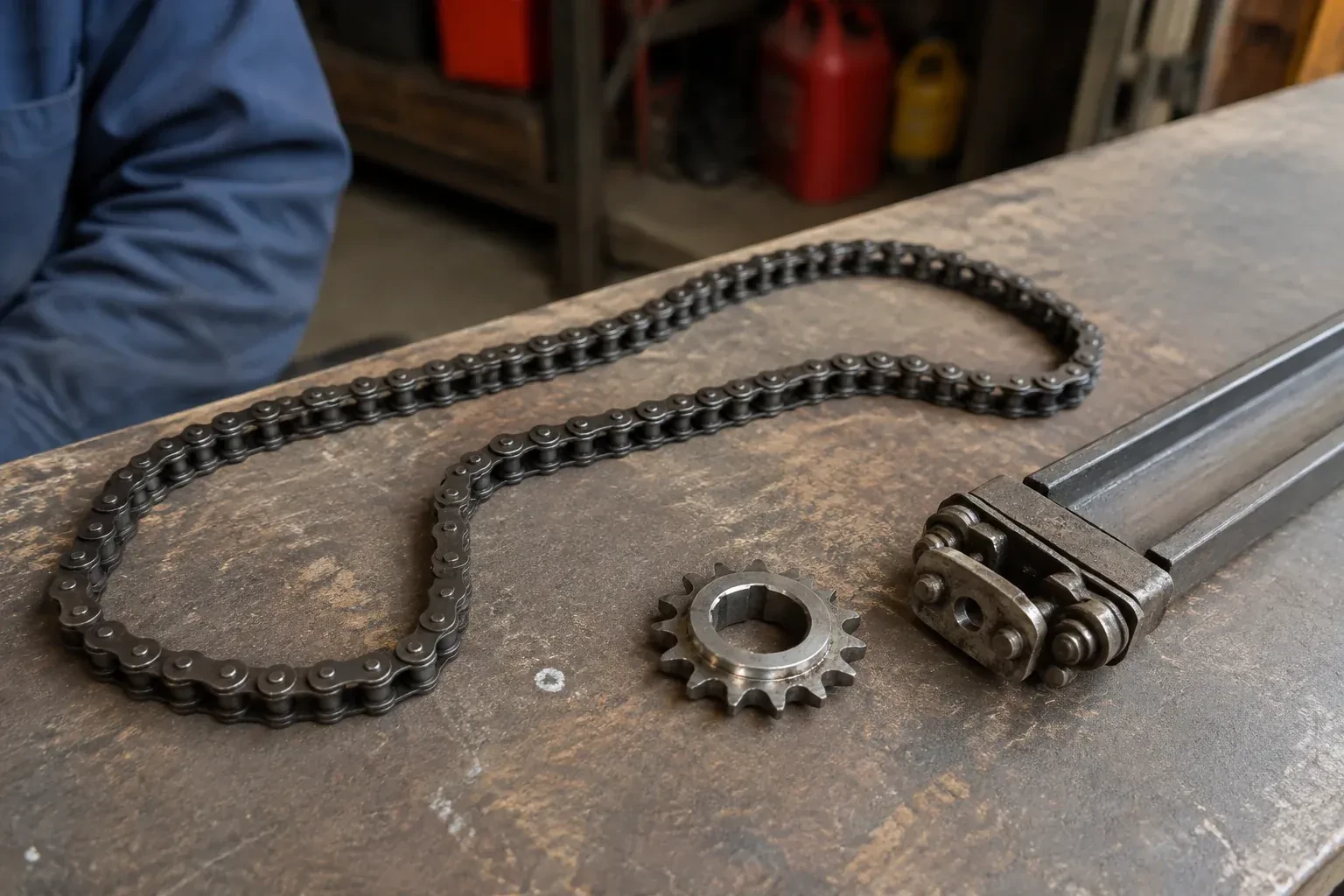
Drive gear and sprocket kit
Wall control
Bell wire and clips
Start capacitor
Garage Door Opener Diagnosis and Repair
What affects the quote
Distance to your door
Travel is part of the visit. An address across town and a rural property at the end of a concession road involve different driving, and the quote reflects the trip.
Repair or replacement
When diagnosis points to replacement, the quote changes shape entirely: a new head unit, rail and sensors with installation, plus removal of the old opener, rather than a single part and labour.
Ceiling height and access
A standard-height garage puts the head unit in easy ladder reach. High ceilings, high-lift tracks, storage lofts or a car that cannot be moved add setup time and sometimes a taller ladder.
What to have ready
- Is the door quieter or noisier than it used to be, and where is the sound coming from?
- Has anyone pulled the red emergency release cord recently?
- Roughly how old is the opener, and is the model label readable?
Garage Door Opener Diagnosis and Repair: questions
QuestionsWhy will the door close only while I hold the wall button?
That is a built-in behaviour, not a new fault. When the sensor circuit reports a problem, most openers refuse to close from a remote but allow a constant-pressure close from the wall control, because someone standing there can see the doorway. It is a strong signal that the photo eyes or their wiring need attention, and once the sensor issue is corrected the door closes normally from every control again.
Should I lubricate the chain, the rail or the track?
Rollers, hinges, bearings and springs benefit from a garage door lubricant once or twice a year. The chain, belt or screw-drive rail is a separate question, since each drive type calls for its own product and schedule from the opener's manual rather than one rule for every unit. The track itself should stay clean and dry, because lubricant there collects grit and makes rollers slide instead of turning. The technician can point out the spots on your door at the end of the visit.
How do you tell whether it is the opener or the door?
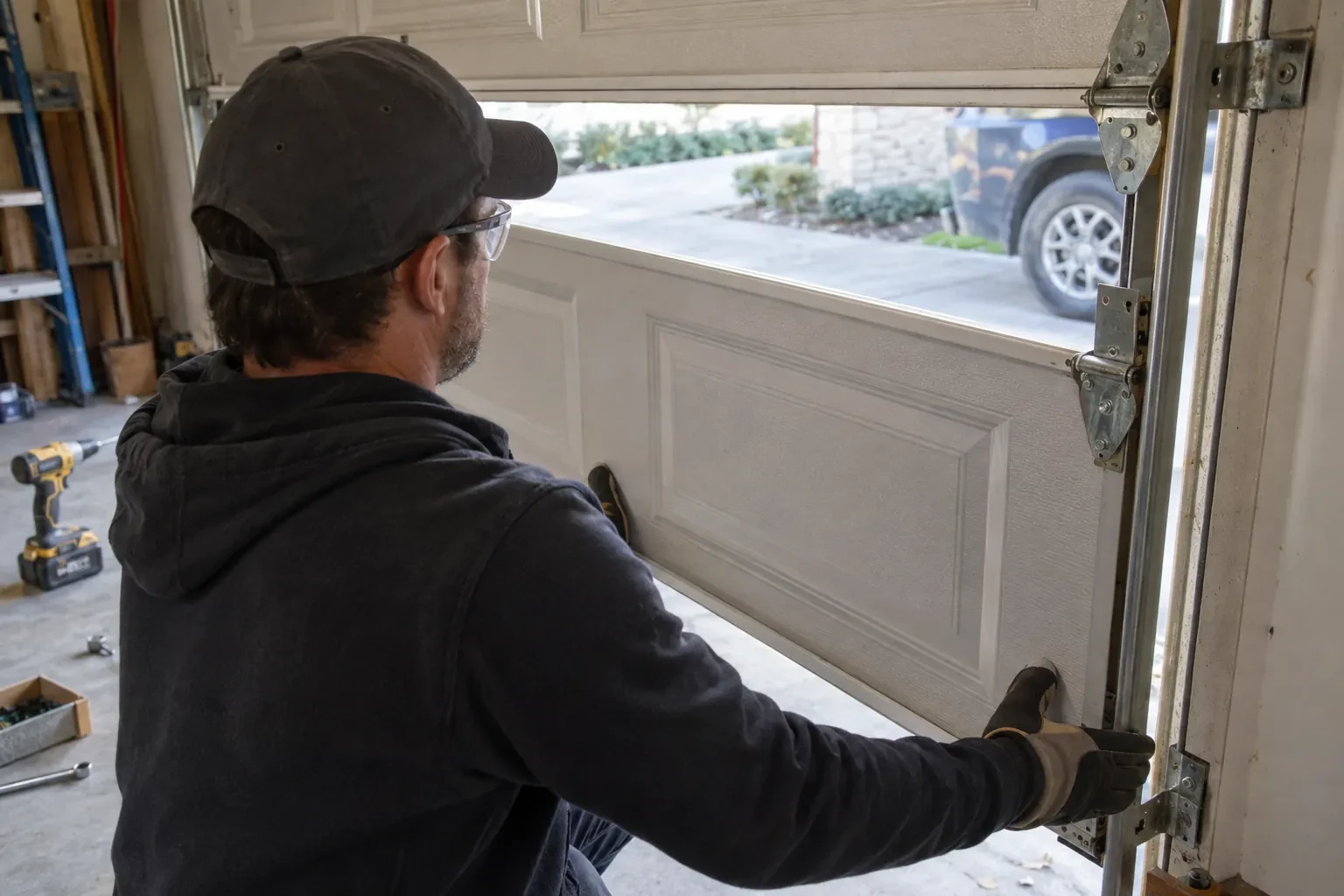
By separating them. With the door closed, the emergency release is pulled so the opener is out of the picture, and the door is lifted by hand. A balanced door rises without strain, hangs where you leave it around waist height and stays open at the top. If it does, the opener is at fault. If it is heavy, drifts or binds, the door is the cause and the opener was only reporting the strain. This one check prevents a great many wrong repairs.
Related services
- Belt-Drive Opener RepairThe door used to glide up with a soft hum.
- Garage Door Opener ReplacementYou swapped the old wooden door for a heavier insulated steel one, and the twenty-year-old opener that was kept has never settled.
- Photo-Eye Sensor Alignment or ReplacementThe small light on one of the sensors near the floor has gone dark, or it flickers when someone walks past the track.