Repairs · Toronto
Garage Door Bottom Seal Replacement
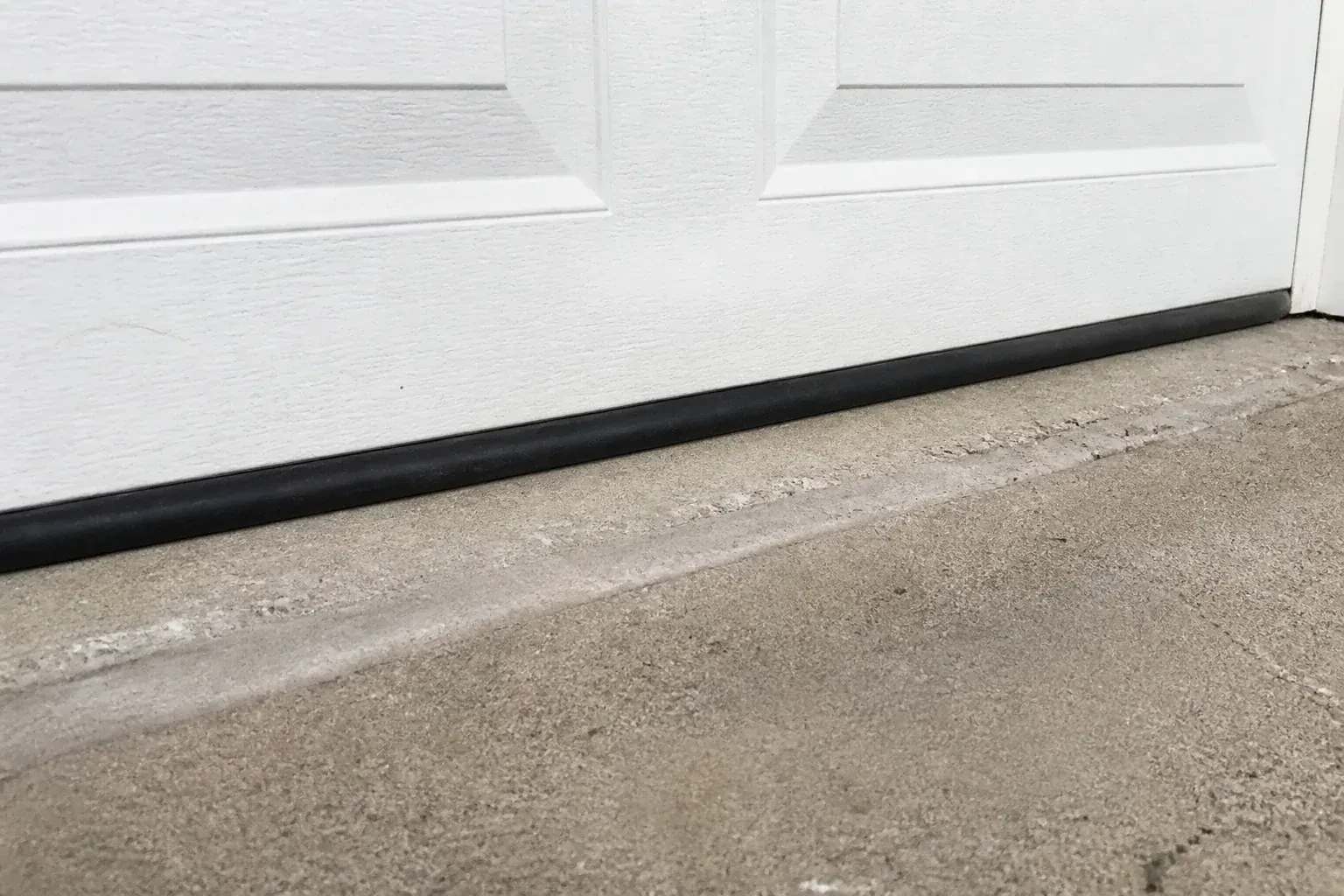
After a spring rain there is a puddle inside the door that reaches the tires.
In plain words
In this climate the bottom seal lives a hard life. Meltwater from the car pools at the threshold and freezes the seal to the slab, and the next press of the remote tears it or drags it out of its channel. Road salt stiffens the vinyl and eats the aluminum retainer; deep cold turns a supple strip rigid. Replacement puts a cold-rated profile on a sound retainer, sized to meet the floor without over-compressing, and the technician shows how a wipe of silicone each autumn and a clear threshold keep the new strip from bonding to the ice. The door closes softly onto rubber again, not onto a frozen ridge.
How the visit goesOne end of the bottom seal has slipped out of its channel and hangs down like a loose shoelace. Each time the door closes it folds under, each time it opens it flaps, and the gap beside it keeps growing.
Garage Door Bottom Seal Replacement
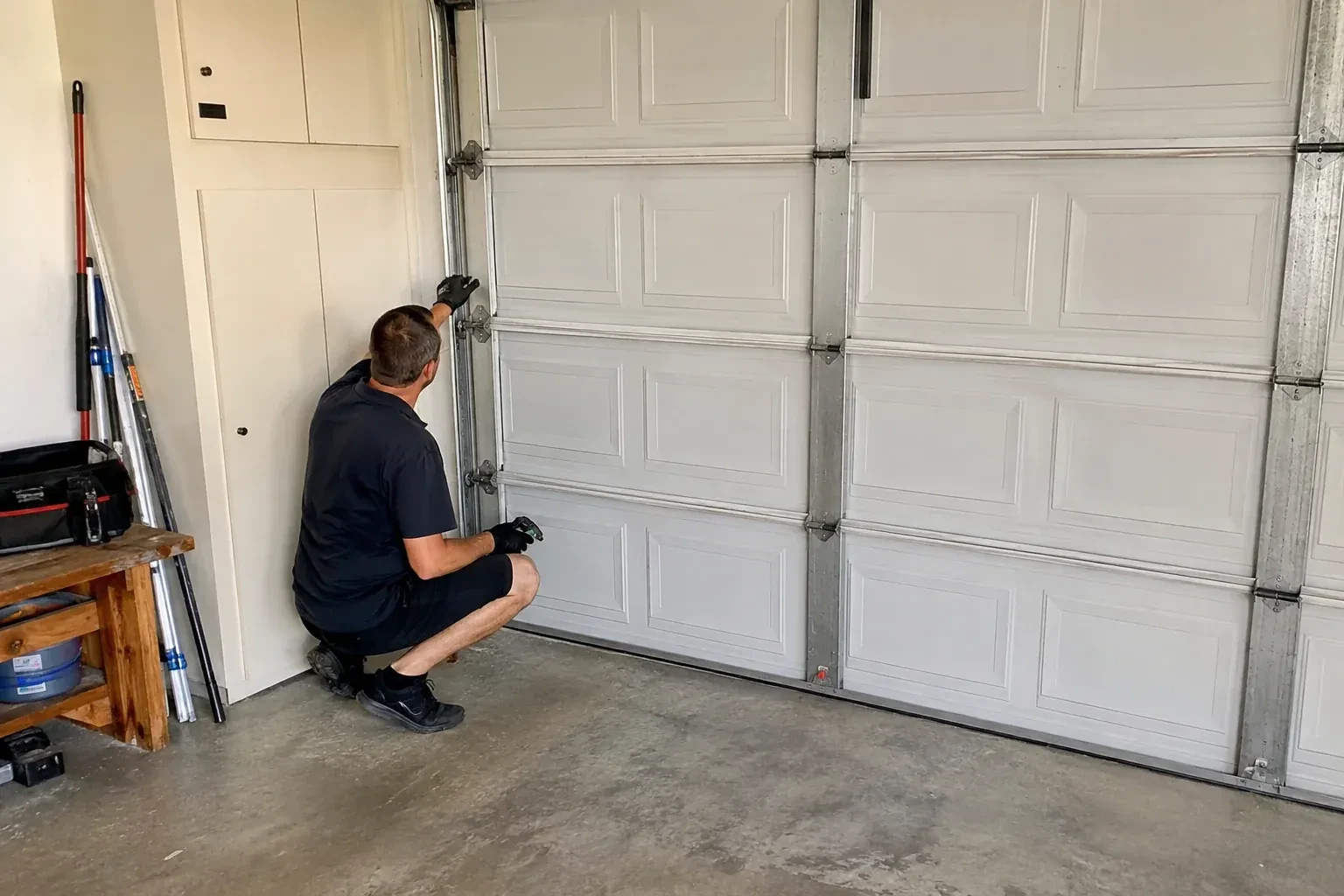
How the visit goes
Why the old seal failed
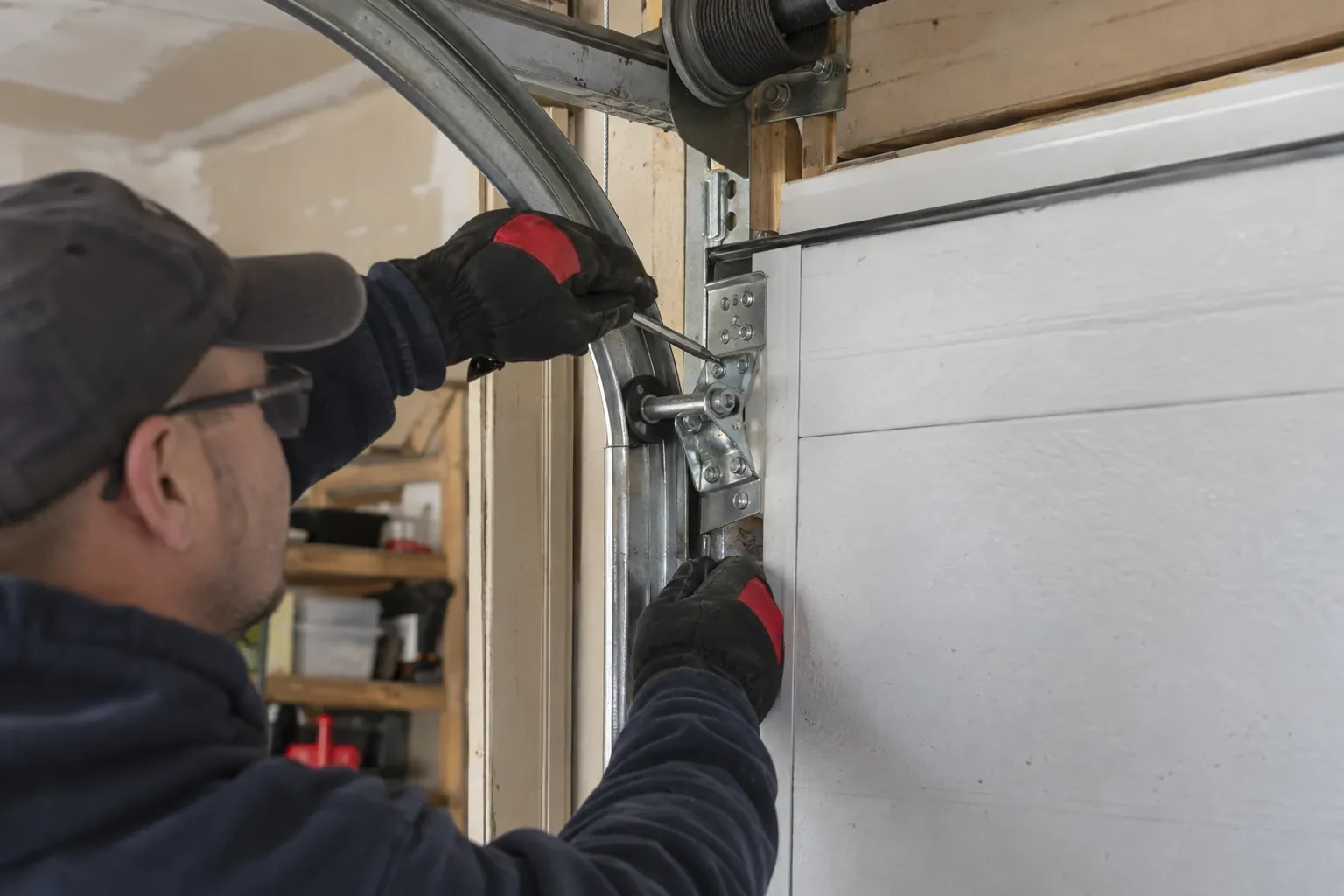
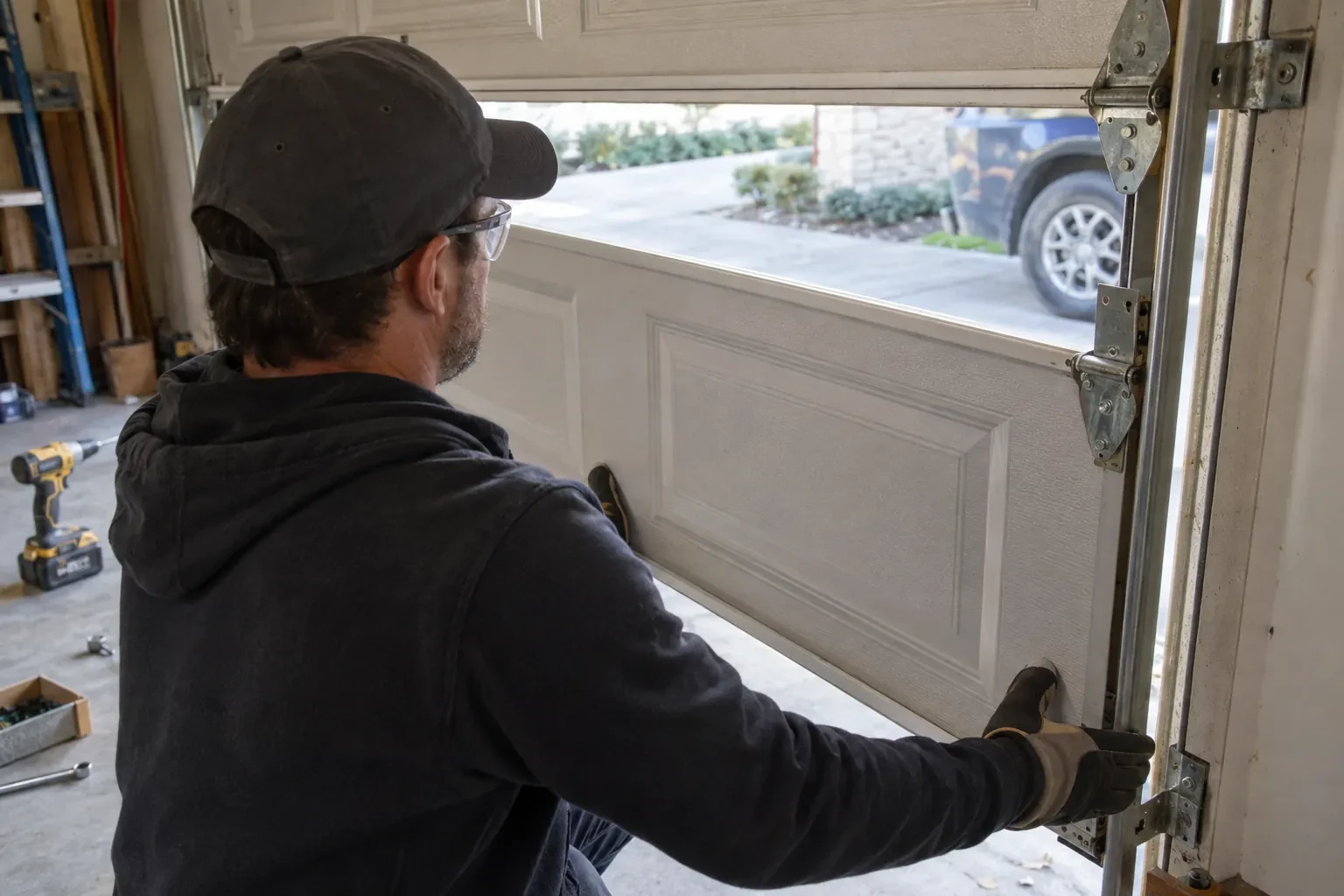
The old strip is read for its history before it comes off. Cracks along the fold and a chalky surface point to sun and age. A flattened bulb that no longer springs back is compression set. A torn edge at one end usually means the seal froze to the floor and the opener pulled it free. Chew marks say rodents. A strip that has slid partly out of its channel points to a bent or opened retainer, or to a seal that was slightly the wrong size. Each of these leads to a different choice of material, profile or retainer work, so the new seal is spared the fate of the old one.
Cutting the new seal to length
The replacement is cut from a roll to the door width plus a small allowance at each end, using heavy shears or a knife, and the profile is checked against the retainer before any feeding begins. The technician confirms the T or bead edges match the channels and that the bulb height will fill the gap measured earlier without being squashed flat. Where the floor dips at one end, a slightly taller profile is chosen rather than relying on the opener to press harder. Cutting a little long means the ends can be trimmed to the door and finished cleanly once the seal is in.
A clear threshold through winter
The seal closes onto whatever is on the floor, so the threshold deserves a moment when you clear the driveway. Push packed snow and the ridge of ice that forms where the door meets the slab away from the opening before running the door, and sweep salt piles and grit clear of the line so they are not ground into the strip. Park a little further in, if the garage allows, so drips from the car fall on the floor rather than at the seal. These are the same habits that protect the bottom brackets and cables in the corners.
Garage Door Bottom Seal Replacement
In the van
Bulb or U-style bottom seal
Self-drilling retainer screws
Threshold seal and adhesive
Seal end caps
Wire brush and scraper
Garage Door Bottom Seal Replacement
What affects the quote
Access and clearance
Storage, a vehicle that must stay inside, or shelving against the bottom of the door slows the work. A clear metre inside the door makes the visit shorter.
Retainer replacement
If the aluminum or plastic retainer is bent, spread open or corroded, a new extrusion, fasteners and the time to fit it straight along the rail are added as their own line.
Bottom section repairs
A rusted, dented or bowed steel bottom rail, or a rotted wood rail, is pointed out and any repair or reinforcement offered as an option beside the seal work.
What to have ready
- Is there a car or storage inside that needs moving before the visit?
- Is the gap even across the door, or worse at one end or in the middle?
- Is the old seal hard and cracked, torn, hanging loose, or missing?
Garage Door Bottom Seal Replacement: questions
QuestionsWhat is a threshold seal, and when is it worth adding?
A threshold seal is a rubber or aluminum-backed strip glued to the garage floor along the line where the door closes. The door's bottom seal lands on it, and its raised outer edge turns water, wind-blown debris and small visitors back toward the driveway. It earns its place where the drive slopes toward the garage, the slab sits below the apron, or the floor edge is too uneven for the bottom seal alone to meet cleanly.
Is this something I can do myself?
Many homeowners do, and a technician's value lies in the parts that go wrong: identifying the exact profile so the seal seats, freeing a strip that has fused into its channel, spotting a retainer or door-level problem behind the gap, and resetting the opener's limit and force so the door lands gently and still reverses on an obstruction. If you would rather have it measured, fitted and tested in one go, that is what the visit is for.
Should I choose the tallest seal available?
Not as a rule. The seal should fill the measured gap with a little compression to spare. A profile far taller than the gap gets squashed flat, wears at the fold, bows the bottom section and can make the opener reverse. Where the floor dips at one end, a taller bulb is the right call for that door; where the floor is flat, a standard height lasts longer. Measuring first is what settles it.
Related services
- Garage Door Tune-UpThe door lands with a thud you can feel through the kitchen floor, and sometimes it bounces back up a few centimetres before settling.
- Off-Track Garage Door ResetThe morning after a thaw the opener groaned, the door stayed stuck to the icy floor for a second, then lurched up crooked.
- Garage Door Panel ReplacementAfter an overnight freeze the door stuck to the slab, the opener strained, and something gave.