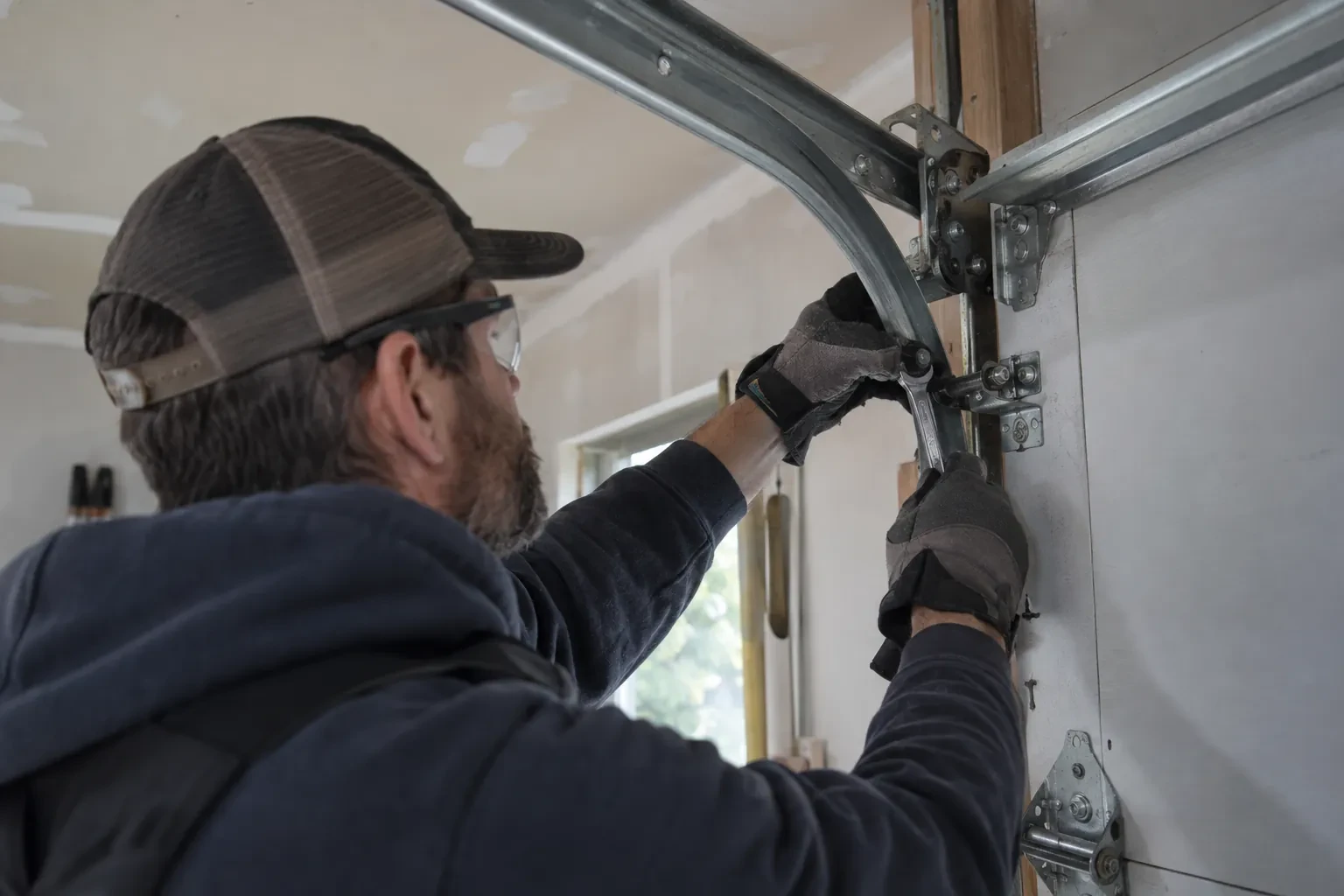
Garage Doors
Advice from the workshop
Think of this as the owner's manual the door never came with. Each guide takes one topic, explains it without jargon, and tells you what to watch for as the seasons change.
Homeowners ask
What is the balance test and why does it matter?
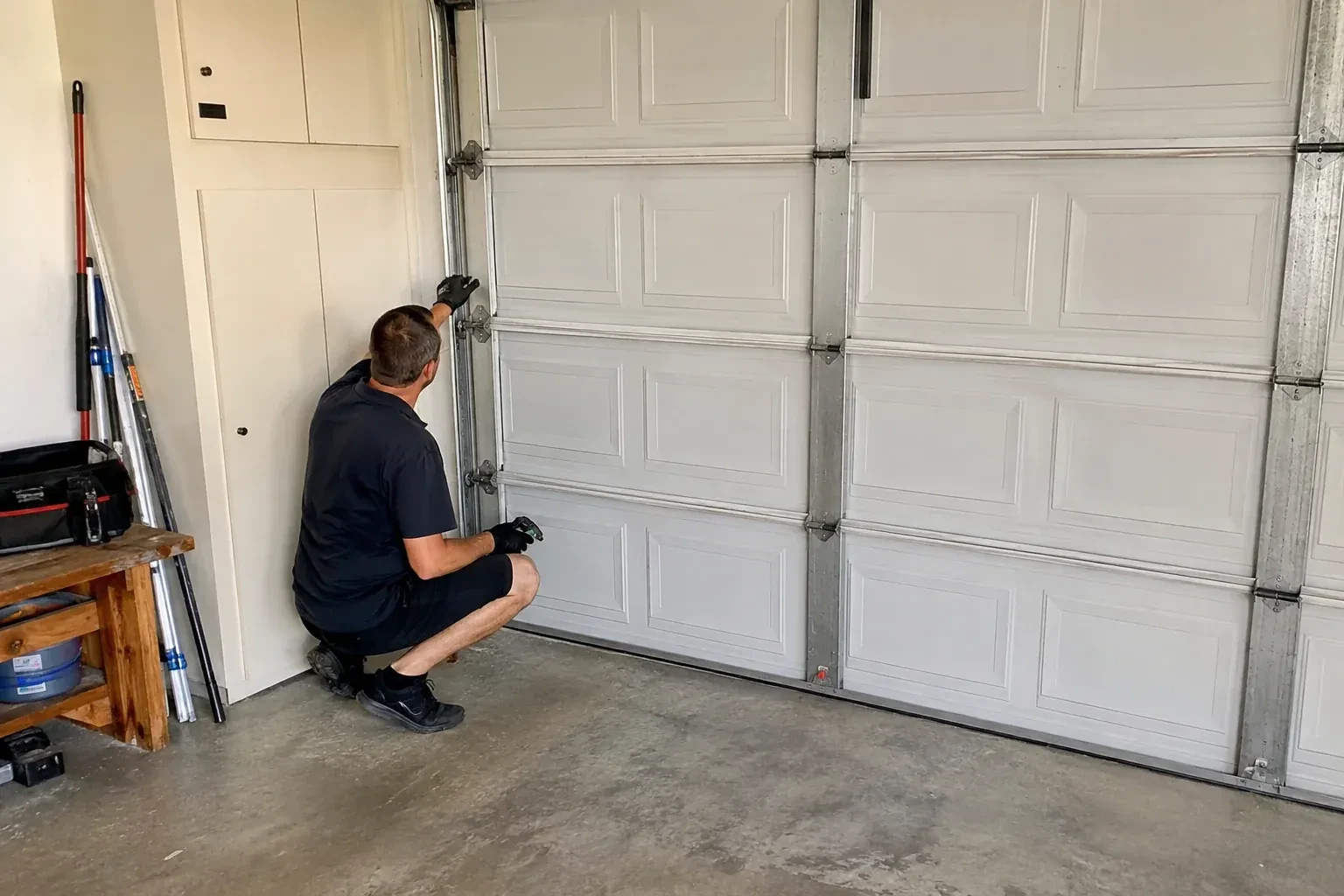
With the opener disconnected, the door is lifted by hand. If it moves with light effort and stays put at waist height, the springs are carrying its weight as designed. If it drifts up, sinks or feels heavy, the springs are out of step with the door and the opener has been doing the lifting. That strain shortens the opener's life and can defeat its reversal settings, which is why balance is checked first.
The sensor light is blinking. What does that mean?
On most openers a steady light on each photo-eye means the pair are aligned and seeing each other, and a blinking light means the beam is interrupted or the sensors are out of line. Common causes are a bracket nudged by a bin or a tire, dust or salt film on a lens, low sun at a certain hour, or a chafed wire. During a tune-up the lenses are cleaned, the brackets straightened, the pair realigned and the wiring checked back to the opener.
Why does the door need a balance test after being reset?
Balance shows that the springs are carrying the door's weight so the opener only guides it. After a reset the door is disconnected from the opener, raised by hand to the halfway point and released; a balanced door holds there with little drift. If it falls or shoots up, the counterbalance needs adjusting before the opener is reconnected, otherwise the motor strains and the rollers are pushed out of line again.
Does a new section bring back the door's original strength?
A section ordered to the same specification carries the same steel gauge, core and reinforcement as the original, and it is fitted with sound hinges, new fasteners and, where the design calls for it, a strut. Combined with the alignment and balance work done at the same time, the door returns to operating the way its manufacturer designed it to. Where an original section had bowed for want of a strut, adding one leaves that part stiffer than before.
What is a threshold seal, and when is it worth adding?
A threshold seal is a rubber or aluminum-backed strip glued to the garage floor along the line where the door closes. The door's bottom seal lands on it, and its raised outer edge turns water, wind-blown debris and small visitors back toward the driveway. It earns its place where the drive slopes toward the garage, the slab sits below the apron, or the floor edge is too uneven for the bottom seal alone to meet cleanly.
Can I paint the new seal to match my trim?
Paint the rigid parts only. A wood stop can be painted before the fin is fitted or with the fin masked, and a vinyl stop needs no paint at all. The flexible fin is left bare, because paint fills it and stiffens it, and a stiff fin cracks well before its time once cold weather sets in. Seals come in a range of colours so the fin can match the trim without a brush.
Does lock work involve the springs or cables?
The lock, its bars and its guides all live on the door sections and the tracks, well away from the counterbalance, so the visit involves no winding or unloading of springs. Where a lock misses its slot because the door hangs crooked or sits high, the door's balance or a cable may be part of the story, and the technician points that out so it can be dealt with properly.
How do winter and road salt affect rollers?
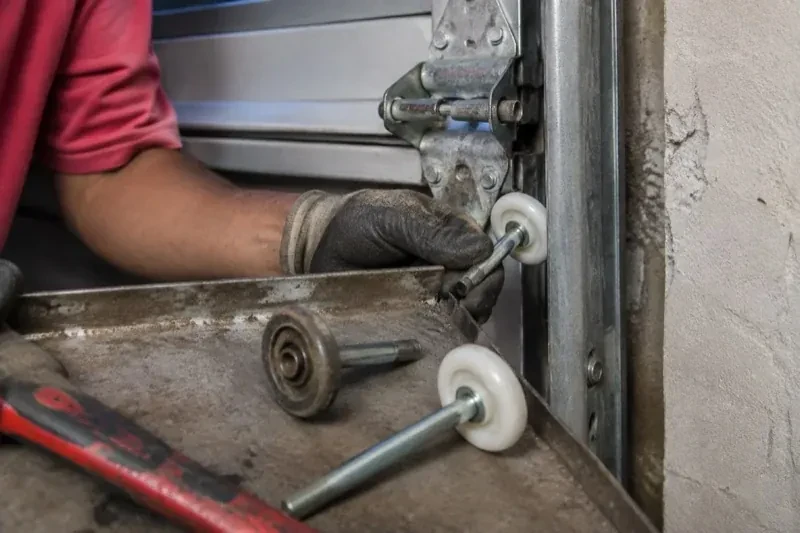
Slush carried in on the tires collects in the foot of the track and refreezes overnight, so wheels skid across ice ridges instead of turning and wear flat spots; cold thickens old grease so bearings stiffen and the opener strains; and the salt in that slush corrodes steel stems, bearings and the bottom brackets first. This is why the lowest rollers often look the worst and why sealed-bearing nylon rollers, and a clear, dry lower track, are recommended for garages that see a car every winter day.
What happens during a hinge replacement visit?
The opener is disconnected and the door left closed. The technician inspects every hinge, roller and screw hole and explains what was found. Worn hinges are then changed one at a time with parts of the same number and gauge, tired holes are re-anchored, and rollers are renewed where needed. The door is run by hand to check the panels fold cleanly and the fit against the jambs, balance is tested, and the opener is reconnected and its safety reversal tested.
What happens during the visit?
The opener is disconnected and the door clamped. The technician identifies the track type and layout, checks each vertical run for plumb, spacing and fixing, looks at the jamb wood, the curve, the flag brackets, the horizontal runs and their hangers, and how each roller sits. Damaged pieces are dressed or replaced, brackets refixed into sound wood, the geometry reset, rollers reseated, springs re-tensioned if they were unloaded, and the door balanced and the opener tested.
Is cable work different on a door with extension springs?
The idea is the same and the route is different. Instead of winding onto a drum, the cable runs from the bottom bracket up over a pulley at the front of the track, back over a pulley on the spring, and to an adjusting clip. The technician relaxes the springs by opening and clamping the door, replaces worn pulleys along with the cable, sets both clips the same, and confirms a containment cable runs through each spring.
Will the new spring look the same as the old one?
Not necessarily, and that is fine. The paint colour on the winding cone or coil is a code that identifies wire size and wind direction, and different suppliers use their own schemes, so a matched replacement can carry a different colour than the spring it replaces. What matters is that the wire size, diameter, length and wind direction suit the door's weight and height, which is confirmed by the balance test.
What does the paint colour on the end of the spring mean?
Manufacturers dab a colour on the end coil to indicate the spring's weight rating, which is a handy starting point. It is not the final word: a faded or repainted end coil tells you little, and the pair on an older door may have been a near match rather than the right one. The technician treats the colour as a hint and confirms the rating from the door's measured weight and the spring's own dimensions.
The door was fine until a power cut. Why is it heavy now?
During a power cut the door is often released and moved by hand for the first time in years, and what people discover is a door that had already grown heavy while the opener quietly covered for it. The outage did not change the springs; it revealed them. A balance check confirms what the door weighs against what the springs give, and resets them to match.
Why will the door close only while I hold the wall button?
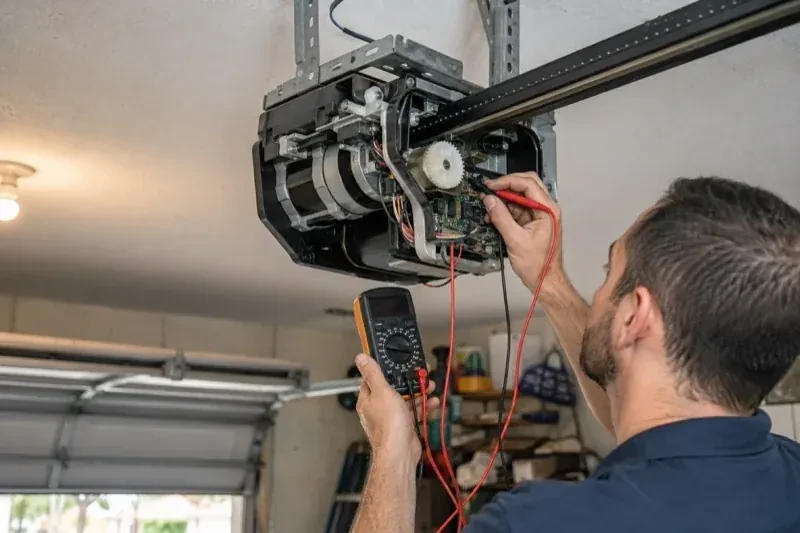
That is a built-in behaviour, not a new fault. When the sensor circuit reports a problem, most openers refuse to close from a remote but allow a constant-pressure close from the wall control, because someone standing there can see the doorway. It is a strong signal that the photo eyes or their wiring need attention, and once the sensor issue is corrected the door closes normally from every control again.
Is a chain drive supposed to be this noisy?
A chain drive has a steady mechanical sound that a belt drive lacks, and that much is normal. What is not normal is change: a slap along the rail from a loose chain, a clack at one spot from a worn sprocket tooth, grinding from the head as a gear wears, or a rattle from hangers or a header bracket that have loosened. Each of those has a fix, and a repaired chain drive should sound the way it did when it was new.
How long does a belt-drive repair take?
A tension adjustment with the safety tests is a short visit. Replacing the belt, trolley or idler pulley, then phasing the motor, relearning limits and running the reversal tests, is usually an hour or two. A gear-and-sprocket kit at the motor head takes longer because the head unit is opened. If the balance test turns up spring work, that is agreed as a separate job with its own time.
How should I prepare the garage before the visit?
Move vehicles out onto the driveway, bring any car that needs its built-in buttons programmed, and clear the floor under the door's path and the area beneath the old opener and rail so ladders can stand safely. Take bikes and boxes off shelves that hang near the ceiling line. Know where the electrical panel is, and have the phones that will use the app on hand with your Wi-Fi password.
What tests are done before the technician leaves?
Two, and you are invited to watch. With the door closing, an object is passed through the beam and the door has to halt and climb back to the top. A 2x4 laid flat beneath the door's centre comes next; closing onto it must make the door back off on contact. The door is also run from the wall control and a remote, the opener's warning flashes are confirmed gone, and both sensor lights are shown steady.
Why does my remote work only when I am right under the door?
Short range is a signal problem, not a pairing problem. LED bulbs in the opener's own sockets can emit radio noise that swamps the receiver, an antenna wire tucked into the housing cannot hear well, and a coin cell near the end of its life transmits weakly before it dies. Swapping the bulb, letting the antenna hang free and fitting a fresh cell usually restore range; if not, the receiver is checked.
My garage is detached. Will the signal reach?
Sometimes on its own, often with help. A driveway, two exterior walls and a metal-clad garage can knock a signal down to the point where the hub connects but drops offline regularly. The technician measures at the mounting spot and, where the reading is marginal, adds a small access point or extender positioned to bridge the gap, so the hub joins a strong signal from day one rather than a weak one you have to keep nursing.
Where should I grip the door when lifting it by hand?
Use the door's own handles or the gripping points built into the panel face, on the inside and outside of the door. Sectional doors are meant to have them near the bottom section and again on the second or third section. Never take hold at the joint between two sections, which closes as the door bends around the track. If your door has no handles or they have been removed, the technician can fit a pair during the visit.
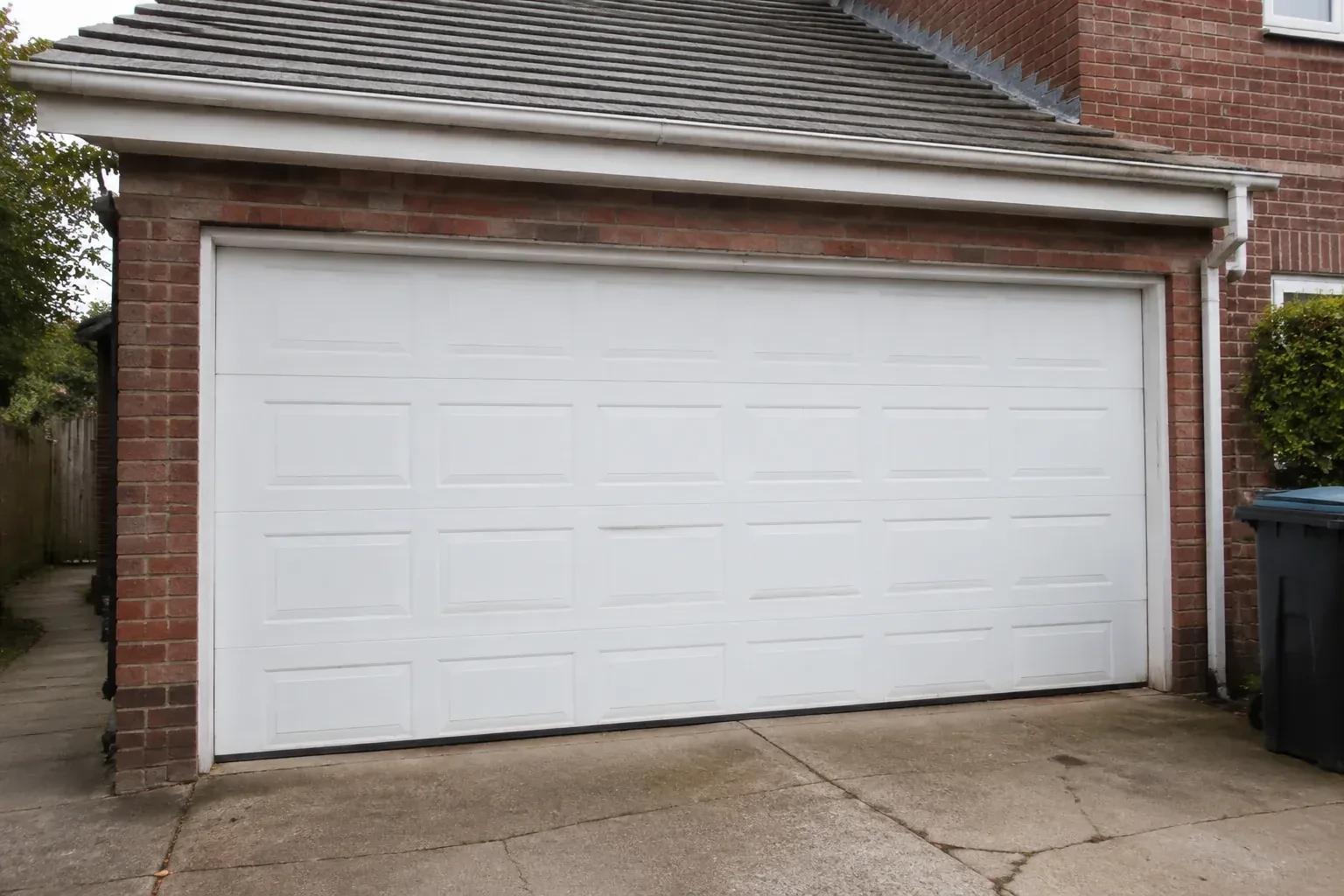
Which insulation details should I compare?
Look beyond a single thermal number. Compare section construction, insulation type and thickness, seals between panels, glazing and the perimeter weather seals included in the proposal. How often the door opens and how well it fits the floor also influence comfort. Product literature provides the appropriate performance information for the exact model.
Can I keep the garage door opener I already have?
Possibly, after its identity, condition and compatibility are checked against the new door. The installer reviews door height and weight, track layout, reinforcement, attachment geometry, travel limits, controls and safety sensors. The door is balanced and operated manually before any opener is connected. If the existing unit fits the documented requirements, it can be integrated and tested as part of the installation scope.
Why are both positive and negative pressures important?
Wind can push a closed door toward the garage or create suction that draws it outward. Those actions load sections and hardware differently, including rollers, hinges, tracks, and attachments at the jambs. A suitable configuration addresses both directions using the pressure values and details established for the project rather than treating reinforcement as resistance in only one direction.
What happens if the garage floor is not level?
The survey measures the variation and determines how the bottom section and seal can meet it. A flexible astragal can accommodate modest changes, while a pronounced crown, dip or damaged threshold may call for related floor or threshold work. The door itself is installed level for reliable travel; the sealing approach is selected separately to follow the practical shape of the floor.
Will my current garage door opener work with the glazed door?
Possibly, after its model, condition, mounting arrangement and compatibility are checked against the selected door. Door size and weight, top-section reinforcement, travel path and control requirements all matter. The counterbalance system carries the door weight; a compatible operator then controls a balanced door. Settings are established for the new assembly and its safety functions are tested during commissioning.
How does an uneven garage floor affect the new door?
The bottom weather seal can compress over modest variation, but it follows the slab rather than making the slab level. The installer measures the high and low points and sets the door from the established finished floor. Larger variation may leave uneven seal contact or alter the clear opening height. Confirming coatings, thresholds and drainage slopes before installation gives everyone the same reference surface for fit and travel.
How should a repaired door be lubricated?
Use the product and interval specified by the door manufacturer. Hinges, roller bearings, shaft bearings and springs may have defined lubrication points, while track generally benefits from being clean rather than coated with material that holds grit. High-use openings may need a different schedule. The service record can note what was applied and where for consistent future care.
How are salt and winter moisture handled?
The lower guides, sill, fasteners, bottom seal and sensor faces are checked for ice, grit and corrosion. Buildup is cleared with methods suited to the material, drainage issues are noted and damaged sealing parts can be renewed within scope. The door is tested after cleaning because cold-weather resistance can exist alongside an alignment or balance problem.
When is high-lift conversion a practical choice?
It is practical when an existing sectional opening has meaningful wall height above it, enough ceiling depth for the horizontal run, suitable support conditions and a clear reason for gaining overhead room. The door, counterbalance and operator must be designed together. A measured feasibility plan confirms the usable clearance before installation becomes the next step.