Springs · Toronto
Extension Spring Replacement
Open the door by hand and it drifts back down on its own, a little at first and then all at once.
In plain words
A spring visit follows a fixed order, so you know what to expect. The technician releases the opener, raises the door fully and clamps it, because an extension spring is at its slackest with the door open. Then both springs, the pulleys, cables, hangers and containment cables are inspected and the door is weighed. Old springs come off, new ones go on with containment cables threaded through, cables are routed over the pulleys and both sides are hooked at the same setting. The clamps come off, the door is balanced by hand, and only then is the opener reconnected, adjusted and put through its reversal tests.
How the visit goesThe opener groans on the way up and the door slams the last foot on the way down, hard enough to rattle the windows. The motor is the same one it always was; something in the springs has stopped doing its share.
Extension Spring Replacement
How the visit goes
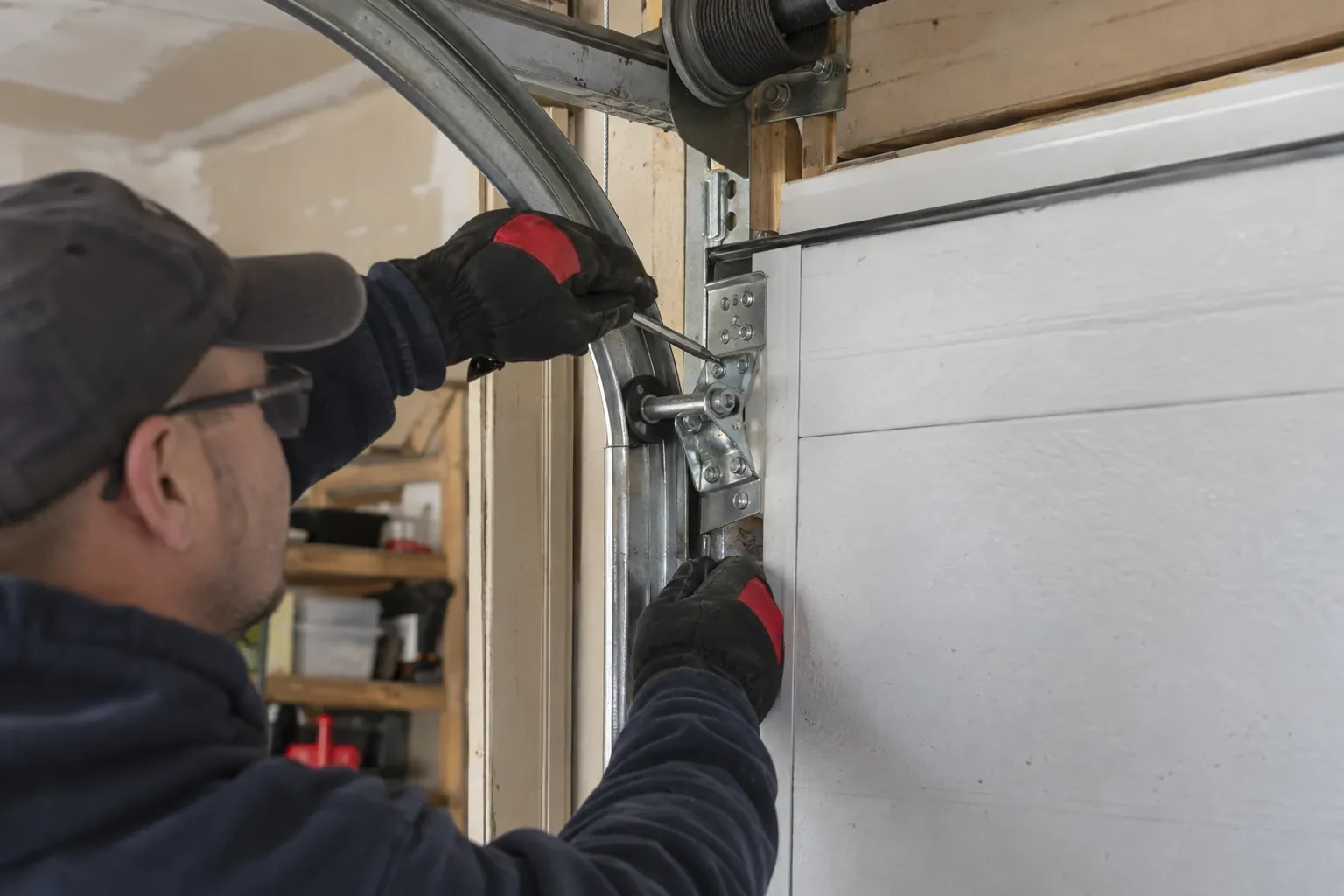
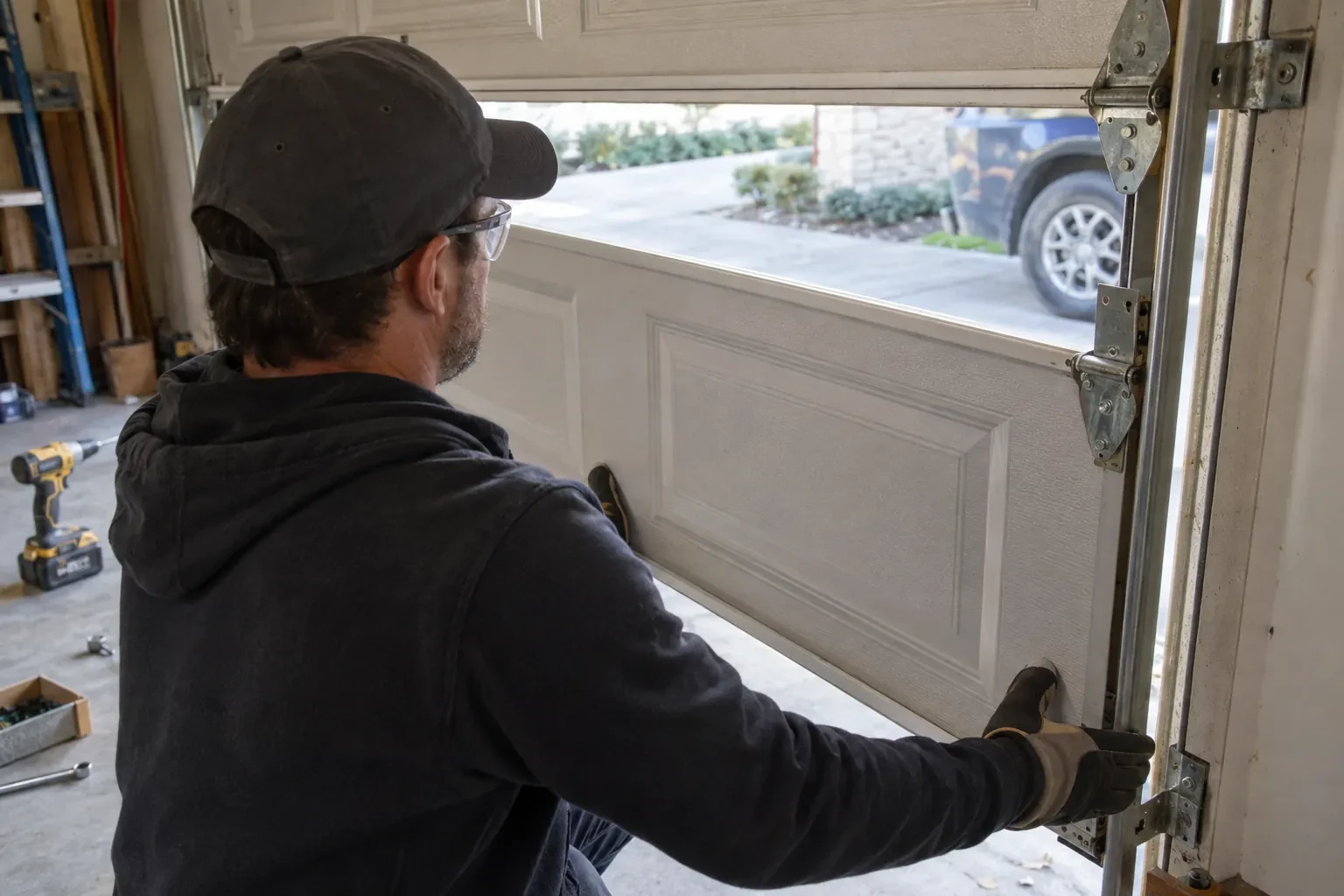
Securing the door with the springs slack
An extension spring is stretched tight when the door is closed and nearly relaxed when the door is fully open, so the first move is to get the door up. The technician pulls the opener's release, raises the door by hand if it will go, and clamps both vertical tracks below the bottom rollers so the door cannot come down. If a broken spring has left the door stuck partway, it is lifted and supported with the weight taken on clamps and props before anything else is handled. With the door held open, the springs, pulleys and hooks can be examined and removed like ordinary hardware, which is the whole reason the sequence begins this way.
Bringing the opener back into step
The opener is the last thing touched. Once the door balances by hand, the trolley is reconnected and the door run through several full cycles under power while the technician watches the cables ride their pulleys and the springs stretch evenly. Because the door is now lighter to move than it was on tired springs, the opener's force and travel settings are reset to suit; a force setting left high would push a balanced door too hard. Then the reversal checks are done in front of you: a block laid flat under the centre of the door, which the door must touch and reverse from, and a hand passed through the photo-eye beam while the door closes.
A clear threshold and an honest opener
Two habits protect the new springs from the shocks that shorten a spring's life. The first is the floor: a door that comes down on a bin, a bike wheel or a ridge of packed snow stops short while the springs and cables are still pulling, and the jolt can throw a cable off its pulley. Keep the opening clear and scrape the ice ridge off the threshold before running the door in winter. The second is the opener's force setting. It was set for the newly balanced door; if the door ever seems to need more push, that is the springs asking for attention, not a reason to turn the force up.
Extension Spring Replacement
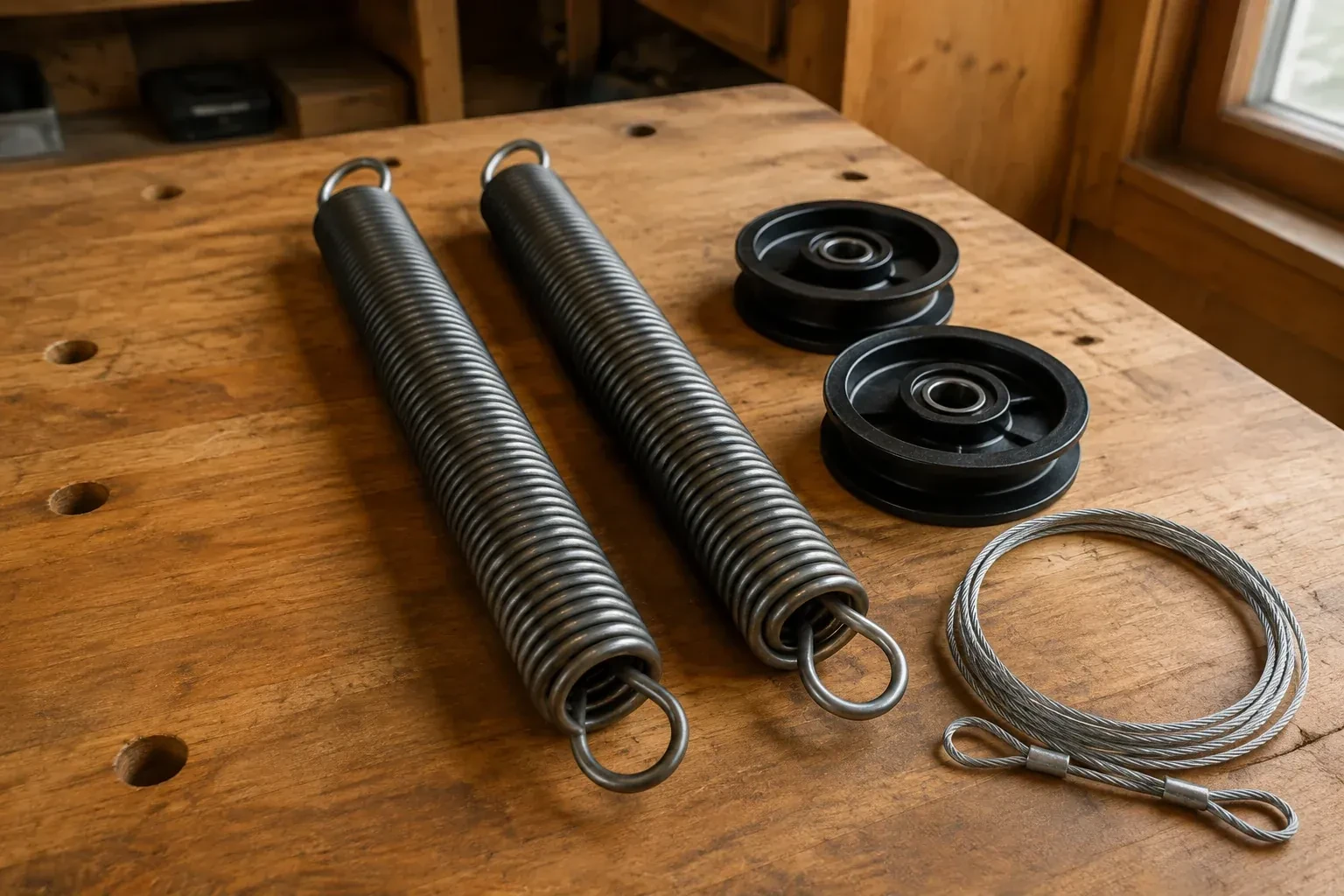
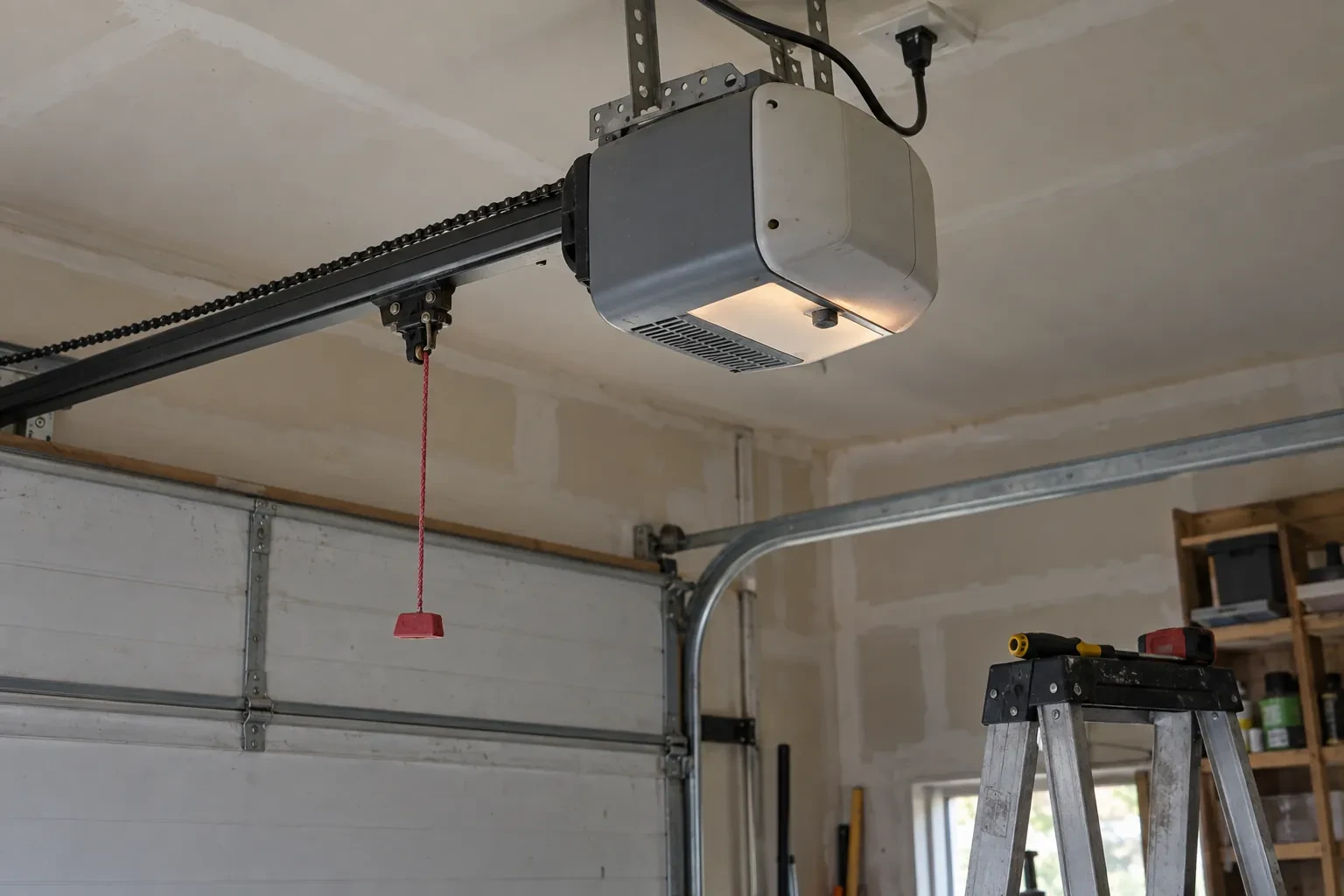
In the van
Track clamps or locking pliers
Extension springs, matched pair
Containment (safety) cables
Pulleys (sheaves) and forks
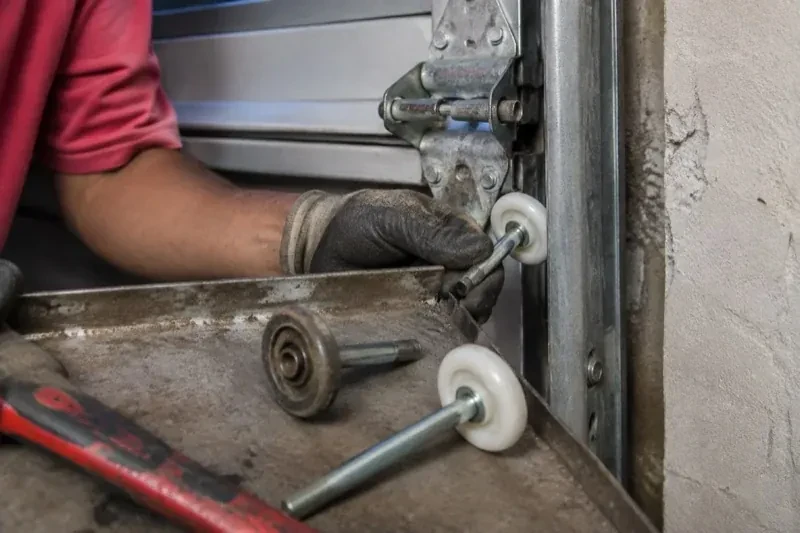
Replacement rollers and hinges
Extension Spring Replacement
What affects the quote
Time of the call
An evening, weekend or holiday visit costs the same amount as a weekday daytime appointment for an extension-spring replacement. The technician confirms the exact figure once the springs, cables and door weight have been checked on site.
Getting the van to the garage
A detached garage down a shared laneway, a rural property or a building with the bay behind a gate takes more time to reach and set up in, and the quote allows for that.
Corroded fasteners
In an unheated garage the bolts through pulley forks and hanger brackets rust solid; freeing or cutting them and fitting new hardware takes time and shows in the parts list.
What to have ready
- Is a car parked inside that will need to come out first?
- Is there a thin cable running through the middle of each spring?
- Is it a single or a double door, and what is it made of?
Extension Spring Replacement: questions
QuestionsWhat does the paint colour on the end of the spring mean?
Manufacturers dab a colour on the end coil to indicate the spring's weight rating, which is a handy starting point. It is not the final word: a faded or repainted end coil tells you little, and the pair on an older door may have been a near match rather than the right one. The technician treats the colour as a hint and confirms the rating from the door's measured weight and the spring's own dimensions.
What happens during the visit?
The technician releases the opener, opens the door fully and clamps it so the springs go slack, then inspects springs, pulleys, cables, hangers and containment cables and weighs the door. The old springs come off, a matched pair goes on with containment cables through them, the lift cables are routed over the pulleys and the two sides are set to matching hook positions. The door is balanced by hand, the opener reconnected and its reversing tested with you watching.
What information helps when I call?
Whether the springs run along the tracks or sit above the door; whether one is broken, hanging loose or just looks stretched; whether the door is closed, open or stuck partway and level or crooked; roughly how wide and tall the door is and what it is made of; and whether there is a cable running through each spring. A photo taken from inside with the door closed answers most of that at once.
Related services
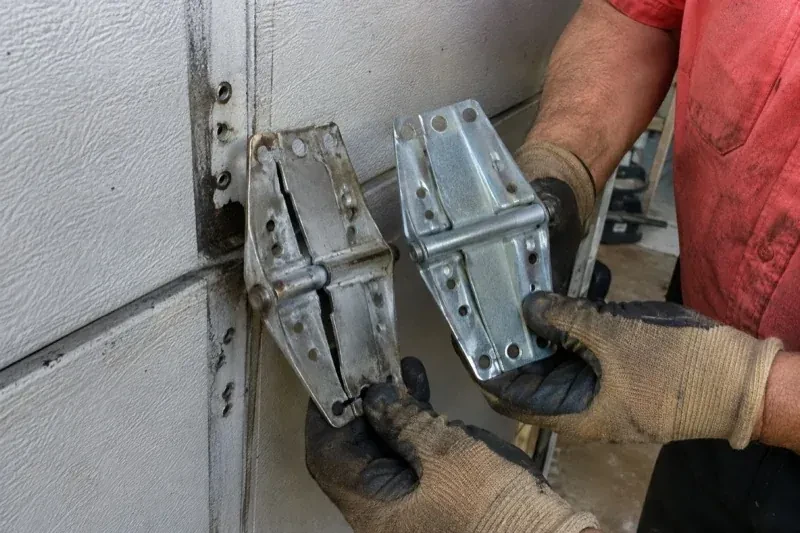
- Garage Door Hinge ReplacementThe roller at the top of the second panel is leaning outward and only half of the wheel is still in the track.
- Garage Door Track Repair or ReplacementThe door has started rubbing the frame on the left, leaving a shiny stripe down the weatherstrip.
- Garage Door Cable ReplacementThe cable has wrapped itself around the shaft above the door instead of sitting on its drum.