Garage Doors in Wexford Heights, OntarioButton, keypador phone.
Some households in Wexford Heights want a keypad by the door for the kids, a second remote for the other car, and an app that says whether the door was left open. We set up each of those, walk you through them, and leave the paperwork so the next person can follow it too.
Some households in Wexford Heights want a keypad by the door for the kids, a second remote for the other car, and an app that says whether the door was left open. We set up each of those, walk you through them, and leave the paperwork so the next person can follow it too.
Open, close, repeat, for years.
Winter is when garage doors in Wexford Heights fail most, so we prepare for it. Cold-rated lubricants, bottom seals that stay soft in the frost, spring tension checked before the freeze and opener force adjusted for a stiffer door. A door serviced in the autumn is a door that opens in January.
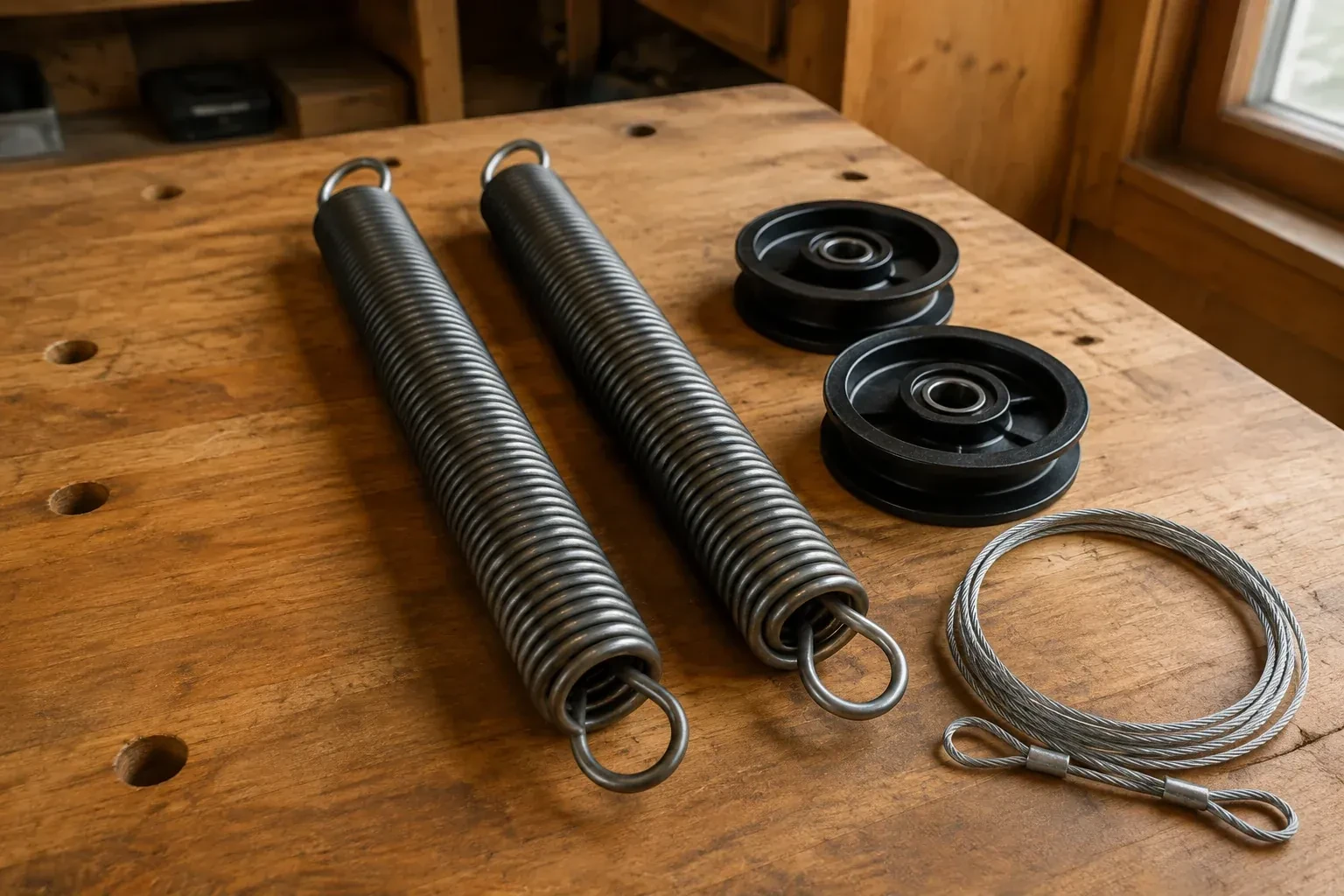
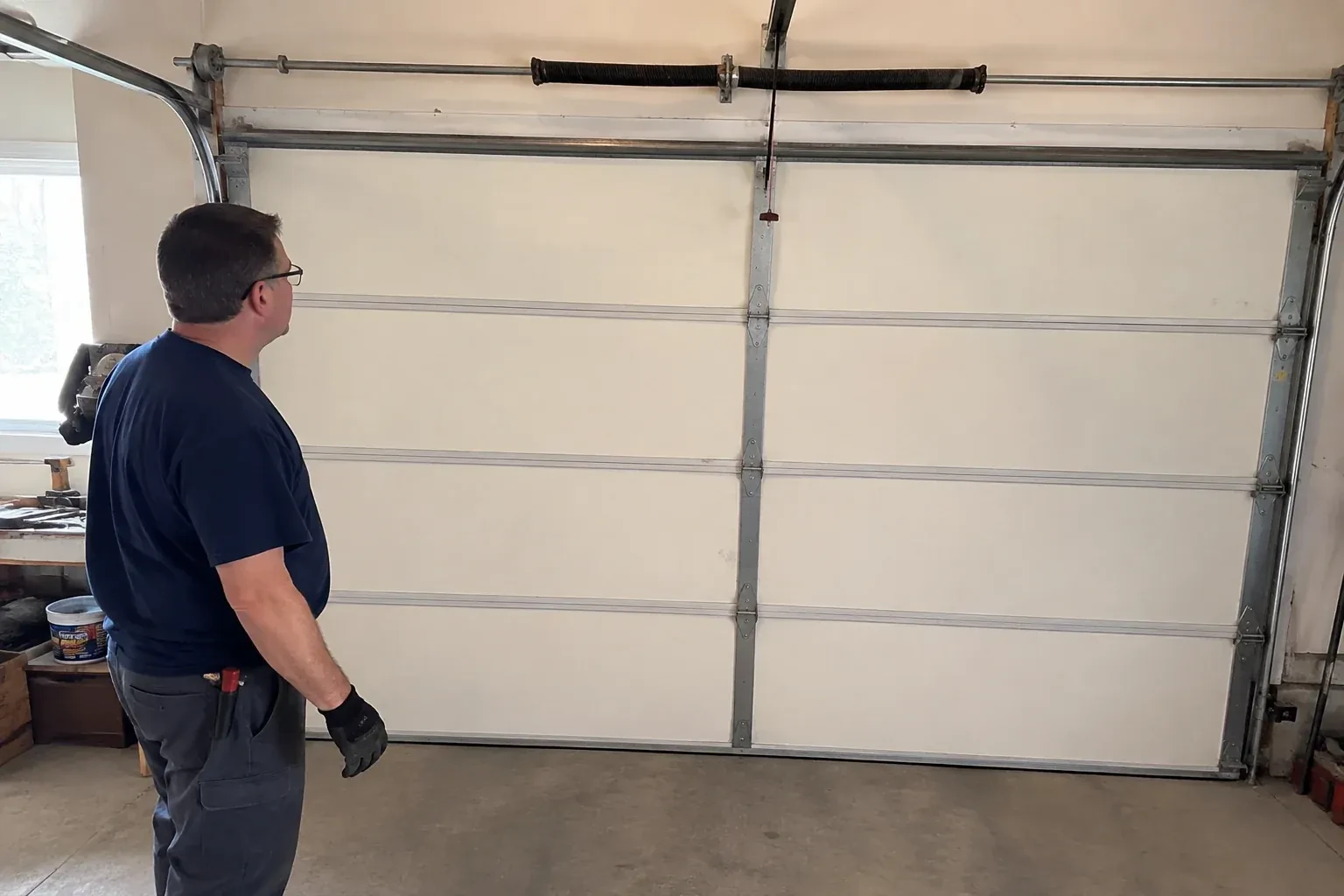
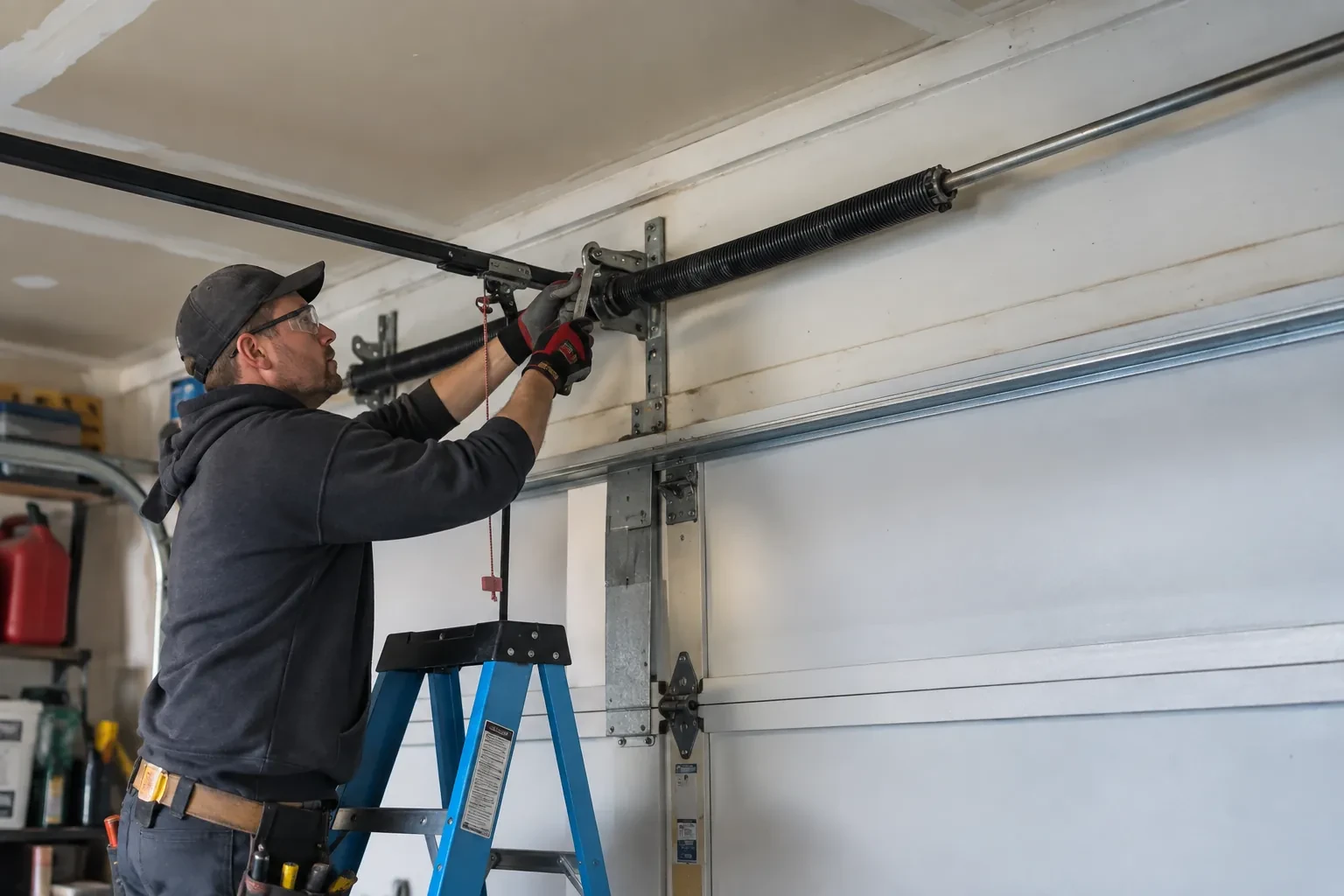
Households in Wexford Heights know the sound of a spring letting go: a bang from the garage, then a door that will not lift. Our technicians handle torsion and extension springs with winding bars, clamps and the patience the job deserves, always matching the spring to the door's weight. The door is balanced afterwards so the opener is lifting a door, not fighting one.
13years in business
24/7open every day
Told before touched. Nothing is adjusted or replaced until you have heard what we found and agreed with the plan for it.
Neat work, neat exit. New parts fitted cleanly, old ones removed, the floor and door wiped down. The garage is yours again the moment we leave.
Room to choose. We give you the practical picture and step back. Repair now, plan a replacement, or wait and watch: your call.
Arrange a garage door check for your Wexford Heights business.
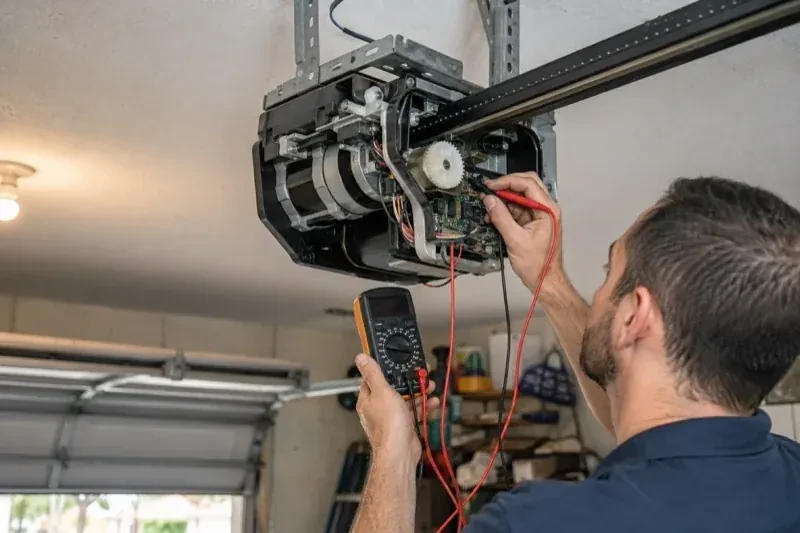
The list below is what a garage door technician in Wexford Heights actually does in a week: replaces springs and cables, resets doors that jumped the track, fixes and replaces openers, programs remotes and keypads, changes seals and rollers, tunes and balances doors, and installs new ones.
About 58% of homes in Toronto were built in 1980 or earlier, according to the 2021 Census.
Older homes
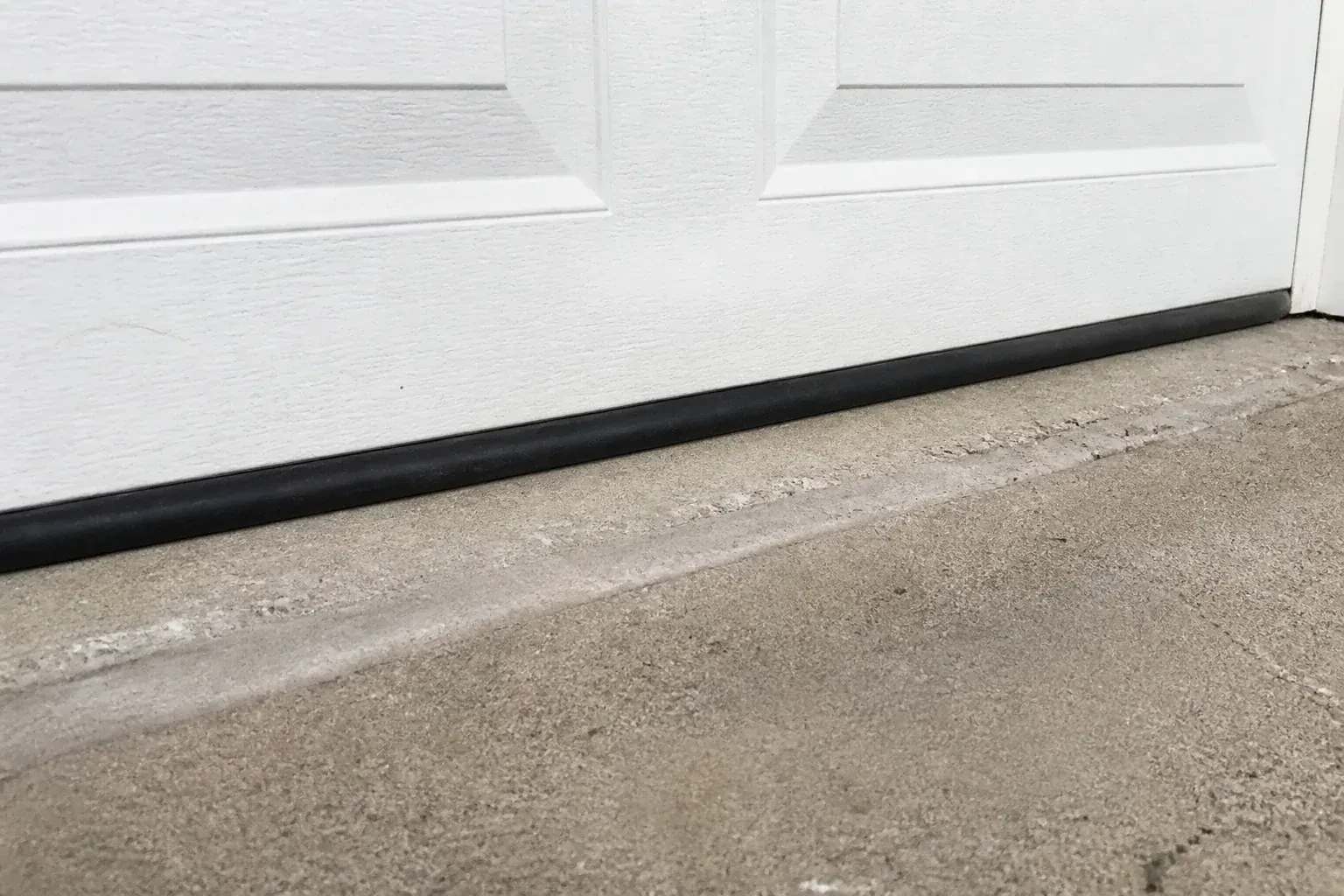
Decades of freeze and thaw work on the concrete apron in front of an older garage, and an uneven floor means the bottom seal meets a gap on one side. A thicker seal or an adjusted threshold closes it and keeps snow and cold air out.
Single-detached houses make up about 23% of homes in Toronto (2021 Census).
In denser housing the garage door is frequently the main entrance to the home and sits close to the living space, so a door that closes fully and locks properly matters for security. We check the closing force, the lock and the opener's stored codes on every visit.
End bearings and the centre bearing let the torsion shaft turn freely. When they seize, the cables squeal and the spring works against friction it was never meant to fight. Fresh bearings are a small job that changes how the door feels.
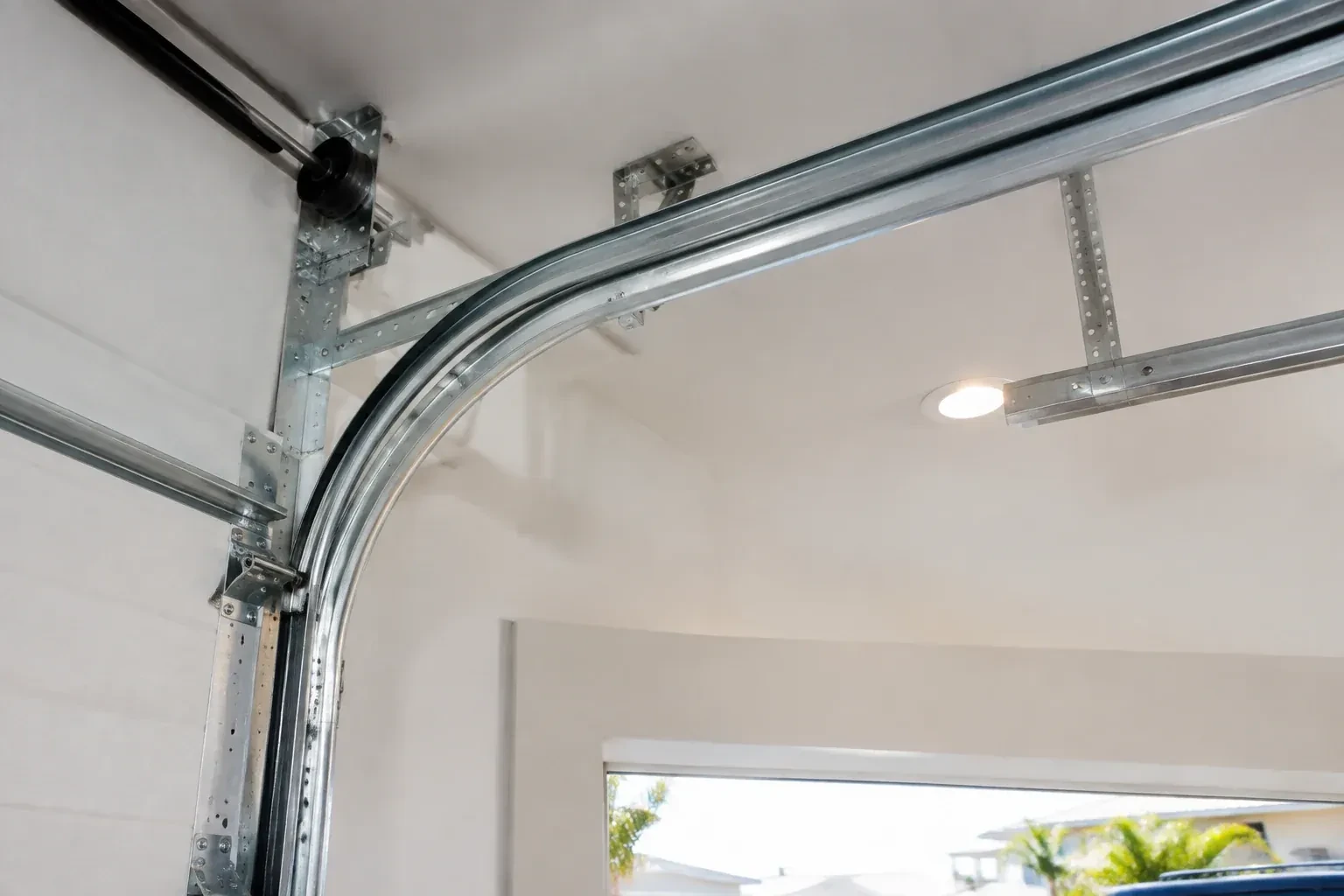
Every installation includes the parts nobody sees: the perimeter seal that stops the wind, the threshold that keeps water out, the struts that hold a wide door rigid and the safety cables on extension springs. We fit all of them.
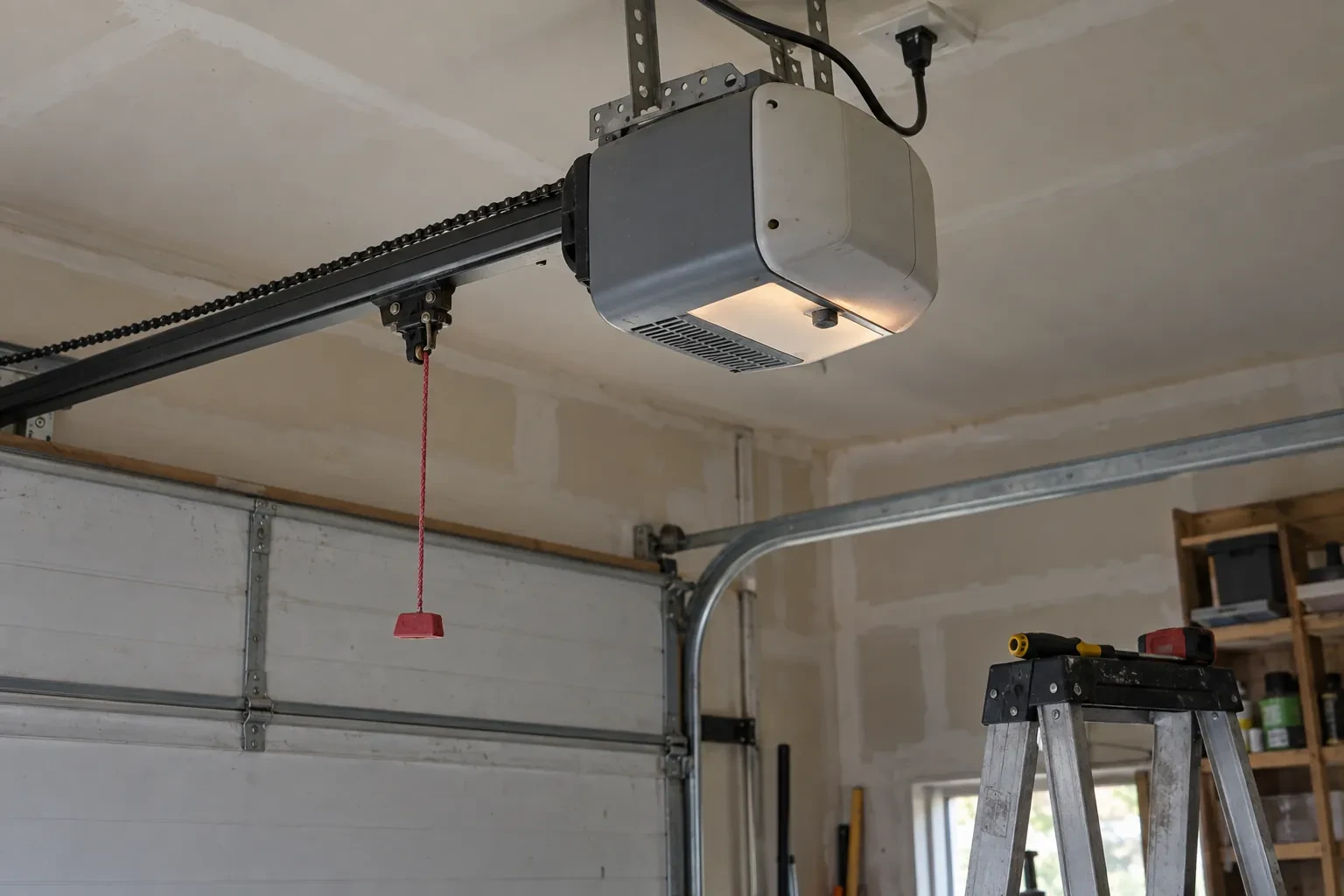
The motor runs, the chain rattles along the rail, and the door does not move a millimetre. You notice the little carriage sliding back and forth on its own.
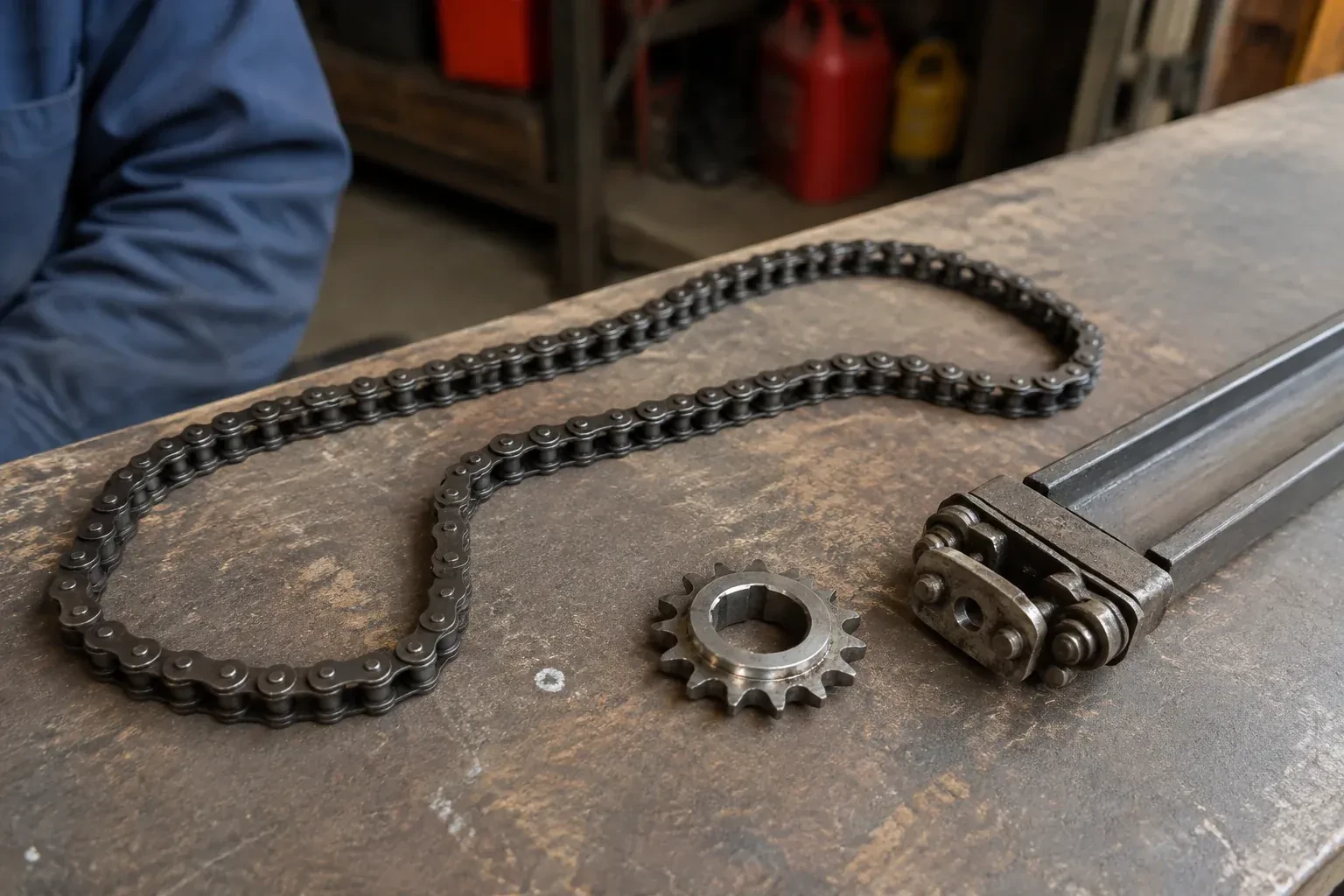
The chain in the detached garage went orange with rust over the winter, the links are stiff, and the opener strains and groans to pull the door up. By afternoon, once the garage warms, it behaves almost normally.
The door used to glide up with a soft hum. Now there is a sharp clack every second or so, and if you stand underneath you can see the belt sagging below the rail and slapping it on the way up.
You swapped the old wooden door for a heavier insulated steel one, and the twenty-year-old opener that was kept has never settled. It strains on the way up, stops partway on cold mornings, and the rail shudders with every cycle.
It is February. You come down in the morning and the garage door has stood open all night; the car is frosted inside, the furnace has run without a pause, and the pipe in the shared wall is your first worry.
Halfway up, the door lets go of the opener with a clunk and sinks back to the floor while the trolley carries on to the top alone. It has happened three times this month, and each time the release lever is found half-cocked.
WhyWhat comes back is a door that moves as a single piece.
The home inspector's report on the house you are buying flags the garage door: extension springs with no safety cable running through them, coils showing rust, and a door that sank when he lifted it partway.
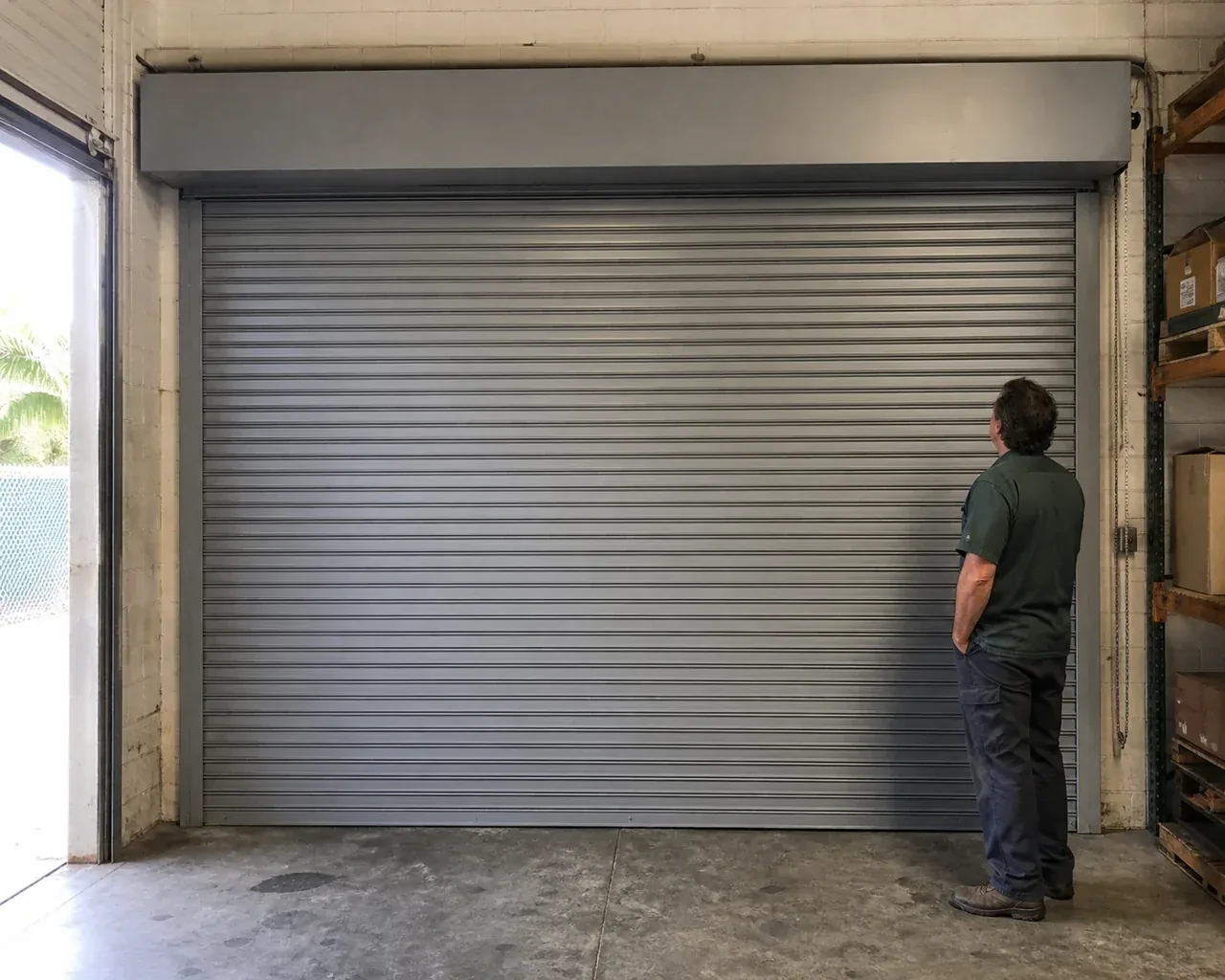
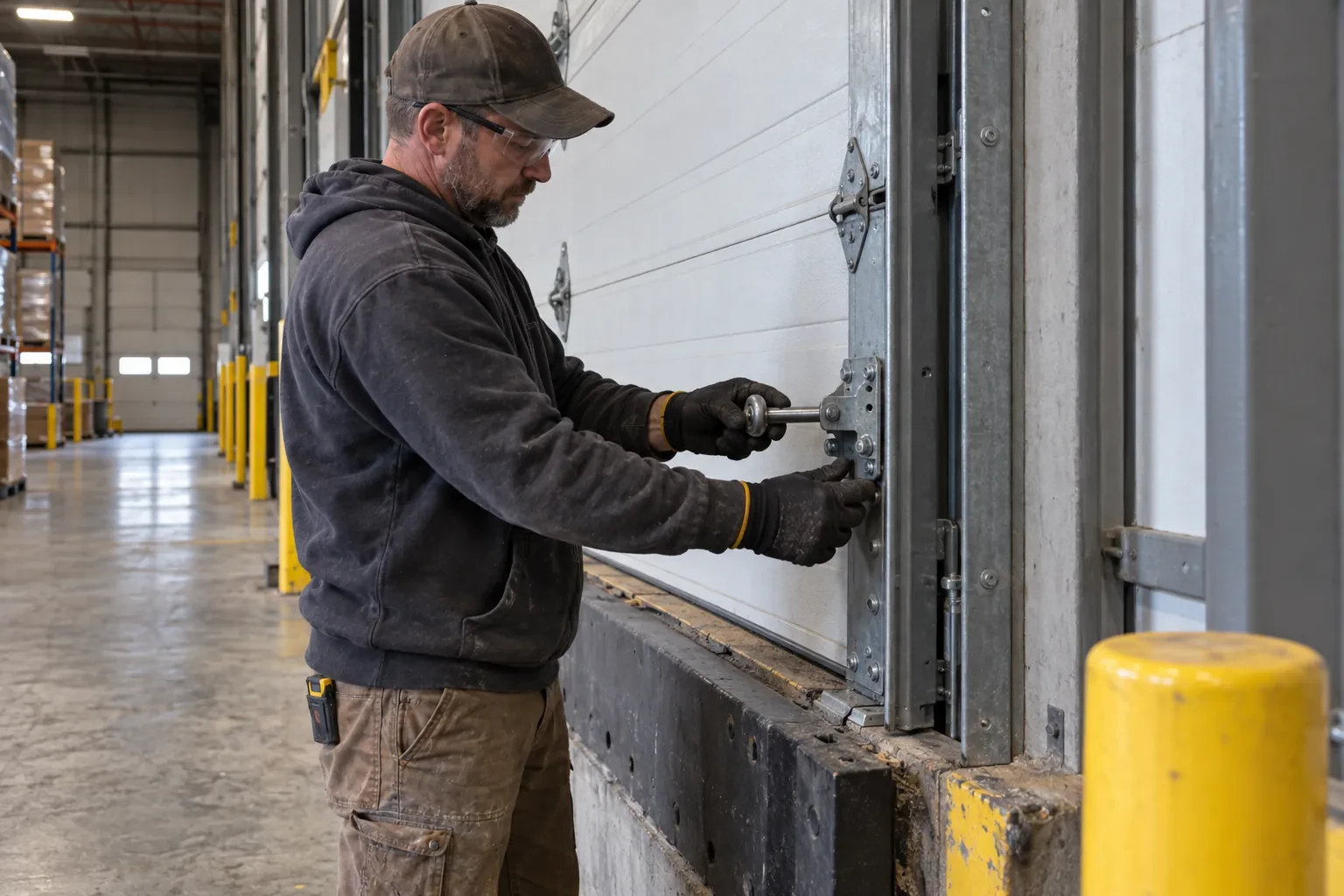
WhyCommercial rolling door repair treats the opening as one connected machine rather than a loose collection of parts.
An entrance. Not an afterthought.
1/10Garage Door Manual Lock Repair
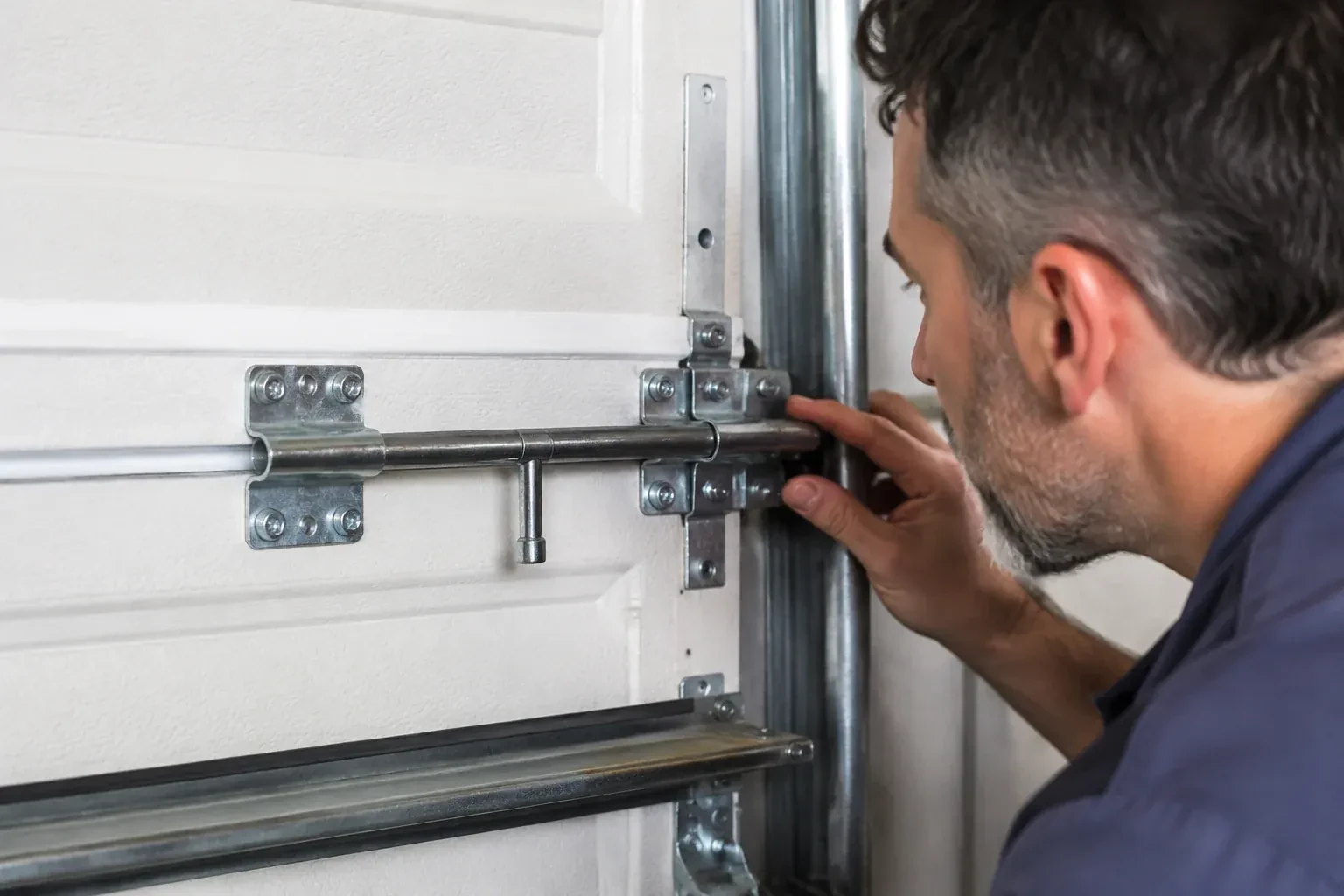
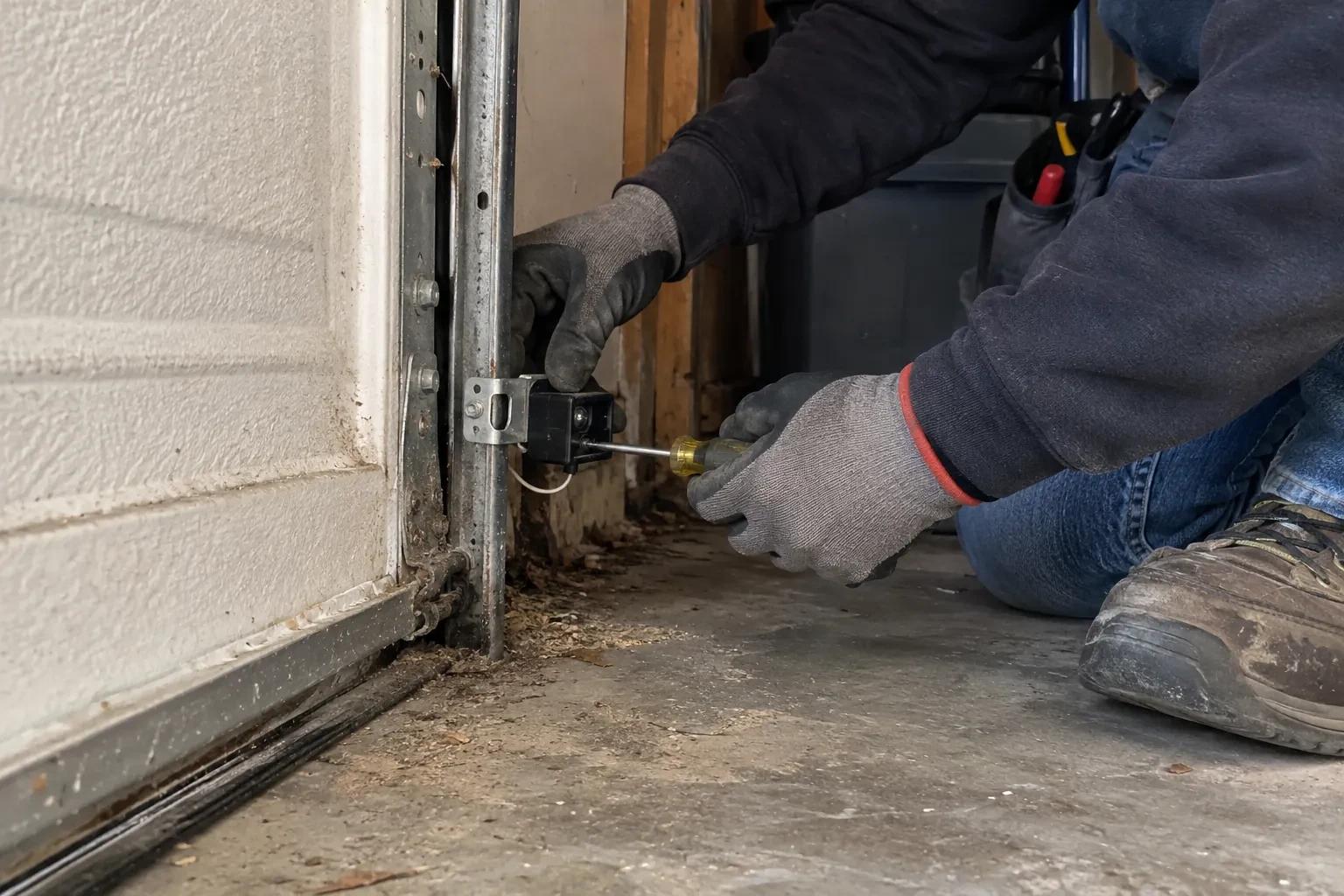
You have just moved in. The garage door carries a proper keyed handle on the outside, but no key came with the house, and the inside slide is painted over. You would like to be able to use it.
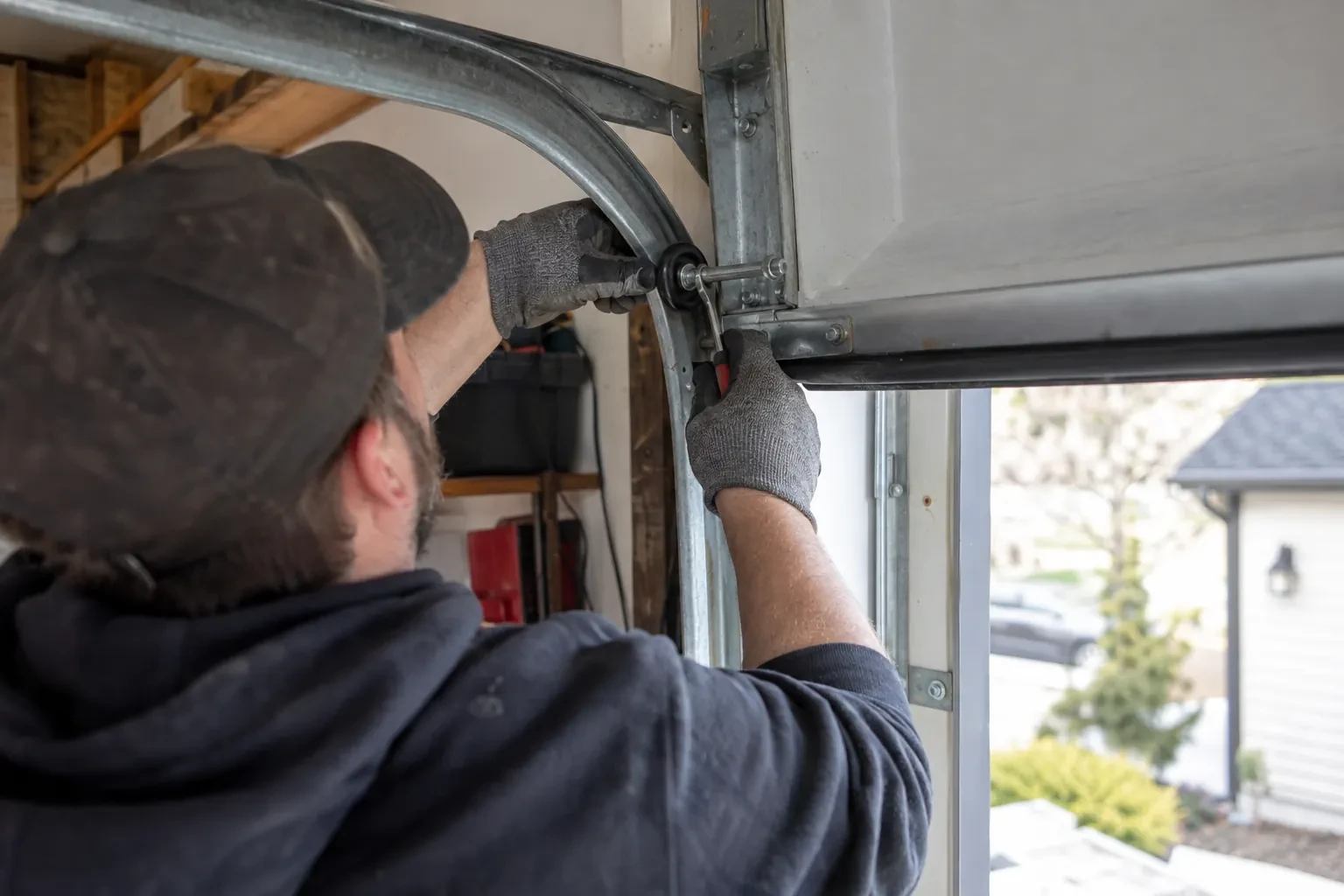
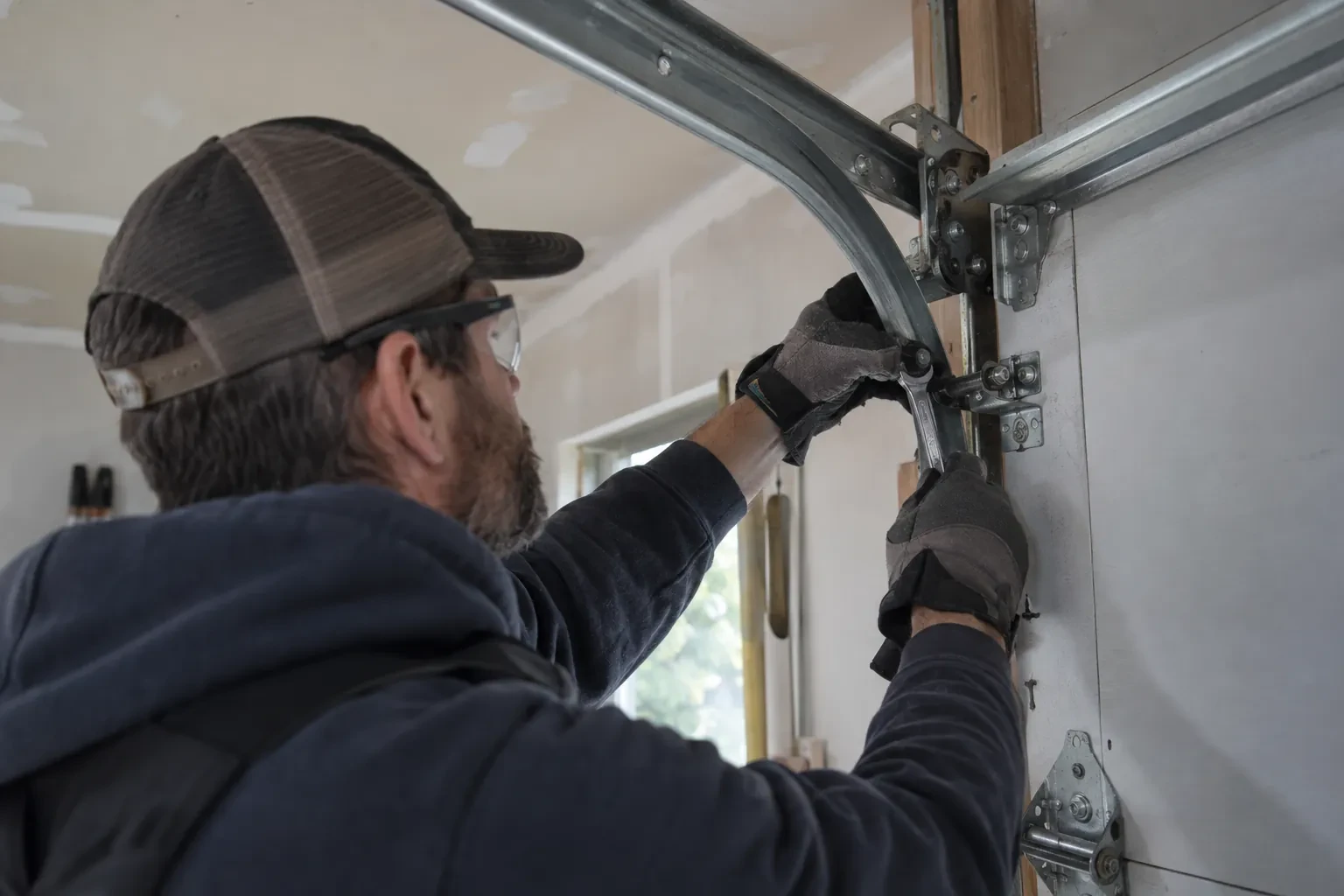
Halfway up, the door hesitates and the opener strains before it carries on. Pulled by hand with the opener released, you feel the same catch at the same height, as if a wheel is dragging instead of turning.
Every time the door goes up there is a sharp pop from the same spot, about a metre off the floor, and the whole door gives a little shudder. Come back down and it happens again at exactly the same place.
The home inspector's report on the house you are buying flags the garage door: extension springs with no safety cable running through them, coils showing rust, and a door that sank when he lifted it partway. The seller has never had it looked at.
Someone replaced the springs a while back and the door has bounced at the top ever since. It slams open against the stops, then creeps down a few inches, and the opener trolley rattles because the door is pushing where it should be resting.
It is a January morning and the door lifts about a hand's width, groans, and settles back down. When you pull the release and try by hand the door feels far heavier than it used to, and the bottom seal is stuck hard to the slab.
There are no sensors at the floor at all, or a previous owner has wired the pair together up beside the motor so the beam never crosses the doorway. A home inspector has just pointed it out.
Your building designer has supplied positive and negative pressure values for the garage opening. The old door was selected years ago without that documentation, so the next step is a replacement whose full configuration can be matched to those criteria.
The operator runs and the drive chain moves, yet the sectional door hesitates near the floor. It feels unusually heavy during manual operation, pointing to a counterbalance problem rather than a simple control-station fault.
The hand chain takes far more effort than it did last month. The curtain feels heavy from the first pull, pauses around mid-travel, and settles downward instead of holding a steady position.
Why does my slide lock stop short of the hole in the track?
Because the door is not resting where it rested when the lock was fitted. A heaved or settled slab, a loosened track bracket, a flattened bottom seal, packed snow at the threshold or an opener limit set a little high all move the door a few millimetres, and a few millimetres is all it takes. The technician corrects the door's closed position or resets the guide so the bar finds its slot again.
How often should the whole door be inspected?
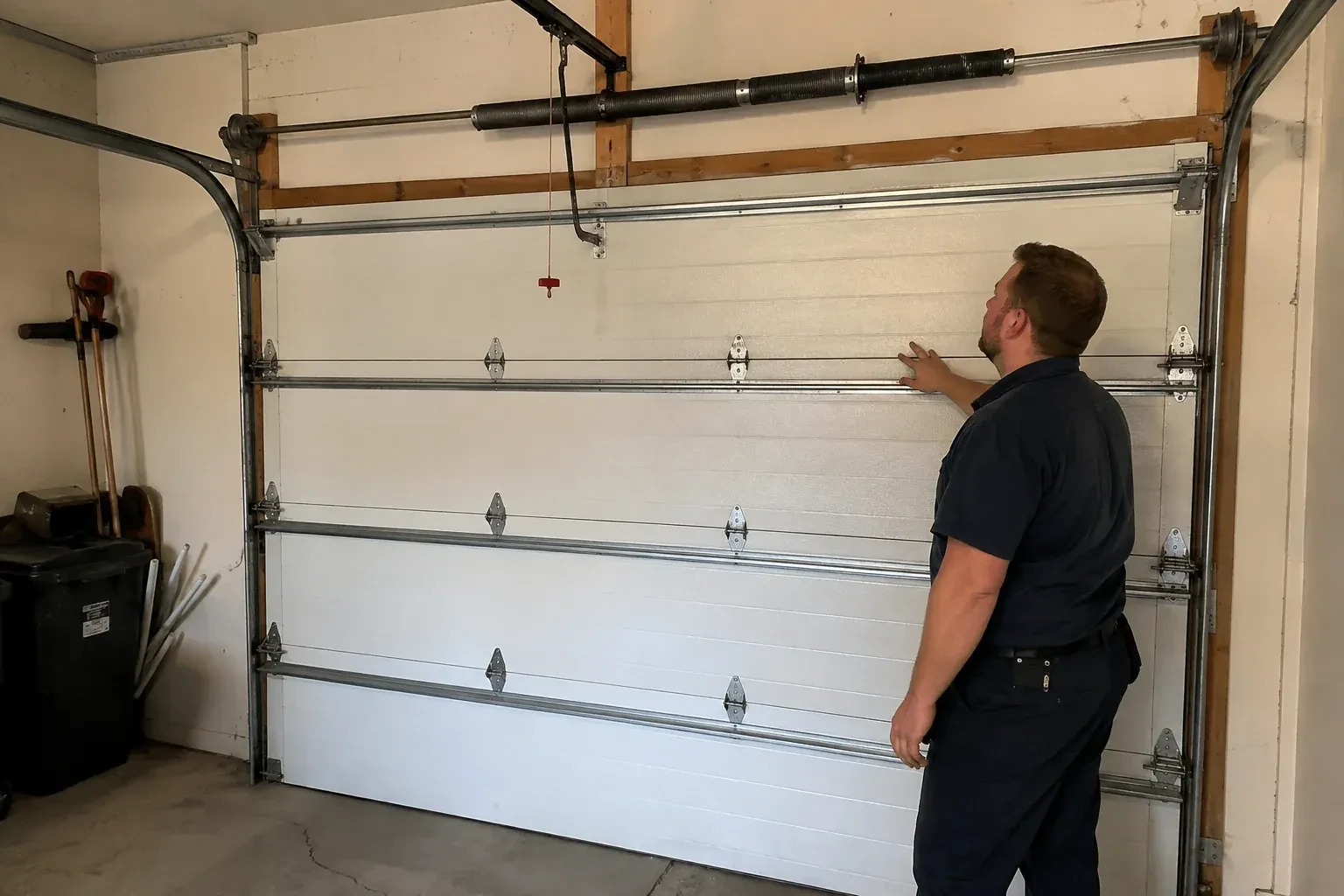
Industry guidance suggests a monthly visual and listening check by the homeowner, with the door closed and then in motion, and a yearly visit from a trained door systems technician who goes over springs, cables, rollers, hinges, track, balance and the opener's safety functions. Rollers themselves are worth a look twice a year, and they belong on the list whenever springs or cables are being replaced. A door used many times a day earns more frequent attention.
How many hinges does a typical door have?
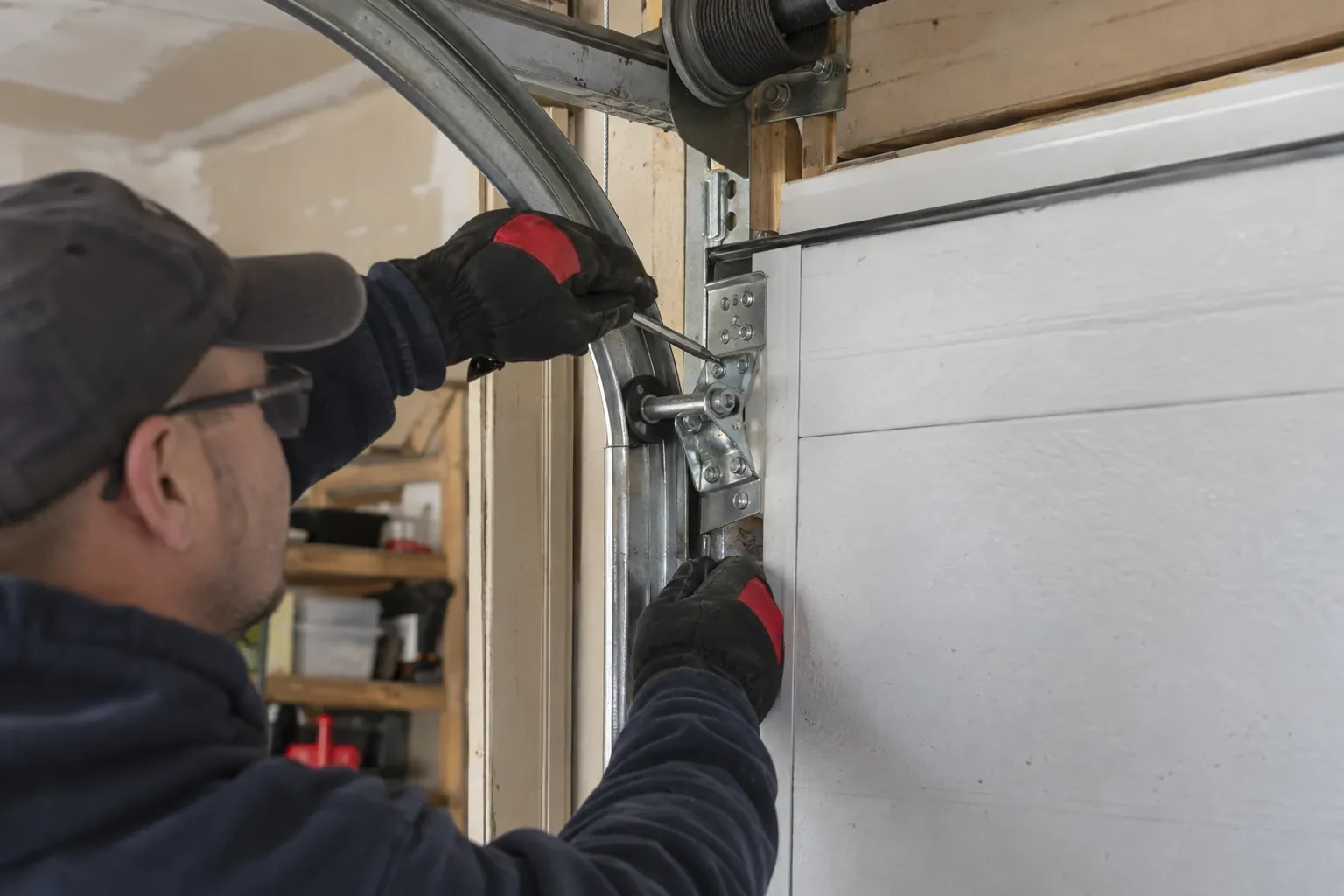
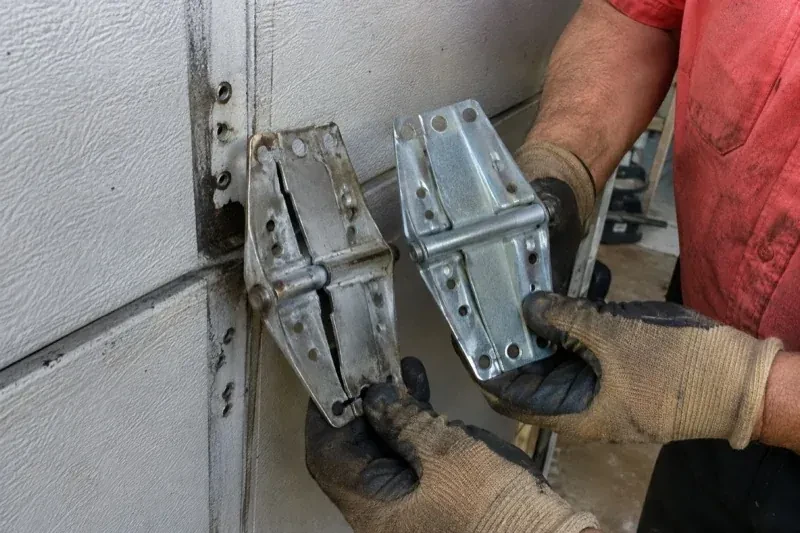
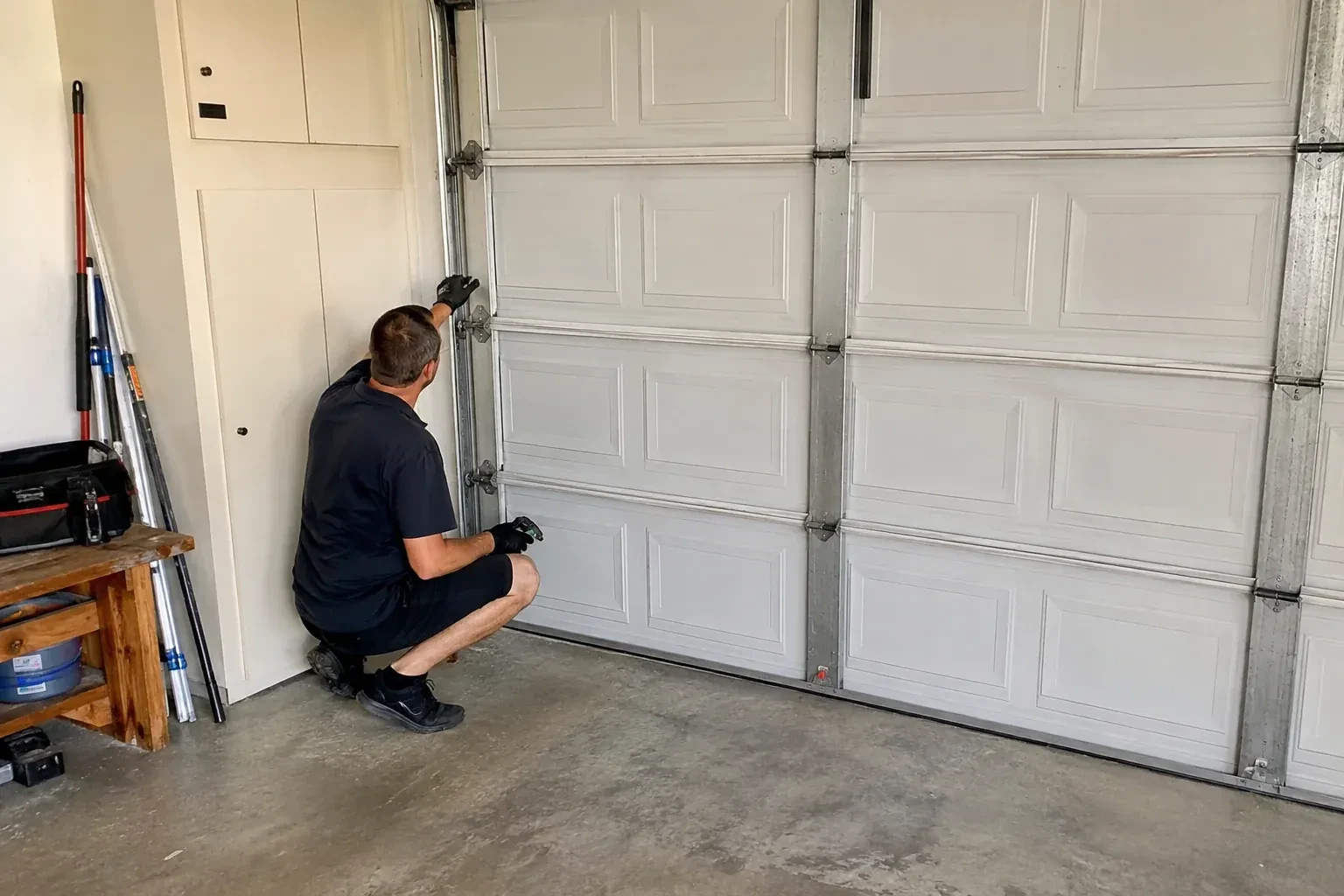
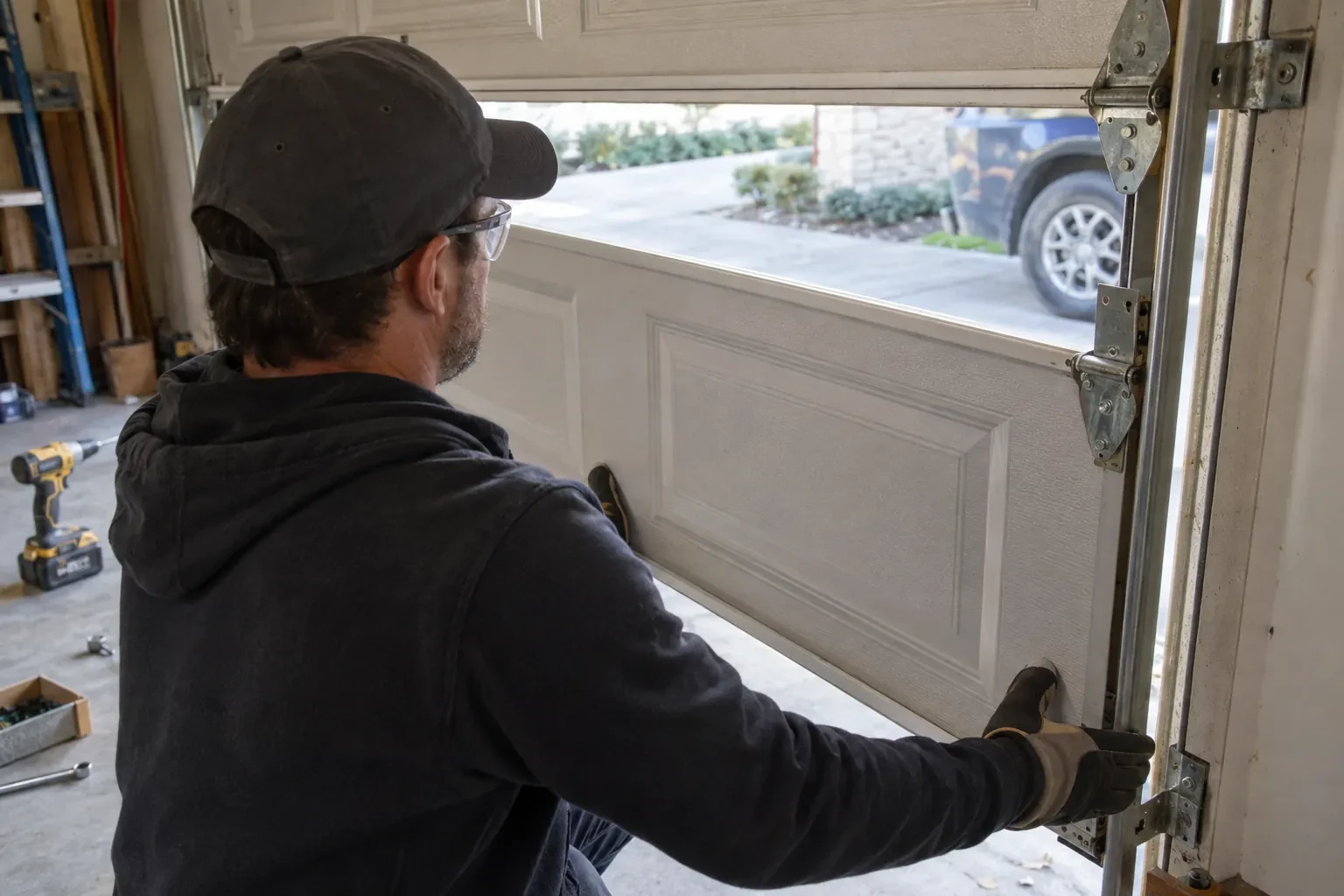
Count the joints between panels and multiply. A single door usually carries two edge hinges and one centre hinge per joint, so a four-panel door has three joints and nine hinges. A double door adds one or two more centre hinges per joint to keep the wider panels flat. The top panel uses adjustable top fixtures rather than hinges, and the bottom corners use bottom brackets, which are different parts.
What happens during the visit?
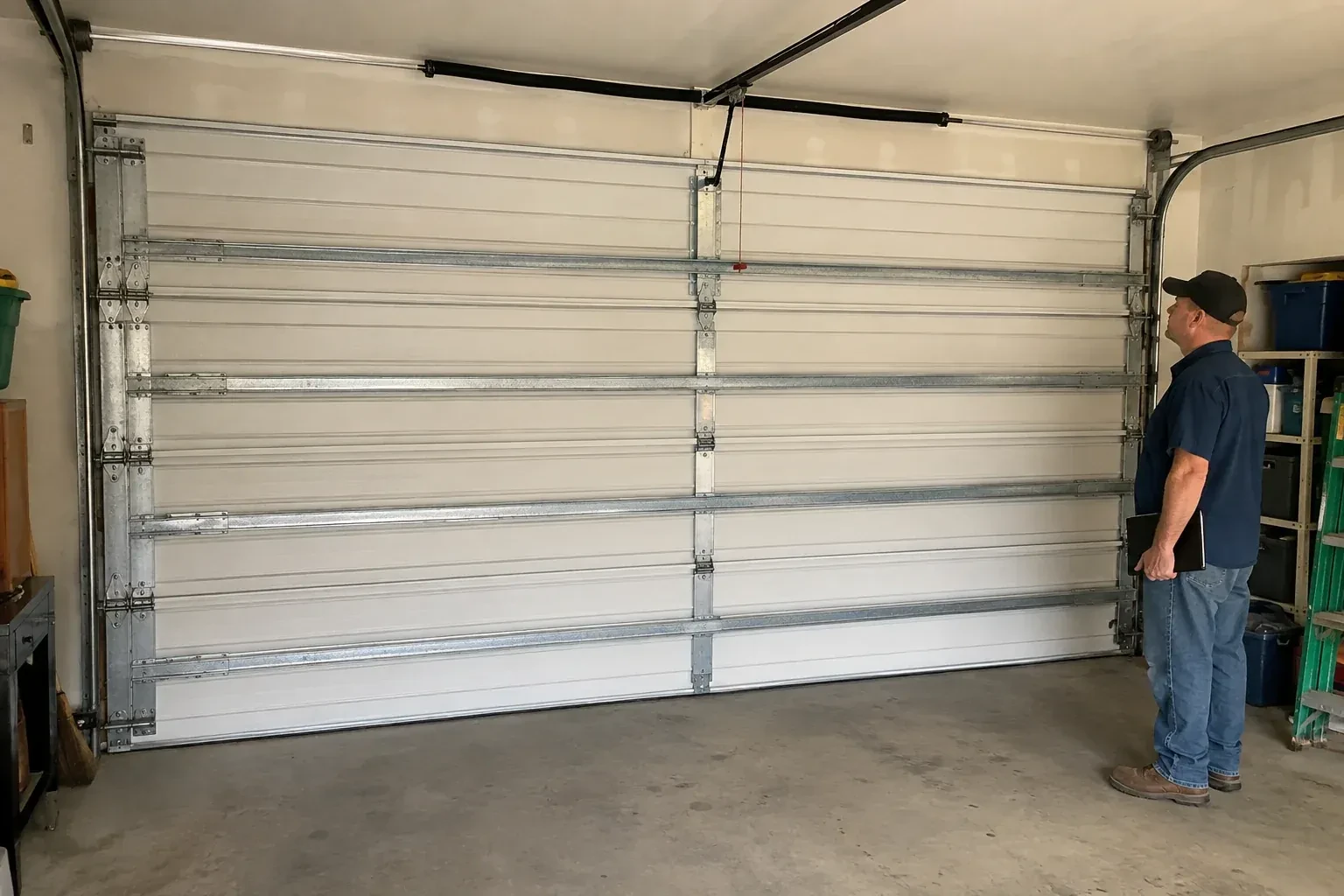
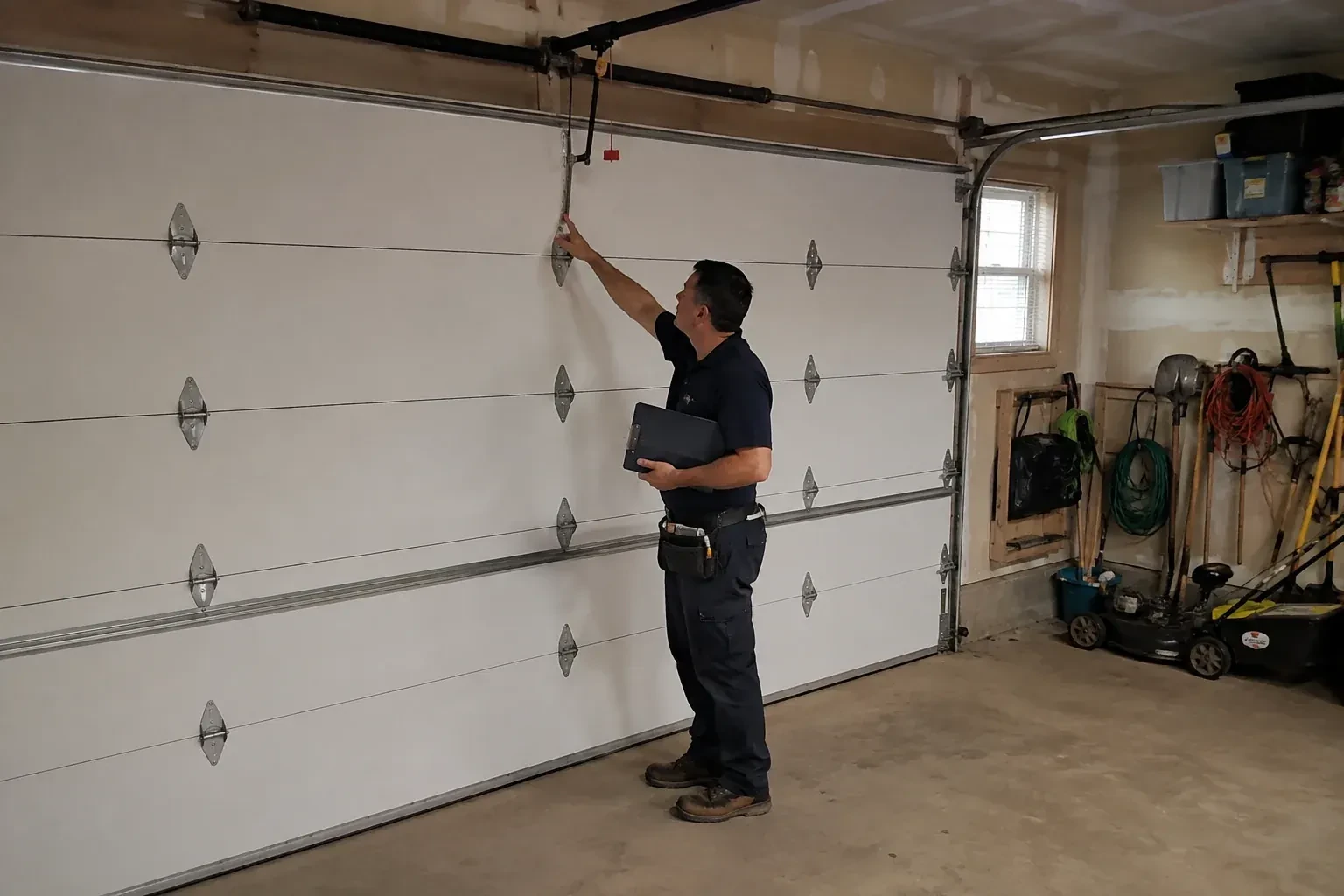
The technician releases the opener, opens the door fully and clamps it so the springs go slack, then inspects springs, pulleys, cables, hangers and containment cables and weighs the door. The old springs come off, a matched pair goes on with containment cables through them, the lift cables are routed over the pulleys and the two sides are set to matching hook positions. The door is balanced by hand, the opener reconnected and its reversing tested with you watching.
What information helps when I book the visit?
Whether the door drifts up, sinks, or hangs crooked when released; whether there is one spring on a shaft above the door or springs along the tracks; whether it is a single or double door and roughly how tall; when the springs were last changed if you know; what has been added to the door; and whether the opener strains, reverses or stalls. A photo of the spring area is useful.
Should I lubricate the chain, the rail or the track?
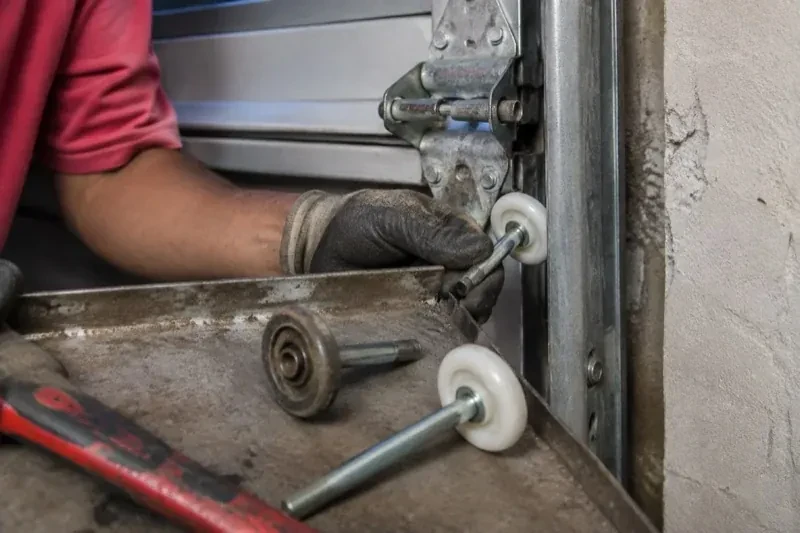
Rollers, hinges, bearings and springs benefit from a garage door lubricant once or twice a year. The chain, belt or screw-drive rail is a separate question, since each drive type calls for its own product and schedule from the opener's manual rather than one rule for every unit. The track itself should stay clean and dry, because lubricant there collects grit and makes rollers slide instead of turning. The technician can point out the spots on your door at the end of the visit.
How do I test the sensors each month?
Start the door closing and, while it is moving, swing a broom handle through the beam low across the opening; the door should halt and travel back up. Next, put a 2x4 flat beneath the door's centre and run the door onto it; it should back off as soon as it touches. If either test fails, close the door first if you can, use it by hand with the manual release, and book a visit; do not release it if it feels heavy.
What does wind-rated mean for a garage door?
It means a documented door configuration is designed and evaluated to resist stated inward and outward wind pressures at a particular size. The description covers the assembled system: sections, reinforcement, tracks, rollers, hinges, brackets, fasteners, and attachment details. Suitability still depends on matching that configuration to the opening and project criteria.
Can several doors be assessed during one facility visit?
Yes. Numbering each opening and providing a short symptom list keeps the assessment organized. The technician can define the requested repair for the affected door and record visible conditions on comparable doors separately. Shared model data and installation history may help with parts planning, while each opening still receives its own mechanical and control checks before any work is scoped.
What does it mean when the door feels unusually heavy?
A marked increase in manual effort often calls for a counterbalance and mechanical-path assessment. Spring setting, barrel bearings, guide friction, curtain damage and drive parts can all contribute. Because the counterbalance contains substantial stored energy, the curtain is secured and the assembly is adjusted with the identified procedure and proper winding tools.
Request a visit
Winter is when garage doors in Wexford Heights fail most, so we prepare for it. Cold-rated lubricants, bottom seals that stay soft in the frost, spring tension checked before the freeze and opener force adjusted for a stiffer door. A door serviced in the autumn is a door that opens in January.