Openers · Toronto
Garage Door Opener Replacement
You swapped the old wooden door for a heavier insulated steel one, and the twenty-year-old opener that was kept has never settled.
In plain words
How do you tell whether an opener has reached its end or simply needs a part? A snapped gear or a worn trolley on an otherwise sound, recent unit is a repair. Replacement makes sense when the operator predates photo-eye sensors, when the board or motor has failed and is no longer made, when the same fault keeps returning, when the door has become heavier, or when you want features it was never built for, such as battery backup or phone control. The technician lays both paths side by side so the choice is yours, and a new operator brings the door up to today's safety standard.
How the visit goesThe bedroom above the garage shakes every morning at six when the chain drive fires up. Everyone in the house knows the moment someone leaves for work. The door itself is fine; the racket comes from the operator and its steel chain.
Garage Door Opener Replacement
How the visit goes
Power at the ceiling
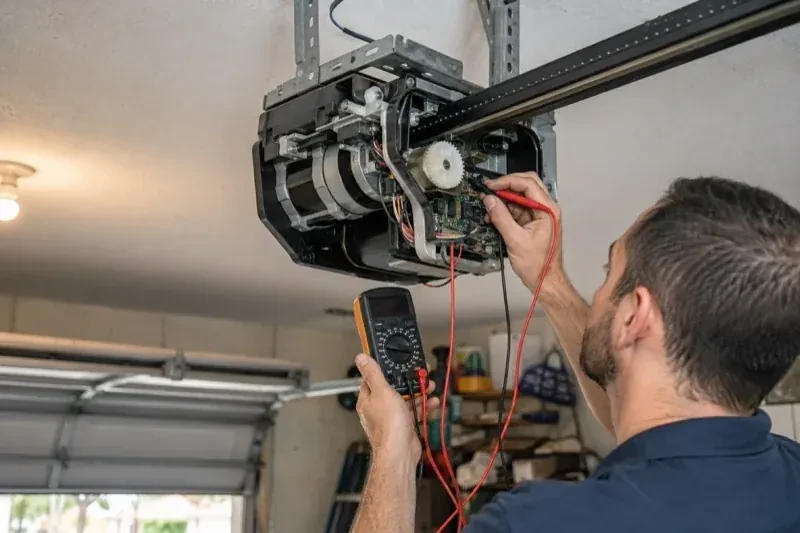
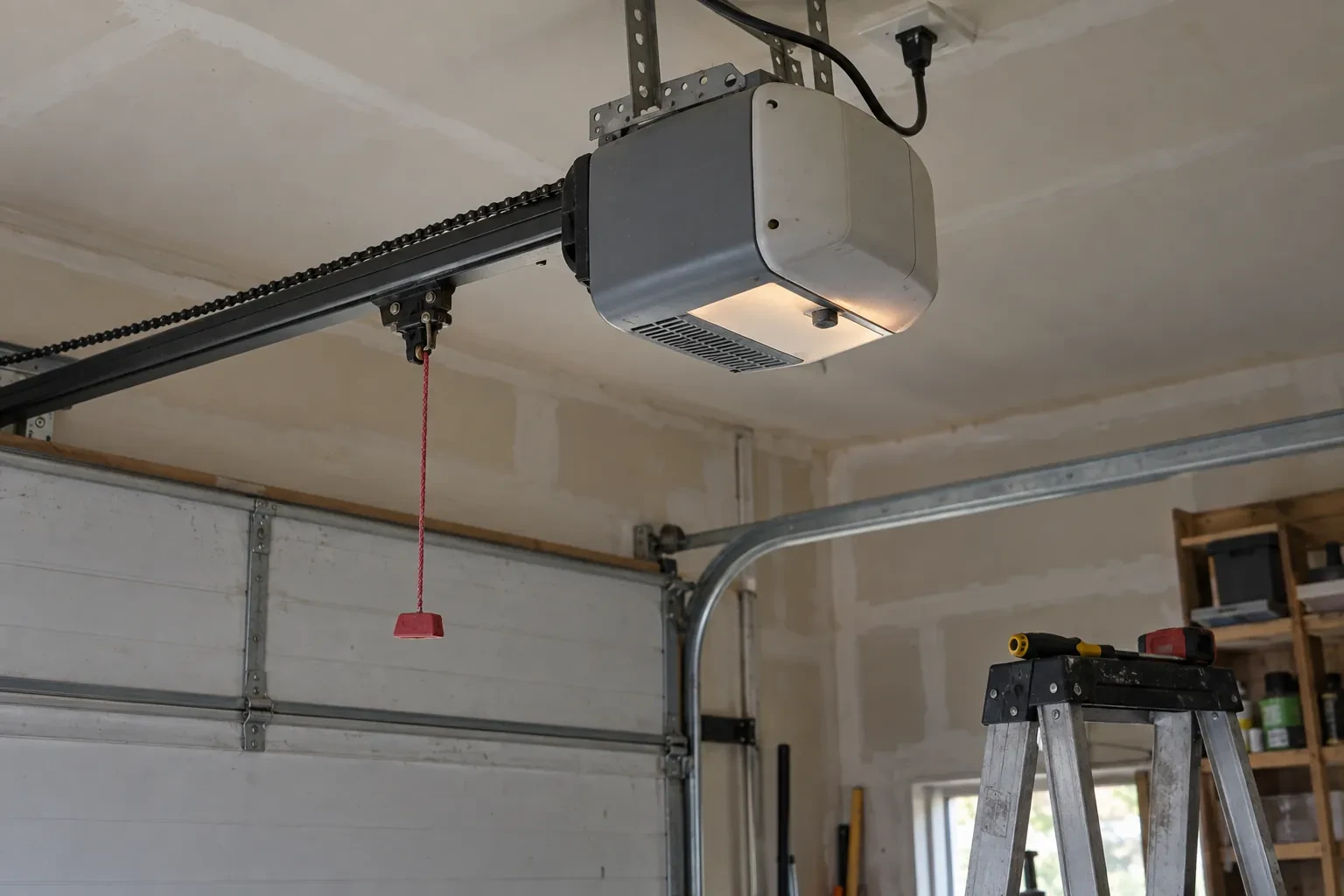
Every operator plugs into a grounded receptacle close to the head unit, so the technician looks for one and checks how it is fed. Many older garages have no ceiling receptacle at all and the old opener has been running from an extension cord draped across the joists, which is a habit worth ending with the new installation. If a receptacle needs adding or moving, that is a job for a qualified electrical contractor, ideally arranged before installation day. The technician also notes whether the garage has Wi-Fi reach if a connected opener is on the wish list.
Sensors, console and wiring
The photo eyes are mounted on both sides of the opening no higher than about 15 cm off the floor, aimed at each other until their indicator lights hold steady, and their wire is stapled neatly along the wall and ceiling to the head. The wall console goes at least 1.5 m above the floor, in clear sight of the door and away from moving parts, so it is out of reach of small children and the door can be watched while it runs. Low-voltage wire is kept clear of the rail and the chain. Finally the head is plugged into its grounded receptacle and powered up for the first time.
Ceiling space and light you did not have before
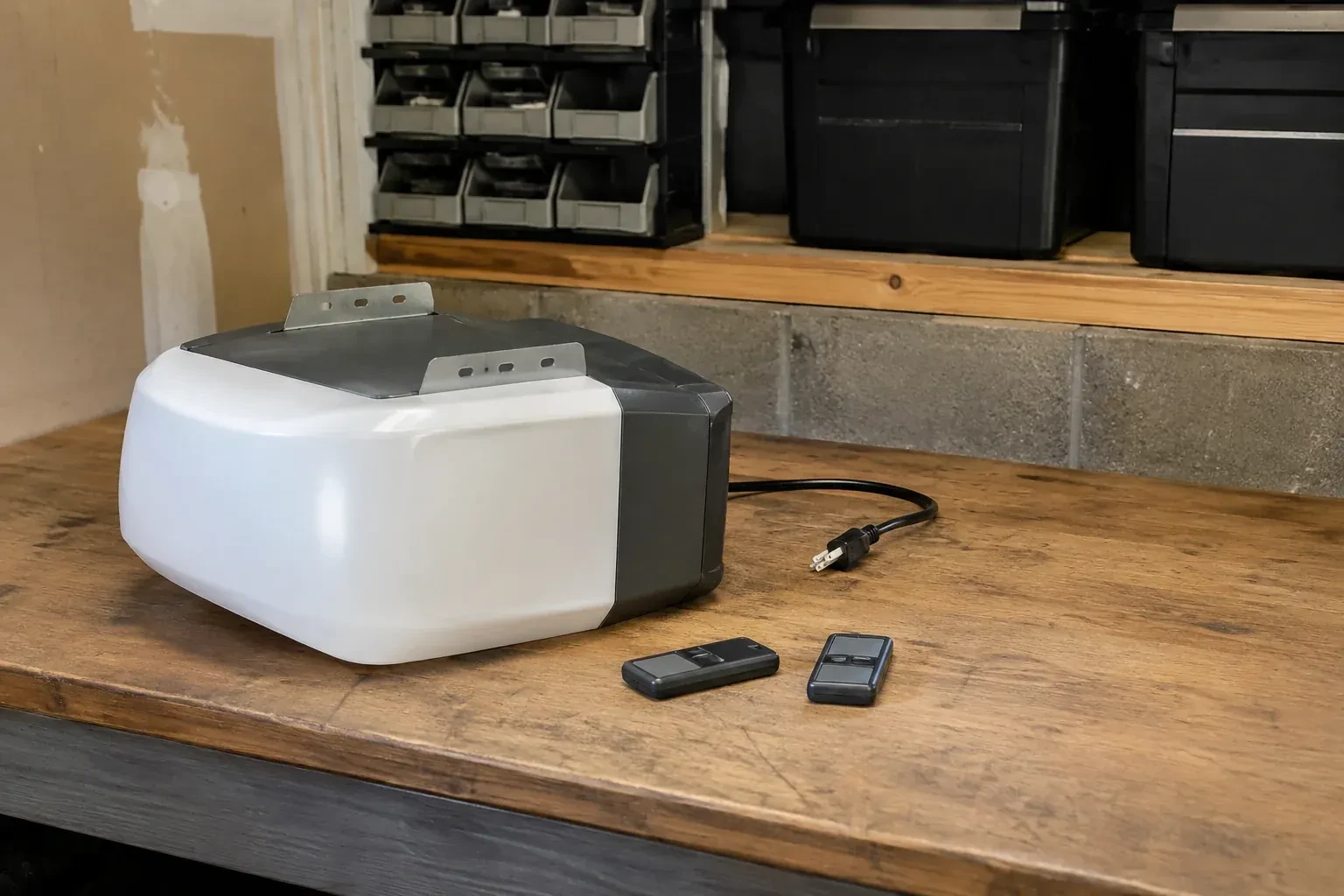
A wall-mount operator hands the whole ceiling back: no rail, no motor box, just the small unit next to the spring shaft. Racks, a loft or a vehicle lift can go where the old opener hung, and the door itself runs quietly because nothing above it is shaking. Any new operator also brings better light, usually LED lamps that come on when the door moves or when a motion sensor sees you walk in, and switch off on a timer. If you notice remote range shrinking after fitting your own LED bulbs, swap them for the type the operator's maker lists, since some bulbs interfere with the radio signal.
Garage Door Opener Replacement
In the van
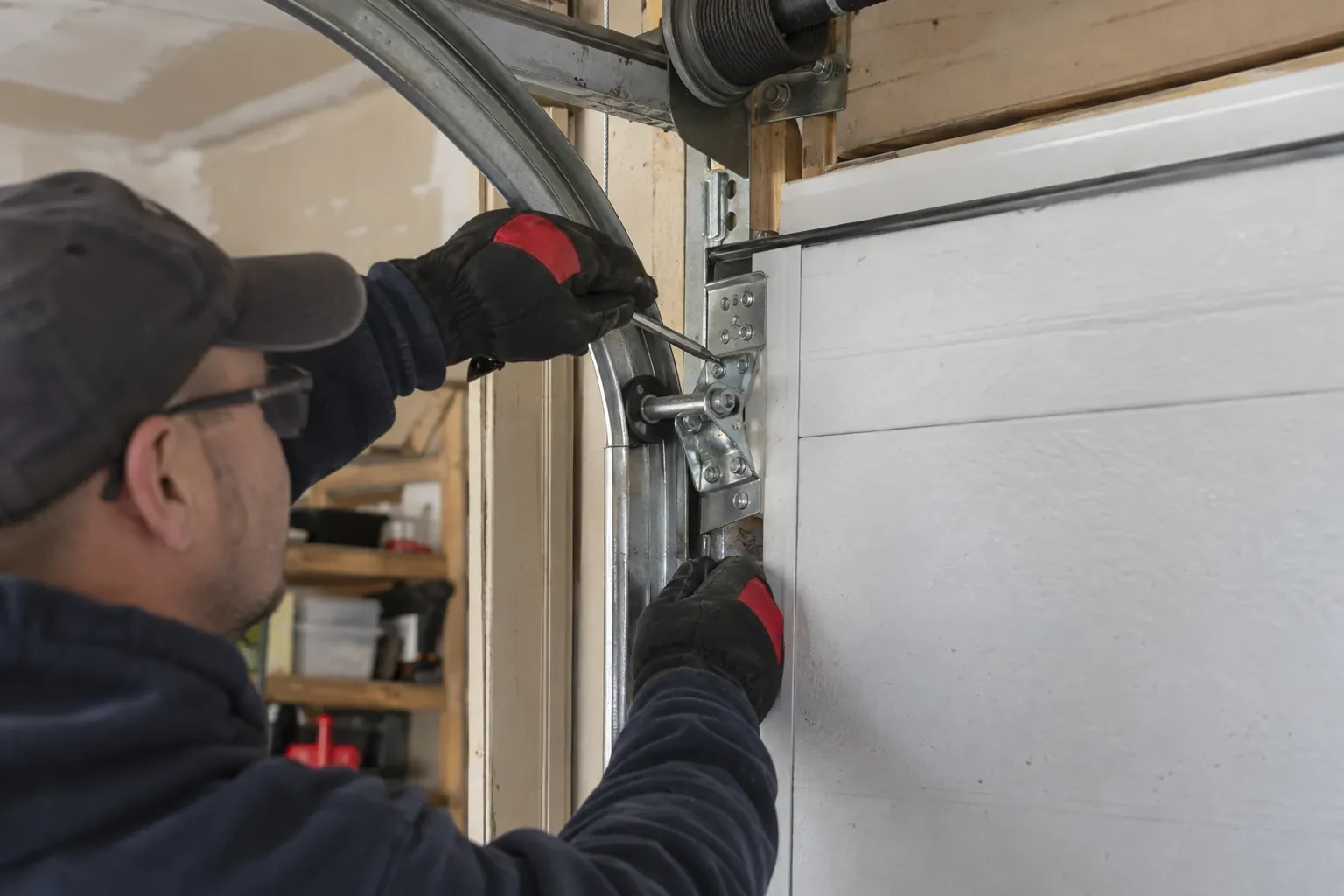
Top-section reinforcement strut
Backup battery
Opener head unit
Chain or reinforced belt
Photo-eye sensors
Garage Door Opener Replacement
What affects the quote
Remotes, keypad and vehicle programming
How many handheld remotes you want, whether a keypad goes outside the door, and whether an older vehicle's built-in buttons need a repeater are counted separately, so a household with four drivers sees a different total from one with one.
Power at the head unit
If a grounded receptacle is already close to the operator, nothing is added. If one must be installed or moved, that electrical work is quoted separately by an electrical contractor.
Removing and recycling the old unit
Taking down the old head, rail, hangers, sensors and wiring, and carrying them away for metal and electronics recycling, is labour that appears on the quote alongside the installation.
What to have ready
- Is there a grounded receptacle in the ceiling near the opener, or is it running from an extension cord?
- Can you send photographs of the opener, the top of the door and the ceiling?
- Has a power outage ever left you unable to open the door?
Garage Door Opener Replacement: questions
QuestionsHow should I prepare the garage before the visit?
Move vehicles out onto the driveway, bring any car that needs its built-in buttons programmed, and clear the floor under the door's path and the area beneath the old opener and rail so ladders can stand safely. Take bikes and boxes off shelves that hang near the ceiling line. Know where the electrical panel is, and have the phones that will use the app on hand with your Wi-Fi password.
Should an opener from before the mid-1990s be replaced rather than repaired?
Manufacturers recommend replacing units made before 1993, since most lacked external entrapment protection such as a photo-eye pair, a sensing edge or a constant-contact close control. Identify the model rather than guessing its age or remote type, since a fixed-code remote with small switches is not proof by itself. Replacing rather than repairing brings the sensor beam, a contact-sensitive force setting, remotes whose code changes on every press and a console lock button.
Can I keep my existing wall button?
The new operator comes with its own console, and the two usually go together because the console is designed to speak to that board and adds a light button, a lock button and sometimes a timer or a battery indicator. The low-voltage wire running to the old button can often be reused if it is in good condition, which saves running a new line across the garage.
Related services
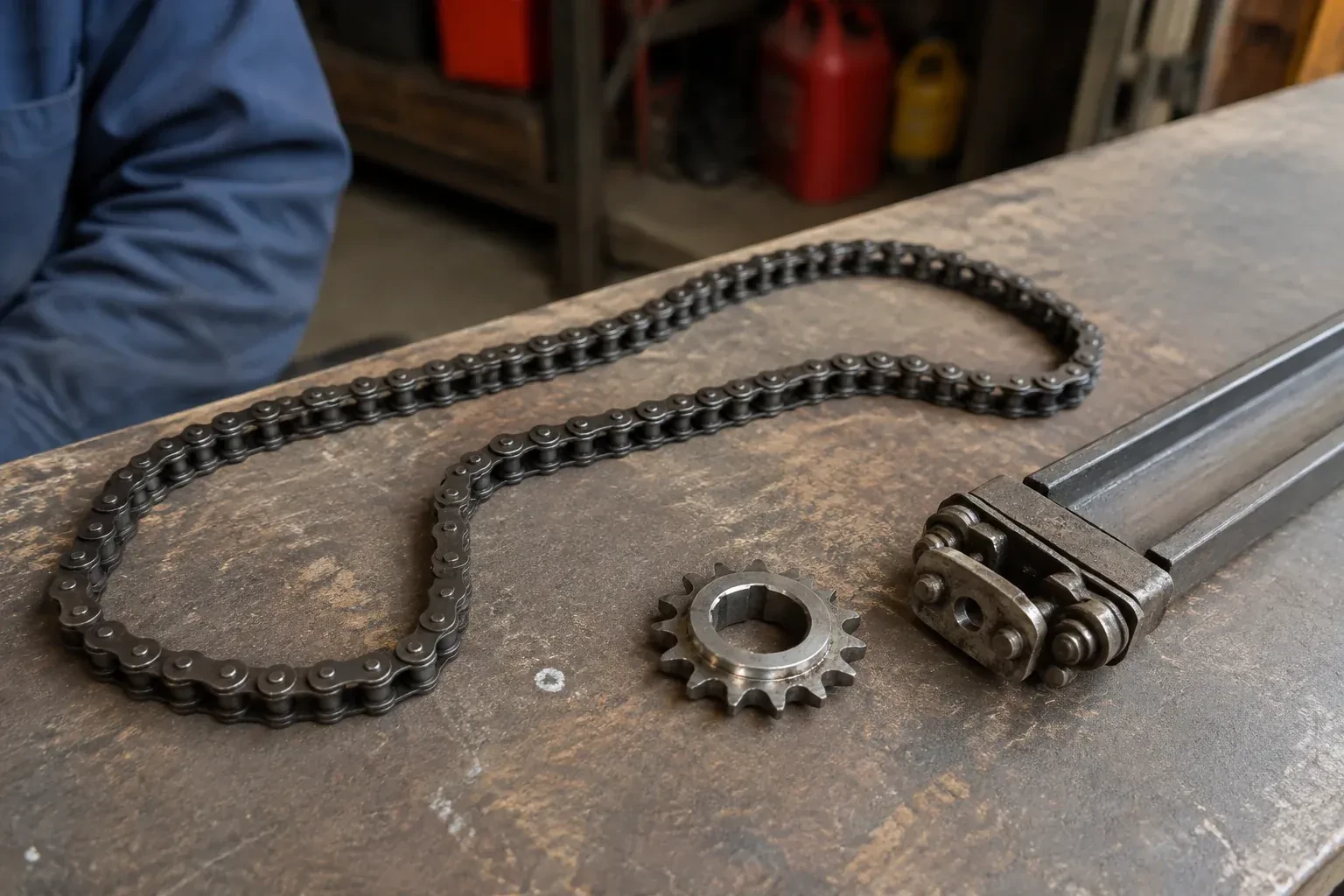
- Chain-Drive Opener RepairThe chain in the detached garage went orange with rust over the winter, the links are stiff, and the opener strains and groans to pull the door up.
- Belt-Drive Opener RepairThe door used to glide up with a soft hum.
- Photo-Eye Sensor Alignment or ReplacementThe small light on one of the sensors near the floor has gone dark, or it flickers when someone walks past the track.