Springs · Toronto
Garage Door Cable Replacement
The cable has wrapped itself around the shaft above the door instead of sitting on its drum.
In plain words
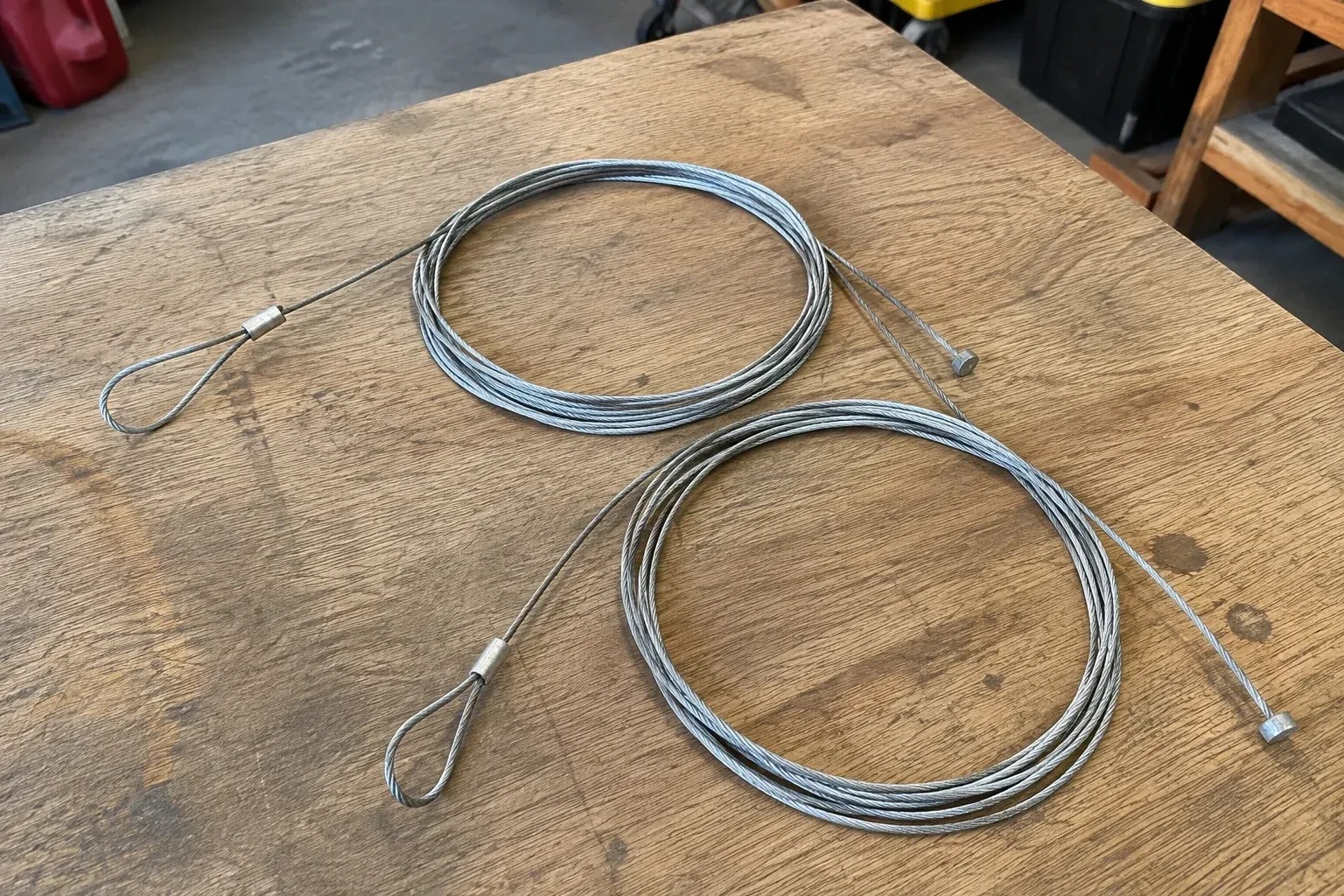
Cables are replaced as a pair, and there is a practical reason. Both went on the door together, have made the same number of trips and have sat in the same slush, so when one fails the other is close behind. A new cable beside a stretched one also pulls the door slightly out of level. Fitting two matched cables of the same length and construction lets the technician set the door dead level, tension both sides equally and leave a counterbalance that shares the work evenly for years. It also means one visit rather than two.
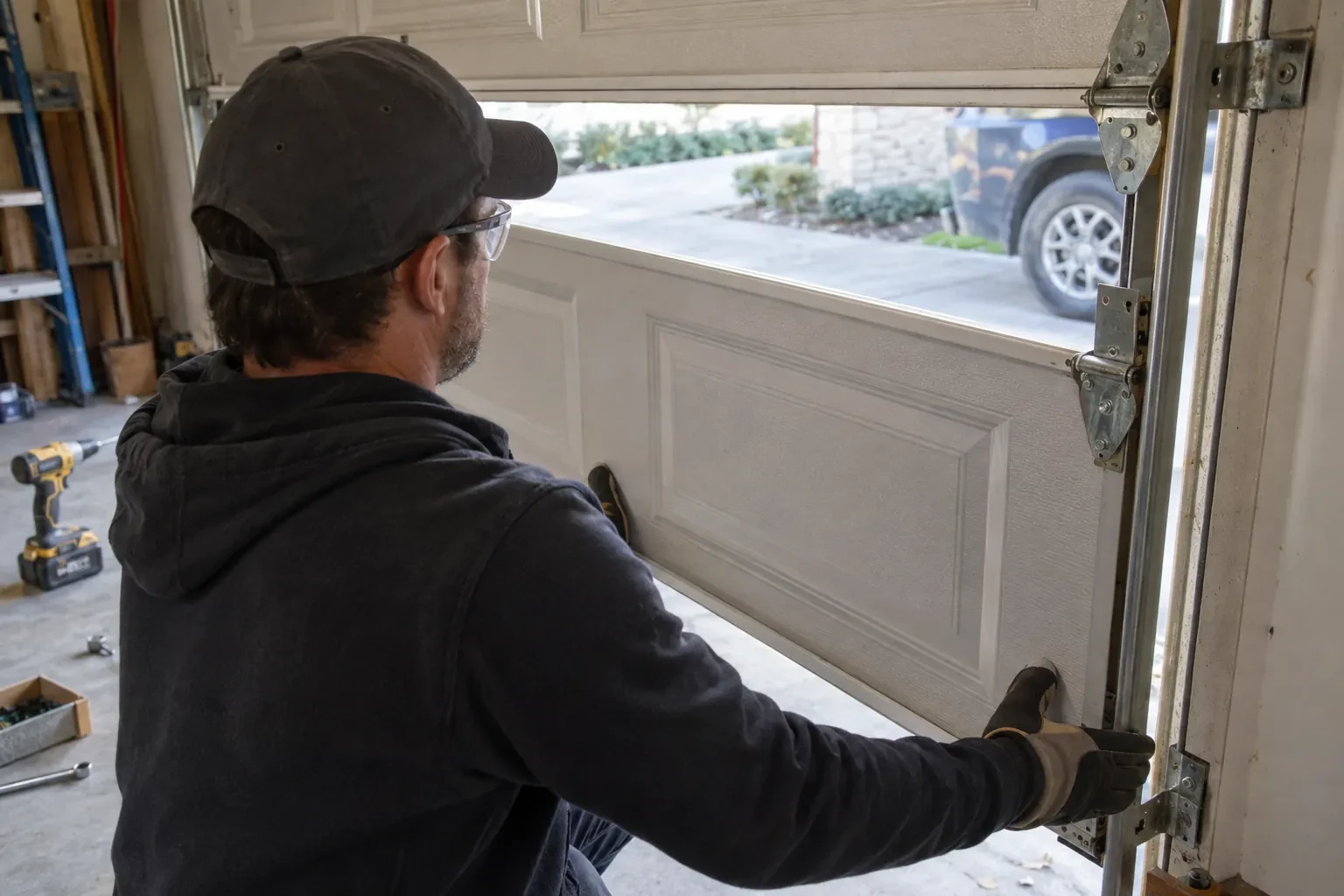
How the visit goesThere was a sharp crack from the garage, and when you went to look the door had dropped on one side and jammed. A length of cable lies coiled on the floor by the bottom roller.
Garage Door Cable Replacement
How the visit goes
Torsion or extension, and which lift
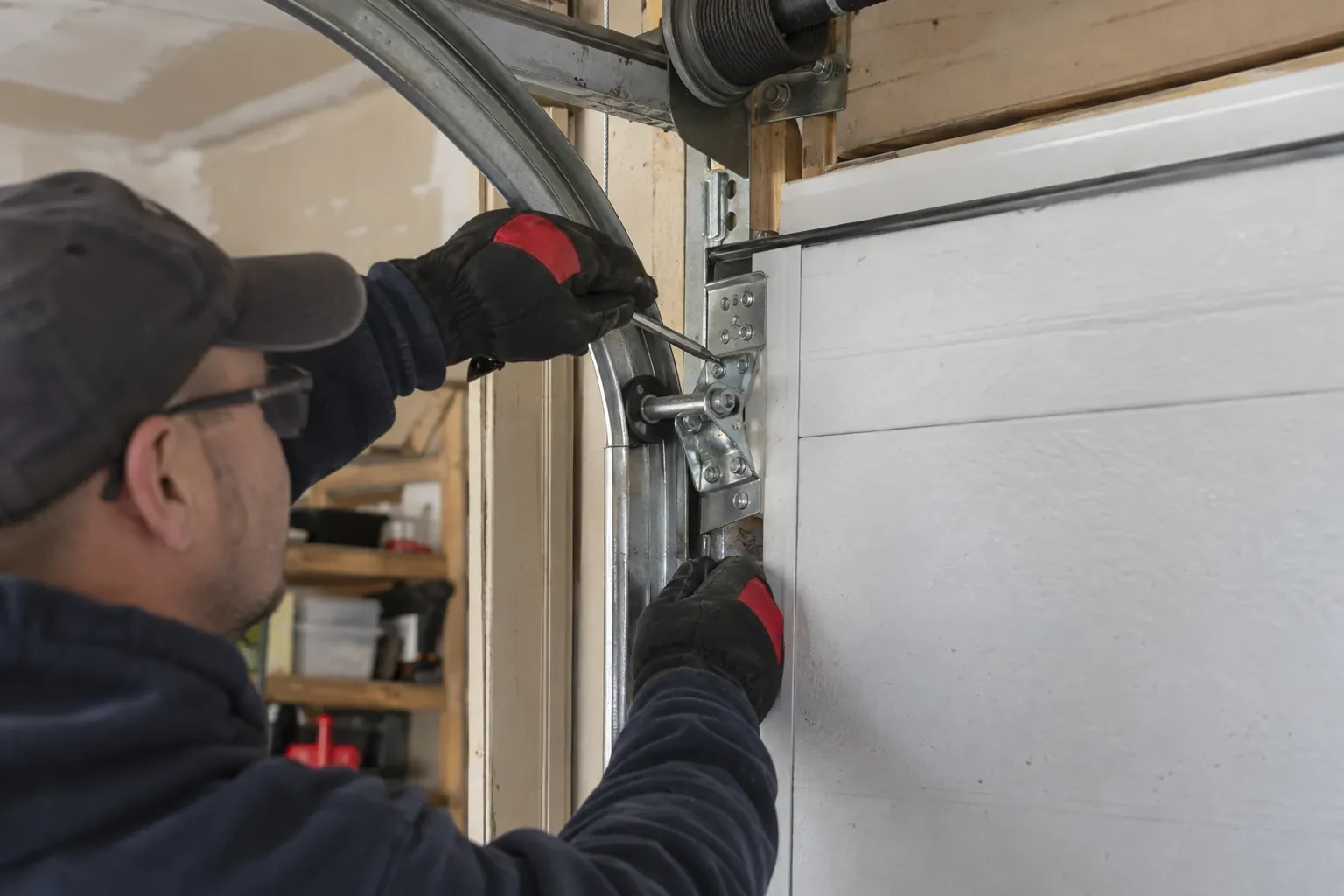
The technician identifies the counterbalance before choosing parts. A shaft with drums above the header means a torsion system; springs stretched beside the horizontal tracks with pulleys mean extension. Then the lift type: standard lift on most attached garages, low headroom hardware where the ceiling is tight, and high lift where the door climbs well above the opening before turning. Each uses a different drum profile and a different cable length, and a double door of the same height may need a heavier cable than a single. Reading these details correctly is what makes the replacement cable wind evenly on the drum instead of overlapping.
Winding the springs back on
The torsion springs are wound back up with the winding bars, a quarter turn at a time, to the number of turns the door height calls for, which is roughly one full turn for each foot of door plus a small allowance the technician judges from the balance test. The cone set screws are tightened to the shaft, the bars are removed, and the clamps come off. The cables are watched as the door is raised to make sure each wraps onto its drum in a single neat layer with no overlap and pays out cleanly on the way down. A quarter turn added or removed fine-tunes the balance.
Lubrication that helps, and where it does not belong
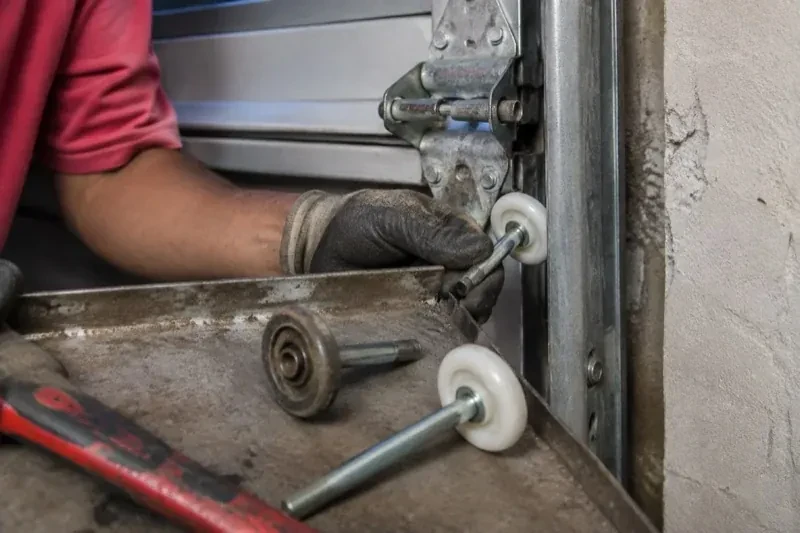
A few minutes with a can of garage-door lubricant twice a year keeps the whole system easy on the new cables. Spray the torsion spring lightly along its length, the hinge pins, the roller stems and bearings, and the bottom bracket pins, then run the door a few times to spread it. A light mist on the cables themselves slows rust; heavy grease is avoided because it holds grit and moisture. The tracks are left dry and simply wiped clean, since lubricant there collects dirt and lets rollers slide instead of roll. Silicone or a lithium spray made for doors is the right product.
Garage Door Cable Replacement
In the van
Cable drums, matched pair
Torsion springs and winding cones
Containment cables
Bottom rollers and hinges
Silicone garage-door lubricant
Garage Door Cable Replacement
What affects the quote
Access to the spring shaft
Shelving, storage or a low ceiling around the torsion shaft and drums slows the work. Clearing the area beforehand or a tighter working space both affect the time quoted.
Corrosion and seized fasteners
Set screws and bracket bolts that have rusted solid take time to free or cut, and badly corroded hardware is replaced rather than reused, which shows in the parts list.
Impact damage to track or sections
A bumper strike often bends the track, a hinge or the bottom section as well as displacing the cable. Straightening or replacing those parts is quoted as separate work.
What to have ready
- Did the door come down on something, or did a vehicle touch it?
- When were the springs last replaced, if you know?
- Is the door closed, fully open, or stuck partway?
Garage Door Cable Replacement: questions
QuestionsIs cable work different on a door with extension springs?
The idea is the same and the route is different. Instead of winding onto a drum, the cable runs from the bottom bracket up over a pulley at the front of the track, back over a pulley on the spring, and to an adjusting clip. The technician relaxes the springs by opening and clamping the door, replaces worn pulleys along with the cable, sets both clips the same, and confirms a containment cable runs through each spring.
Should I lubricate the cables?
A light film, yes. A mist of silicone or a lubricant made for garage doors on the cables, especially the lowest stretch near the brackets, sheds moisture and slows rust. Avoid heavy grease or oil, which holds grit and salt against the strands. The springs, hinges, roller bearings and bracket pins take the same product a couple of times a year, and the tracks are simply wiped clean.
Should both cables be replaced when only one has failed?
Yes, as a rule. The two cables were fitted together, have flexed around their drums the same number of times and have sat in the same slush, so the survivor is close to the end of its life. A new cable beside a stretched one also makes it harder to set the door level. Two matched cables give an even lift and one visit instead of two.
Related services
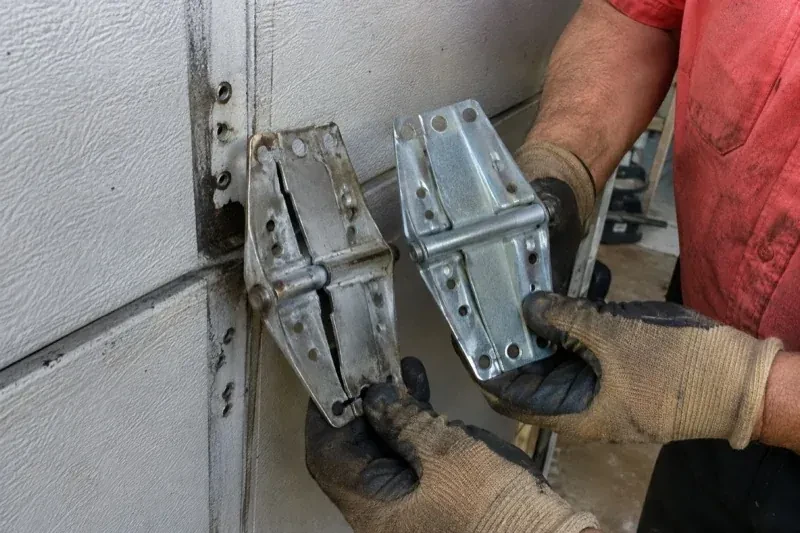
- Garage Door Hinge ReplacementThe roller at the top of the second panel is leaning outward and only half of the wheel is still in the track.
- Garage Door Track Repair or ReplacementThe door has started rubbing the frame on the left, leaving a shiny stripe down the weatherstrip.
- Torsion Spring ReplacementOn a cold morning the remote does nothing useful: the light comes on, the motor turns briefly, the door stays shut.