Openers · Ionview
Garage Door Opener Replacement in Ionview
You swapped the old wooden door for a heavier insulated steel one, and the twenty-year-old opener that was kept has never settled.
In plain words
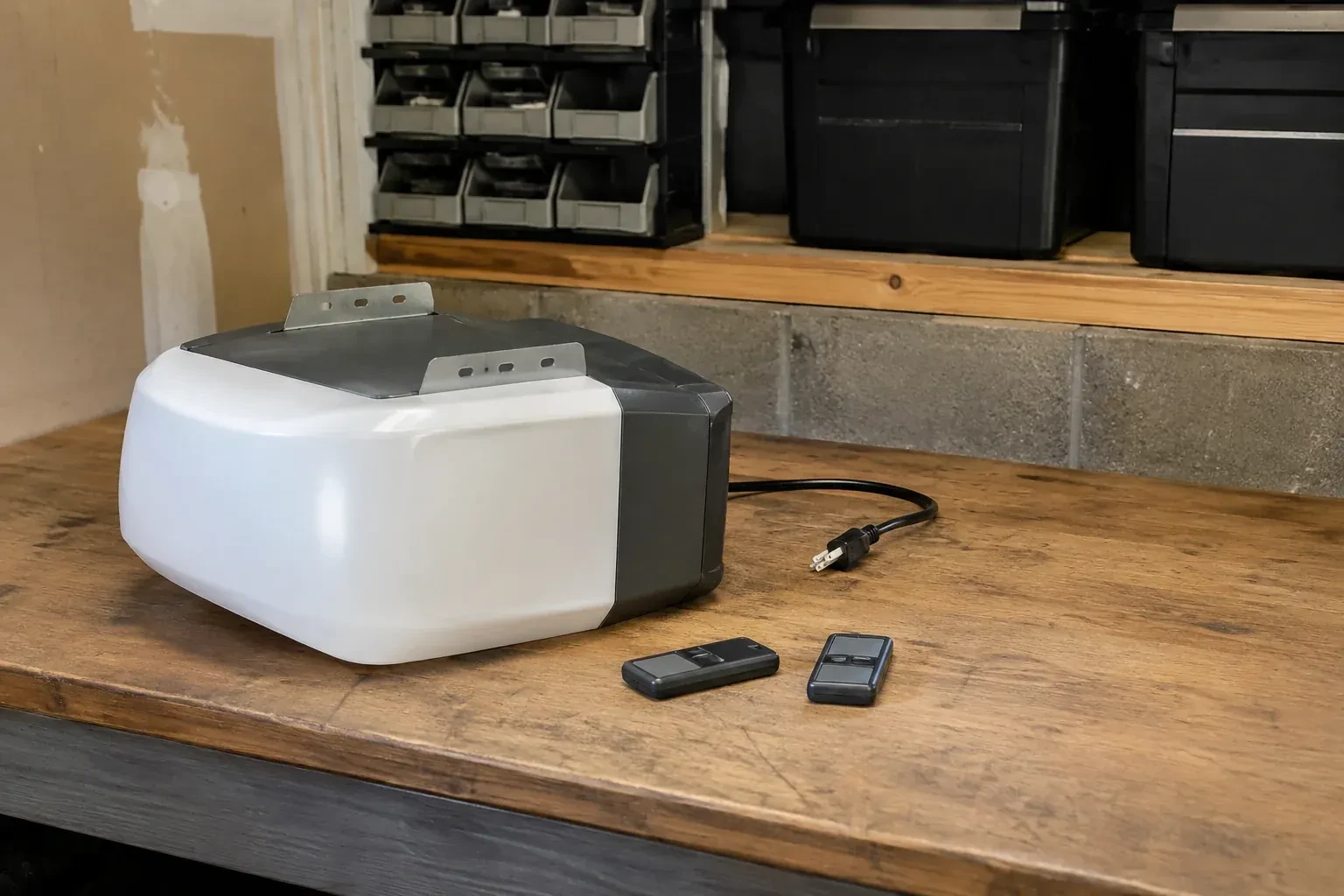
Openers have changed more than most people realise. Many units from before the early 1990s relied on motor resistance alone, without a photo-eye pair near the floor, though some carried a sensing edge or a close control instead. Fixed-code remotes set by tiny switches were common then too, so the same setting could open more than one door. A modern operator adds a beam across the opening, a force limit that reverses on contact, a rolling code that changes with every press, and a lock button that switches remotes off at night. Replacement brings all of those at once, and the safety tests are run in front of you.
How the visit goesThe bedroom above the garage shakes every morning at six when the chain drive fires up. Everyone in the house knows the moment someone leaves for work. The door itself is fine; the racket comes from the operator and its steel chain.
Garage Door Opener Replacement
How the visit goes
Lifting the door by hand first
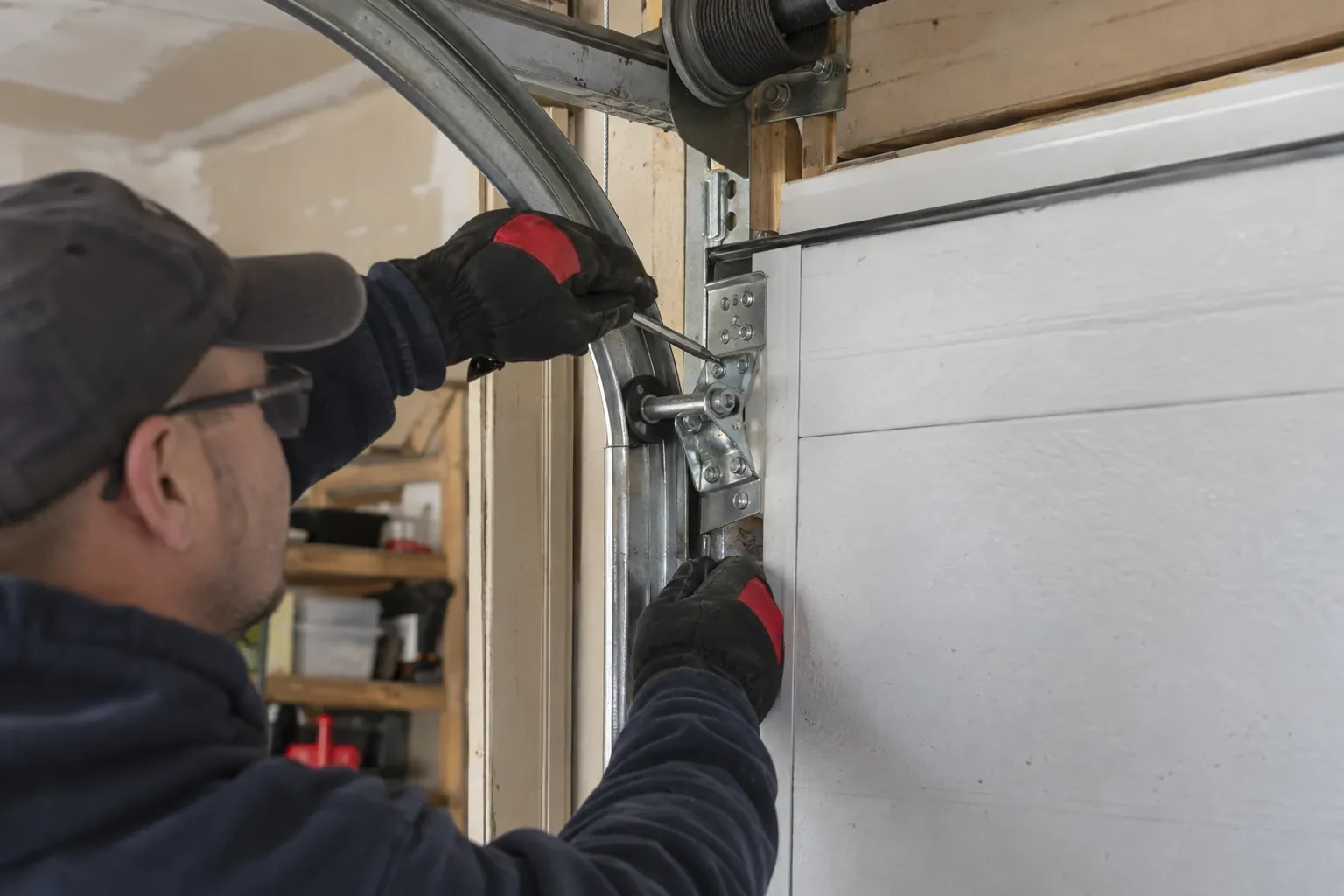
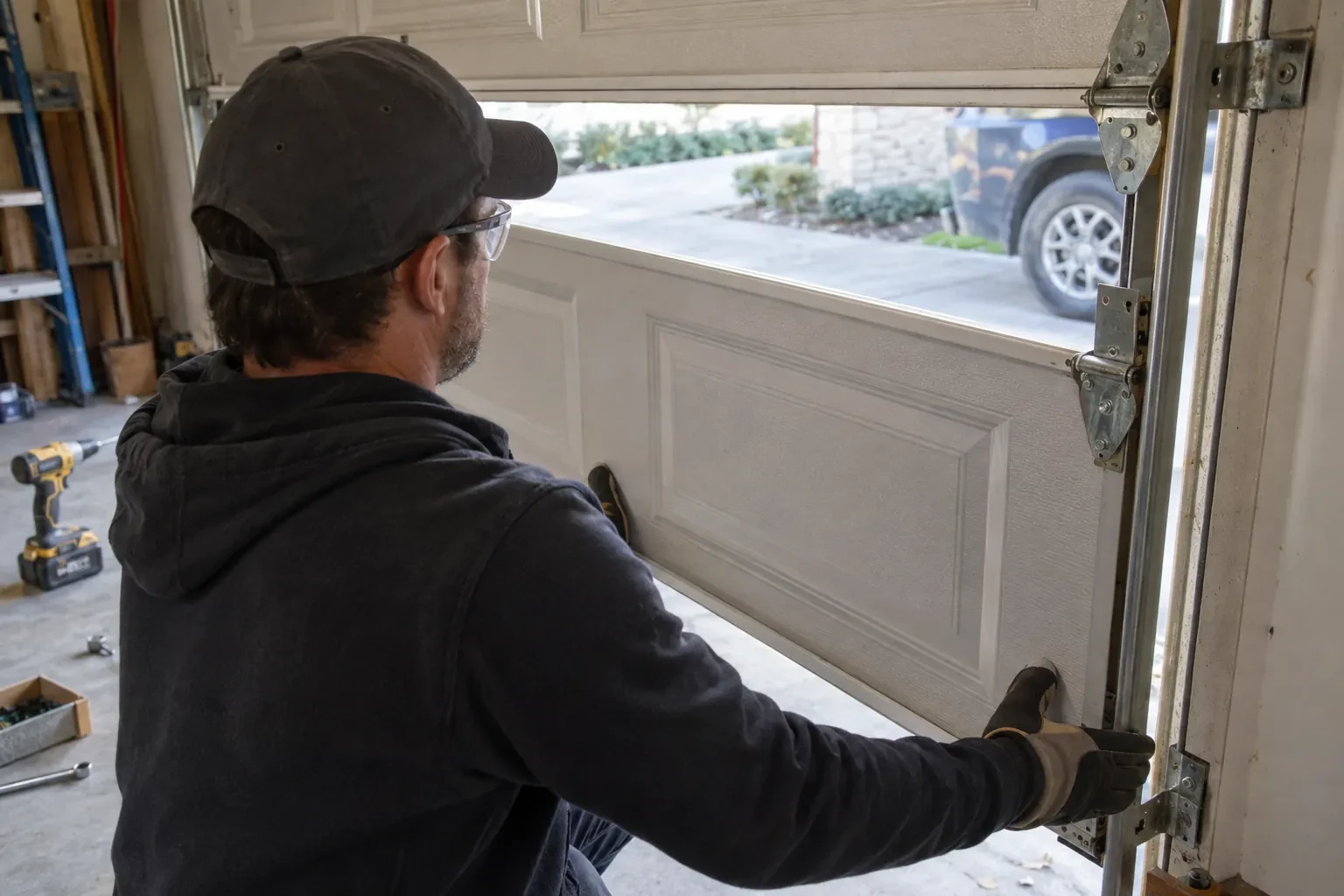
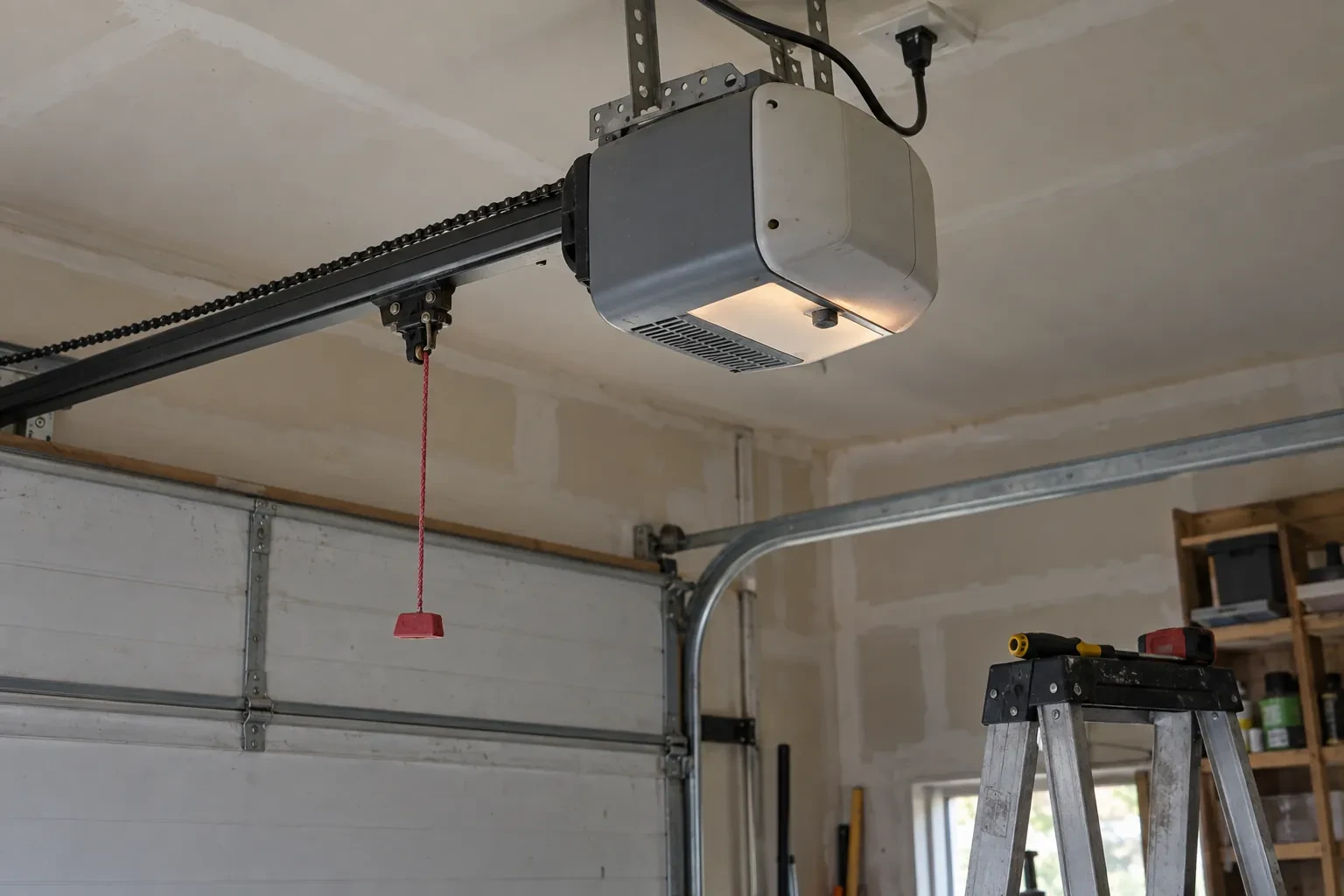
The first check has nothing to do with the opener. The technician unplugs the old unit, pulls the red release so the trolley lets go of the door, and lifts the door by hand. A healthy door rises with moderate effort, stays where it is left about a metre off the floor and comes to rest gently at the top and bottom. That balance is what the new opener depends on, because it moves the door rather than carrying it. If the door is heavy in the hands or drifts down, the springs need attention before any operator is chosen, and that conversation happens now rather than after the new unit is hanging from the ceiling.
Fitting a wall-mount operator instead
When the choice is a wall-mount unit, the operator bolts to the wall beside the torsion spring shaft and turns the shaft directly, so there is no rail, trolley or anything hanging from the ceiling. The door must run on torsion springs with room at the end of the shaft, confirmed before the unit is ordered. A cable tension monitor is fastened to wall framing beside the cable, a few inches from the drum, so the operator stops if a cable goes slack, and an automatic deadbolt is mounted on the track since the door has no rail holding it shut. Photo eyes, console and remotes are set up as with any operator.
Getting the door through winter
A modern operator runs at the smallest force that moves the door, so on a bitter morning when the bottom seal has frozen to the slab it will reverse rather than tear the seal or strain the top section. The right response is to free the seal, by breaking the ice along the threshold or warming it, then press the button again. Keep snow and slush cleared from the threshold, put a silicone wipe on the seal before the cold sets in, and expect the door to sound a little different at minus twenty. An operator chosen for a detached garage is rated for those temperatures, and the seasonal lubricant it was given keeps the hardware moving.
Garage Door Opener Replacement
In the van
Top-section reinforcement strut
Backup battery
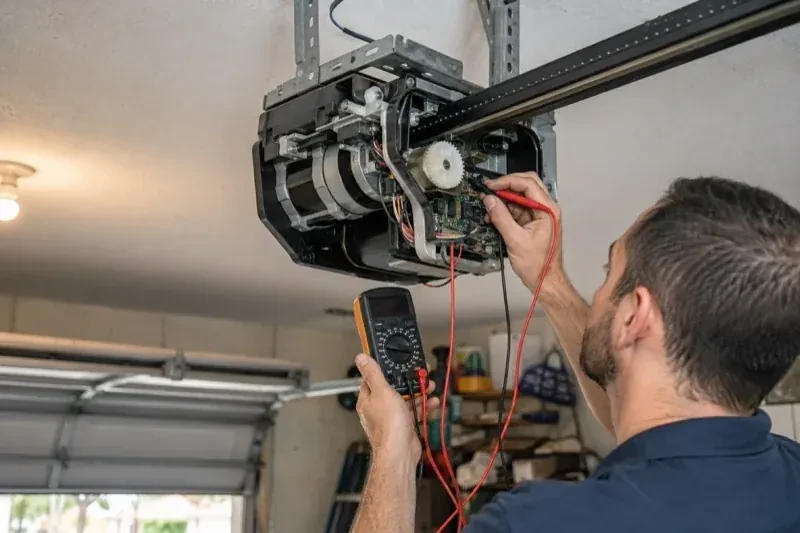
Opener head unit
Chain or reinforced belt
Photo-eye sensors
Garage Door Opener Replacement
What affects the quote
Door work found during the balance check
Spring adjustment or replacement, tired rollers, cracked hinges or frayed cables discovered when the door is lifted by hand are quoted as door work in their own right, never folded into the opener.
Working around what is in the garage
A vehicle lift, a storage loft, ductwork or shelving where the rail will run, or a garage that cannot be emptied before the visit, adds handling time that the technician accounts for after seeing the space.
A second door on the same visit
Replacing two operators in a double garage, or one at the house and one at a detached workshop, shares the travel and setup and is quoted as one visit with two installations.
What to have ready
- Has a power outage ever left you unable to open the door?
- What make and model is printed on the old opener's label, and roughly how old is it?
- Can you send photographs of the opener, the top of the door and the ceiling?
Garage Door Opener Replacement: questions
QuestionsHow should I prepare the garage before the visit?
Move vehicles out onto the driveway, bring any car that needs its built-in buttons programmed, and clear the floor under the door's path and the area beneath the old opener and rail so ladders can stand safely. Take bikes and boxes off shelves that hang near the ceiling line. Know where the electrical panel is, and have the phones that will use the app on hand with your Wi-Fi password.
Should an opener from before the mid-1990s be replaced rather than repaired?
Manufacturers recommend replacing units made before 1993, since most lacked external entrapment protection such as a photo-eye pair, a sensing edge or a constant-contact close control. Identify the model rather than guessing its age or remote type, since a fixed-code remote with small switches is not proof by itself. Replacing rather than repairing brings the sensor beam, a contact-sensitive force setting, remotes whose code changes on every press and a console lock button.
Can I keep my existing wall button?
The new operator comes with its own console, and the two usually go together because the console is designed to speak to that board and adds a light button, a lock button and sometimes a timer or a battery indicator. The low-voltage wire running to the old button can often be reused if it is in good condition, which saves running a new line across the garage.
Related services
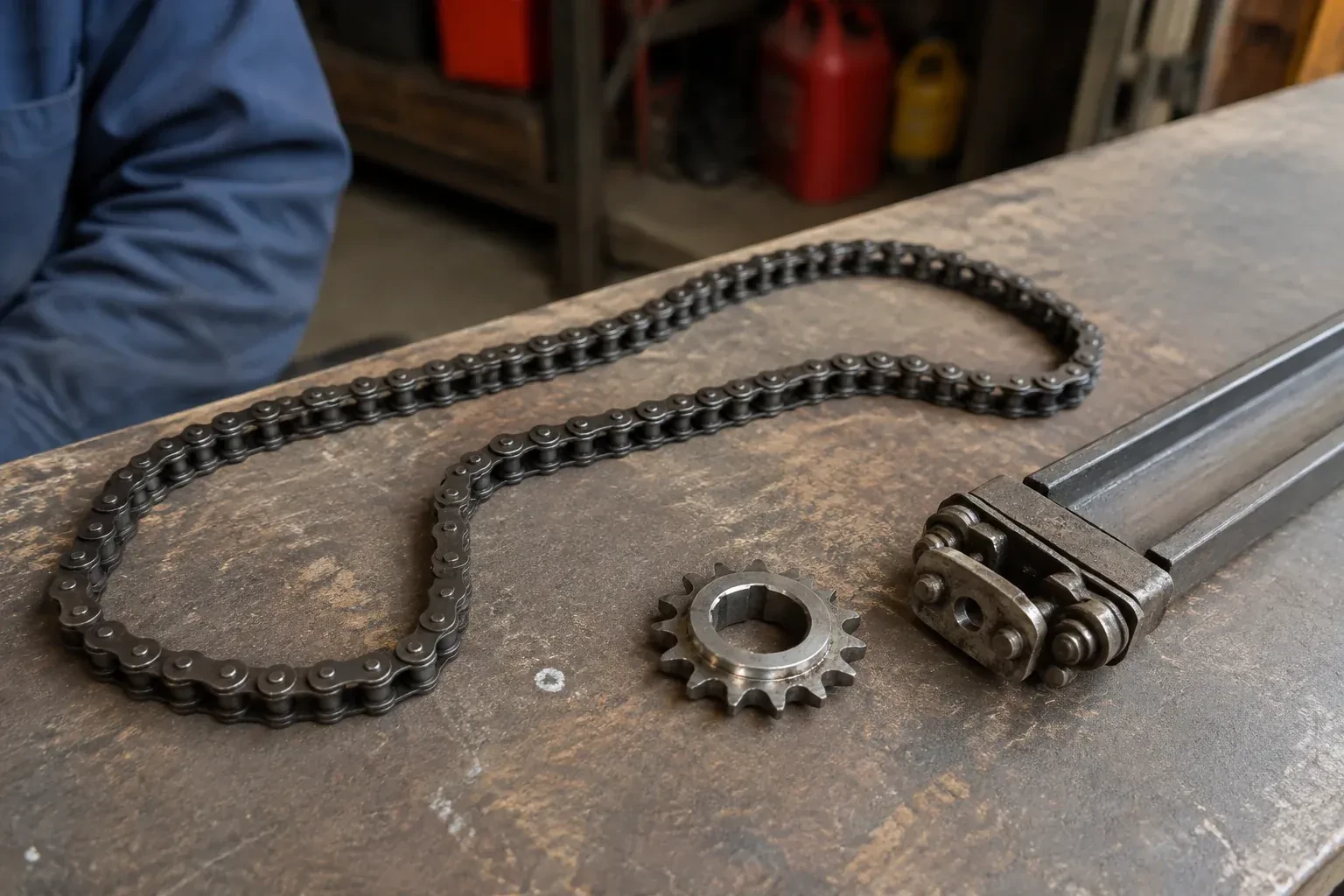
- Chain-Drive Opener RepairThe chain in the detached garage went orange with rust over the winter, the links are stiff, and the opener strains and groans to pull the door up.
- Belt-Drive Opener RepairThe door used to glide up with a soft hum.
- Photo-Eye Sensor Alignment or ReplacementThe small light on one of the sensors near the floor has gone dark, or it flickers when someone walks past the track.