Springs · Ionview
Garage Door Hinge Replacement in Ionview
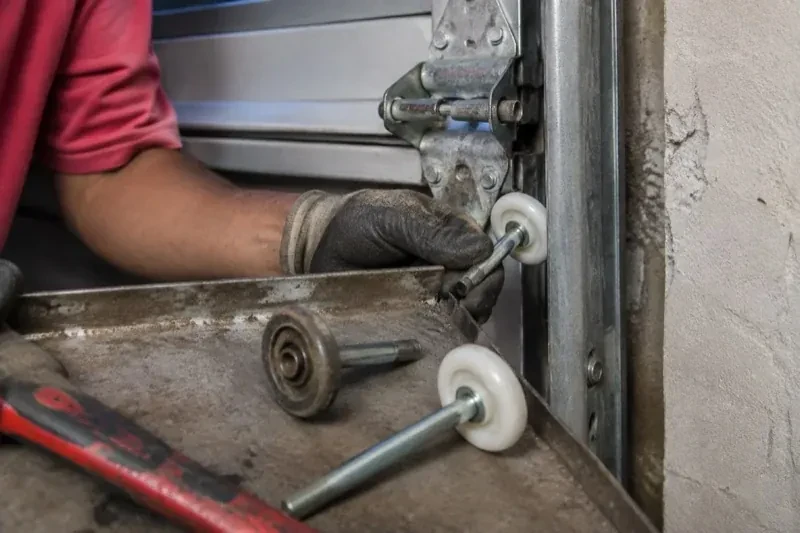
The roller at the top of the second panel is leaning outward and only half of the wheel is still in the track.
In plain words
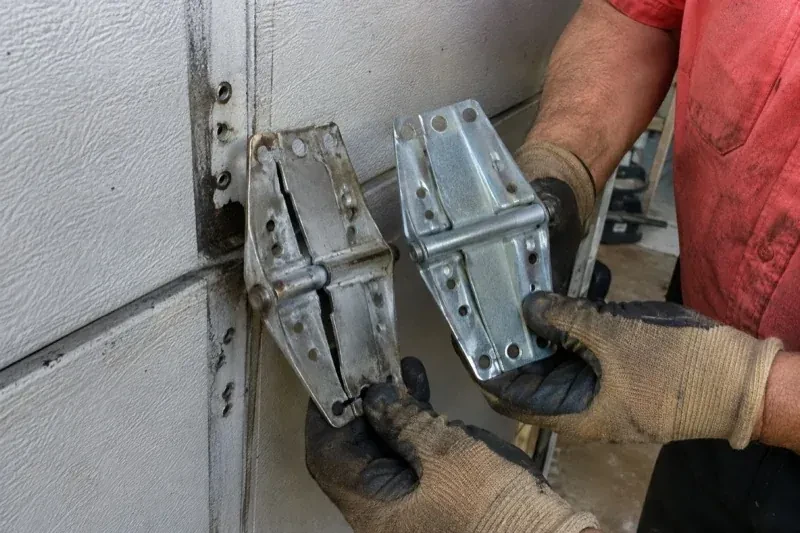
Winter puts the lowest hinges through the most. Slush and road salt land on the bottom two joints, and the salt eats into the galvanizing where the leaf meets the pin. A bottom seal frozen to the slab is the other winter classic: the opener pulls on the top panel, the door stays put, and the hinges and top fixtures take a wrench they were never built for. Hinge replacement puts new galvanized steel on the worn joints, straightens or renews anything bent in the tug, and ends with two habits, a clear threshold and a wipe of the low hardware, that keep the new set sound.
How the visit goesOn the old wood door, one hinge has pulled away from the panel, dragging a screw and a chunk of soft timber with it. The panel sags slightly at that joint and the door bumps at the curve instead of gliding.
Garage Door Hinge Replacement
How the visit goes
Why the hinge gave up
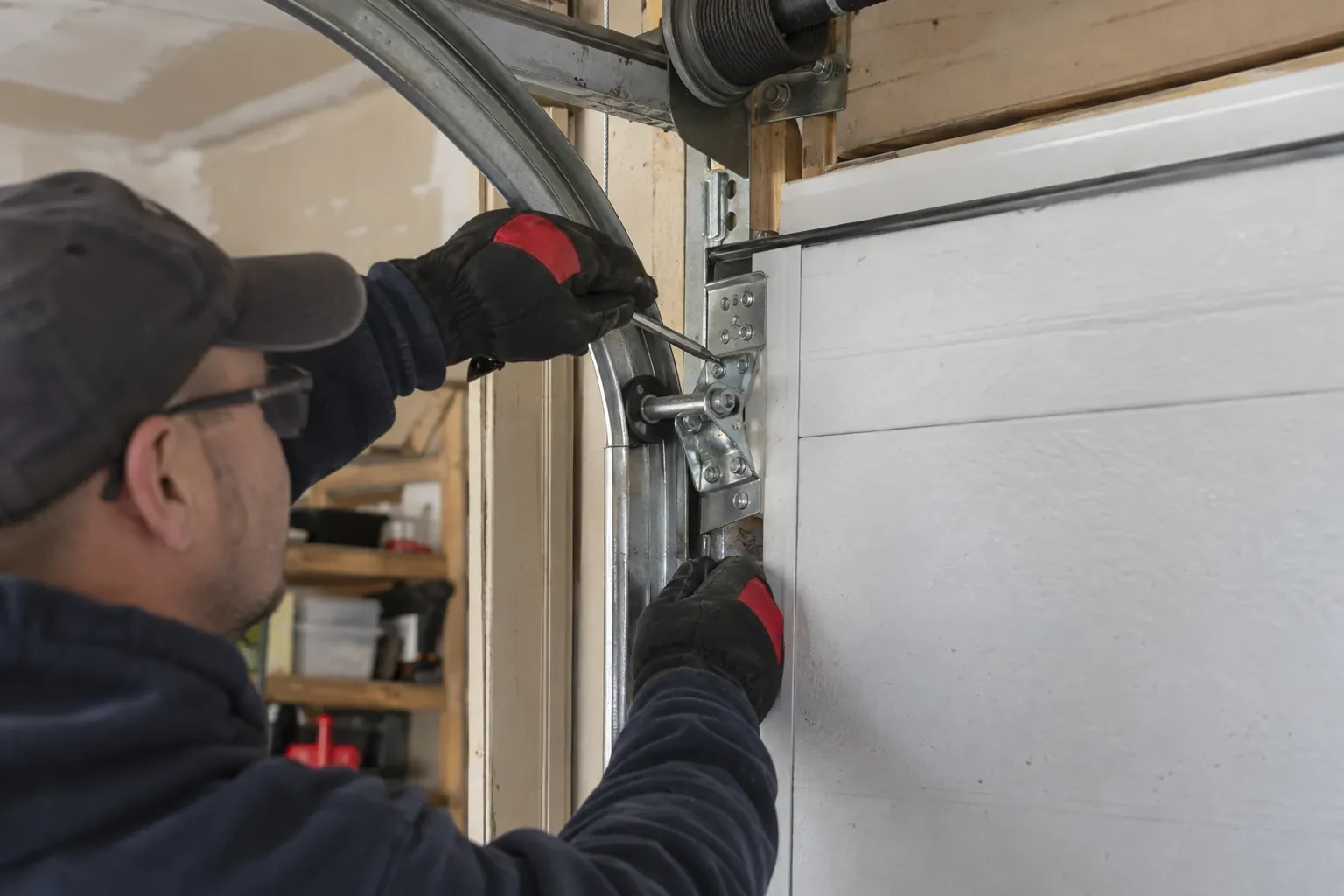
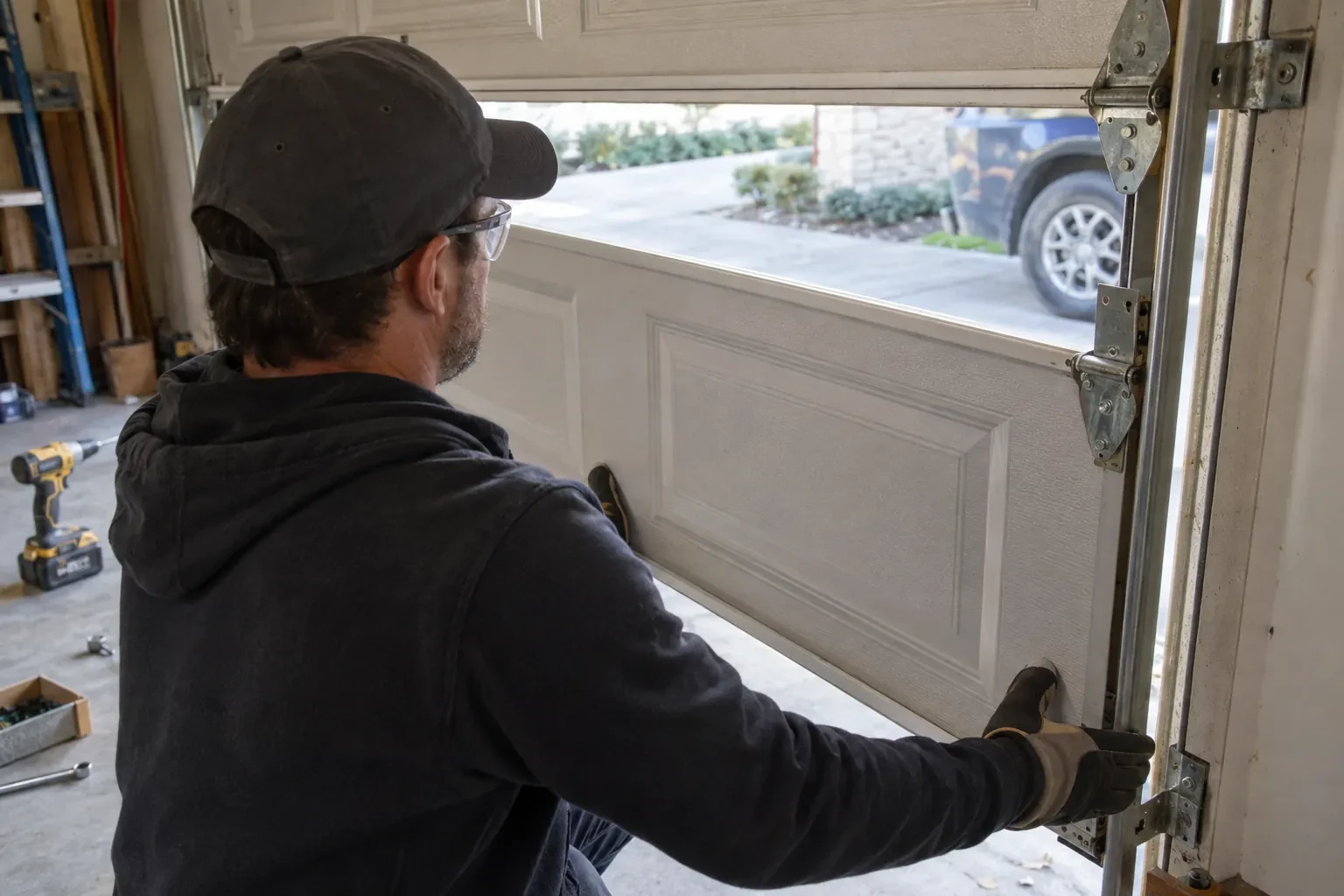
The technician wants the reason as much as the symptom. A door that is out of balance is dragged by the opener, and each hinge takes a share of that force many times a day. A vertical track that has shifted pinches the panels at the curve, and the hinge at that height flexes until it cracks. A bumper touch bends an edge hinge in a way that shows up as rubbing panel edges. Vibration alone works screws loose over the years. You will be asked what the door was doing before the hinge failed, because a stiff, jerky or noisy door before the break points to the cause.
Going over the rest of the hardware
With tools out and the door still, the technician goes down the whole door: every hinge screw snugged, roller stems and hinge knuckles given a garage door lubricant, top fixtures checked for tight fasteners, and the track brackets on the jambs confirmed secure. The bottom brackets are looked at but left alone, because they anchor the lift cables and are under spring tension. Struts and their fasteners get the same pass. This sweep takes little time and usually catches the next loose screw before it becomes the next cracked hinge, so the door leaves in better shape than the single repair would suggest.
Keeping salt off the low hinges
The two lowest joints live in the wettest part of the garage. Through winter, push slush away from the inside of the door rather than letting it sit against the bottom panels, and when a mild day comes wipe the road salt off the lower hinges, brackets and rollers with a damp cloth followed by a dry one. A light mist of silicone on the low knuckles in late autumn helps meltwater run off. Clear the ridge of ice that forms at the threshold before running the door, so the opener is never pulling against a panel frozen to the slab. These habits protect exactly the hinges that fail first here.
Garage Door Hinge Replacement
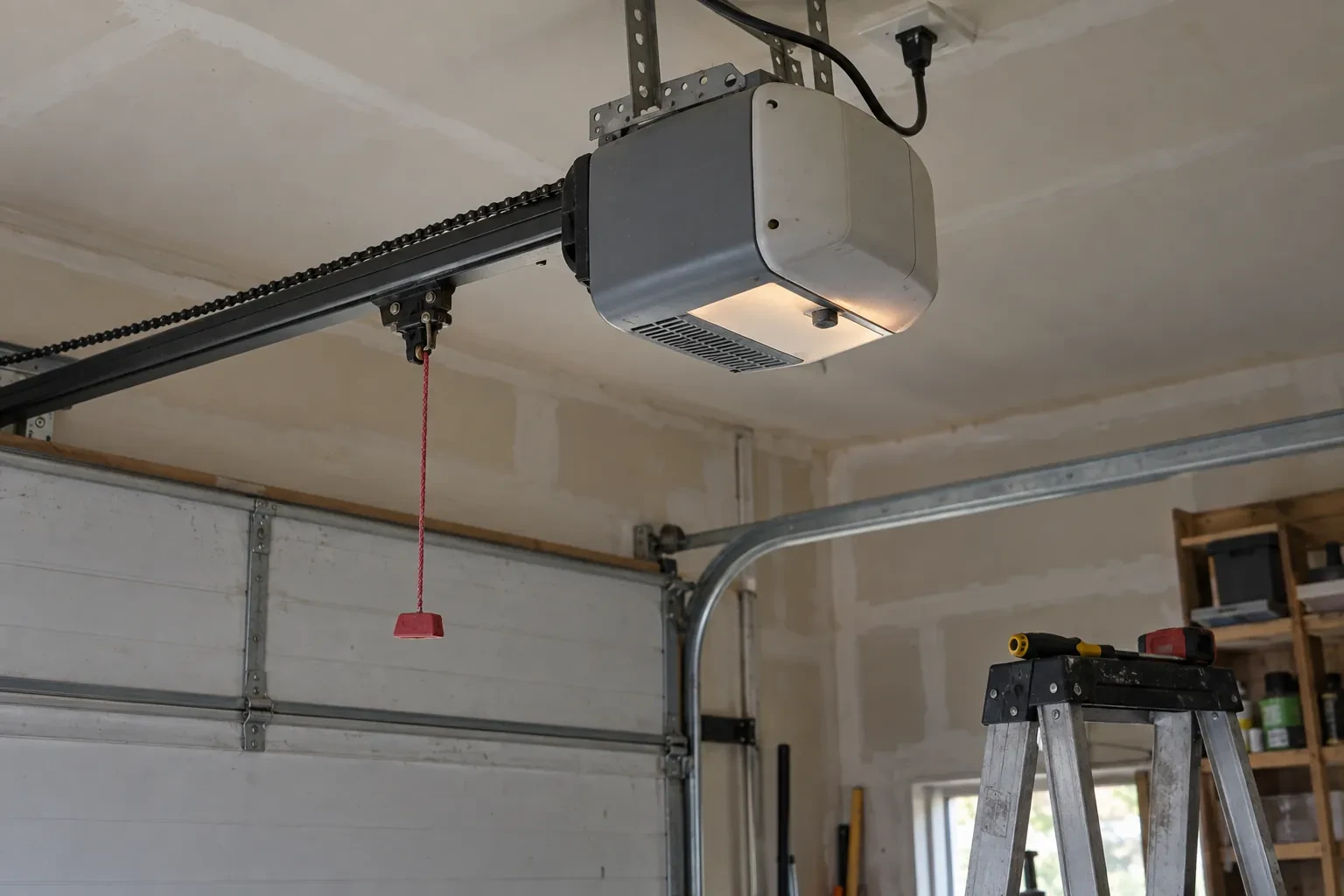
In the van
Carriage bolts, nuts and washers
Flashlight and level
Numbered galvanized edge hinges
Silicone or lithium hinge lubricant
Track clamps or locking pliers
Garage Door Hinge Replacement
What affects the quote
A full hardware tune-up while the technician is there
Some people use the visit to have every hinge screw snugged, all rollers checked and the whole door lubricated. That service is optional and quoted as one line.
Opener adjustment afterwards
A door that folds freely again sometimes needs the opener's force and travel settings reset and its reversal retested. That adjustment is named when it is needed.
How many hinges are changed
One cracked centre hinge is the smallest job. Several worn hinges across two or three joints, which is common on an older door, means more parts and more time, and the quote lists each.
What to have ready
- Is the door steel, wood or insulated steel?
- Do any screws turn without tightening when you press a hinge?
- Is anything stored against the door or under the track we should know about?
Garage Door Hinge Replacement: questions
QuestionsWhat happens during a hinge replacement visit?
The opener is disconnected and the door left closed. The technician inspects every hinge, roller and screw hole and explains what was found. Worn hinges are then changed one at a time with parts of the same number and gauge, tired holes are re-anchored, and rollers are renewed where needed. The door is run by hand to check the panels fold cleanly and the fit against the jambs, balance is tested, and the opener is reconnected and its safety reversal tested.
How many hinges does a typical door have?
Count the joints between panels and multiply. A single door usually carries two edge hinges and one centre hinge per joint, so a four-panel door has three joints and nine hinges. A double door adds one or two more centre hinges per joint to keep the wider panels flat. The top panel uses adjustable top fixtures rather than hinges, and the bottom corners use bottom brackets, which are different parts.
Why did the hinge crack in the first place?
Steel flexed often enough eventually cracks, and several things speed that up. A door out of balance is dragged by the opener, and every hinge takes the strain. A seized roller twists its hinge on each trip. A track out of line pinches the panels at the curve. A wide panel without a strut flexes at the joint. Corrosion at the low hinges thins the steel. The technician looks for which of these was at work so the new hinge is spared the same stress.
Related services
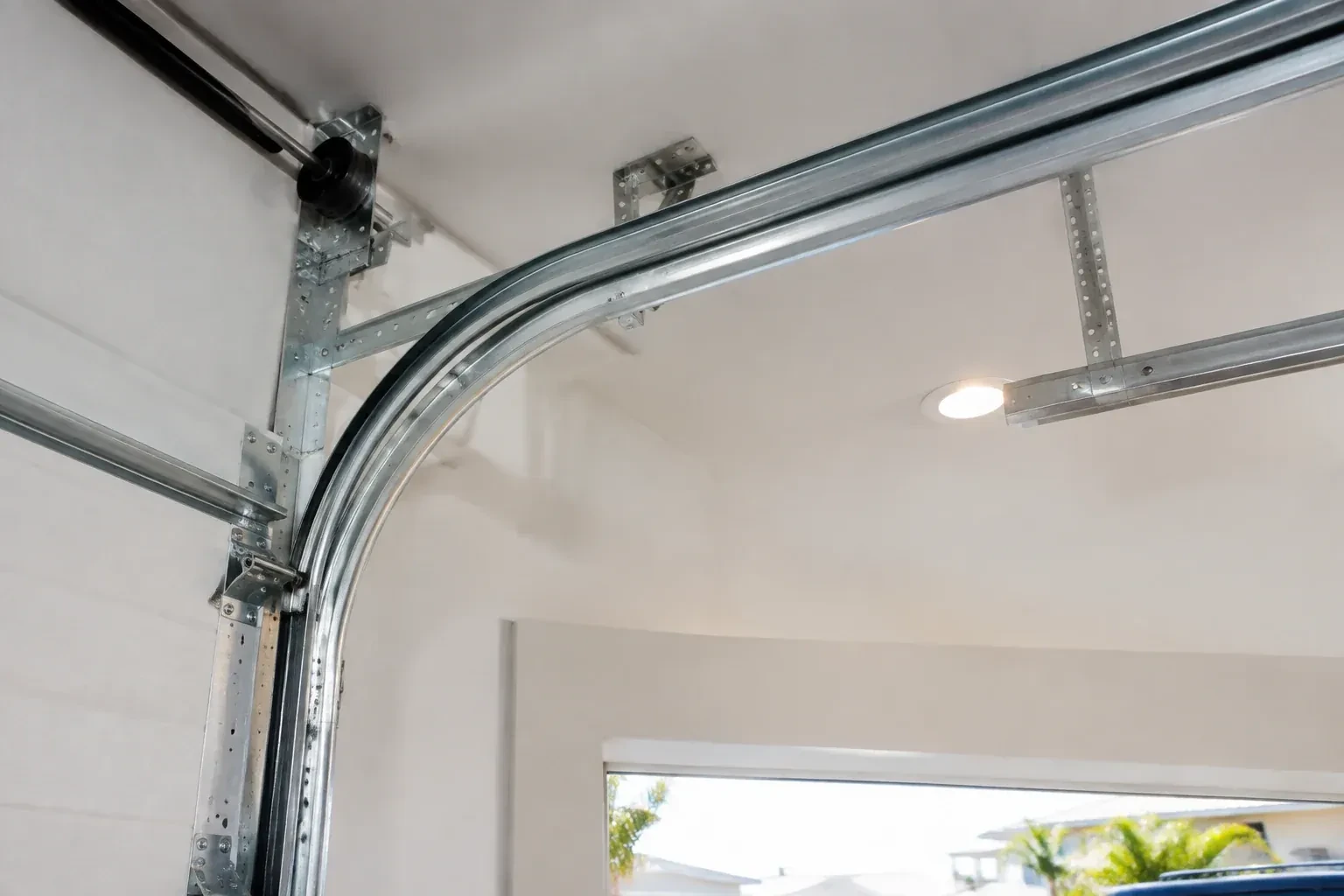
- Garage Door Track Repair or ReplacementThe door has started rubbing the frame on the left, leaving a shiny stripe down the weatherstrip.
- Garage Door Cable ReplacementThe cable has wrapped itself around the shaft above the door instead of sitting on its drum.
- Torsion Spring ReplacementOn a cold morning the remote does nothing useful: the light comes on, the motor turns briefly, the door stays shut.