Openers · Wexford Heights
Garage Door Opener Diagnosis and Repair in Wexford Heights
The motor runs, the chain rattles along the rail, and the door does not move a millimetre.
In plain words
What you get from the visit is more than a working door. You get told, in plain words, what was wrong and why it happened: a gear that had run dry for years, a sensor knocked out of line by a snow shovel, a wall control left in lock mode by a visiting grandchild. Small repairs are done on the spot, settings are recorded, and the door is demonstrated on every control you own. You also learn the short monthly test that catches most opener problems before they strand a car, so the next fault is one you notice while it is still small.
How the visit goesIt is a January morning and the door lifts about a hand's width, groans, and settles back down. When you pull the release and try by hand the door feels far heavier than it used to, and the bottom seal is stuck hard to the slab.
Garage Door Opener Diagnosis and Repair
How the visit goes
What the blinking lights are saying
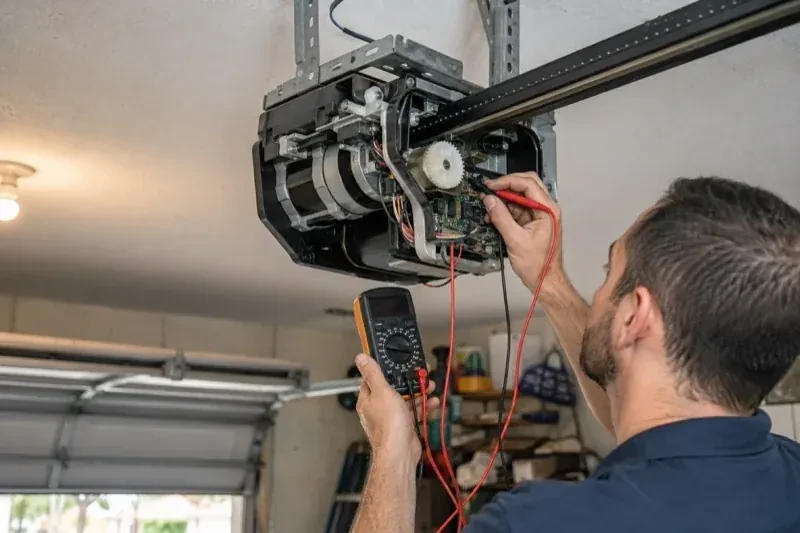
Many openers describe their own fault. The head unit flashes its light bulbs, or an up arrow and a down arrow, in a numbered pattern, and some display a code on the wall control. The technician counts the pattern, identifies the exact model from its label, and matches the two on the manufacturer's chart: one family of codes means the sensor circuit is open or obstructed, another means the motor was told to move and nothing turned, another means the door needed more force than the limit allows. The code narrows the search; a hands-on test then confirms it, because a wiring fault can imitate a sensor fault.
Door first, opener second
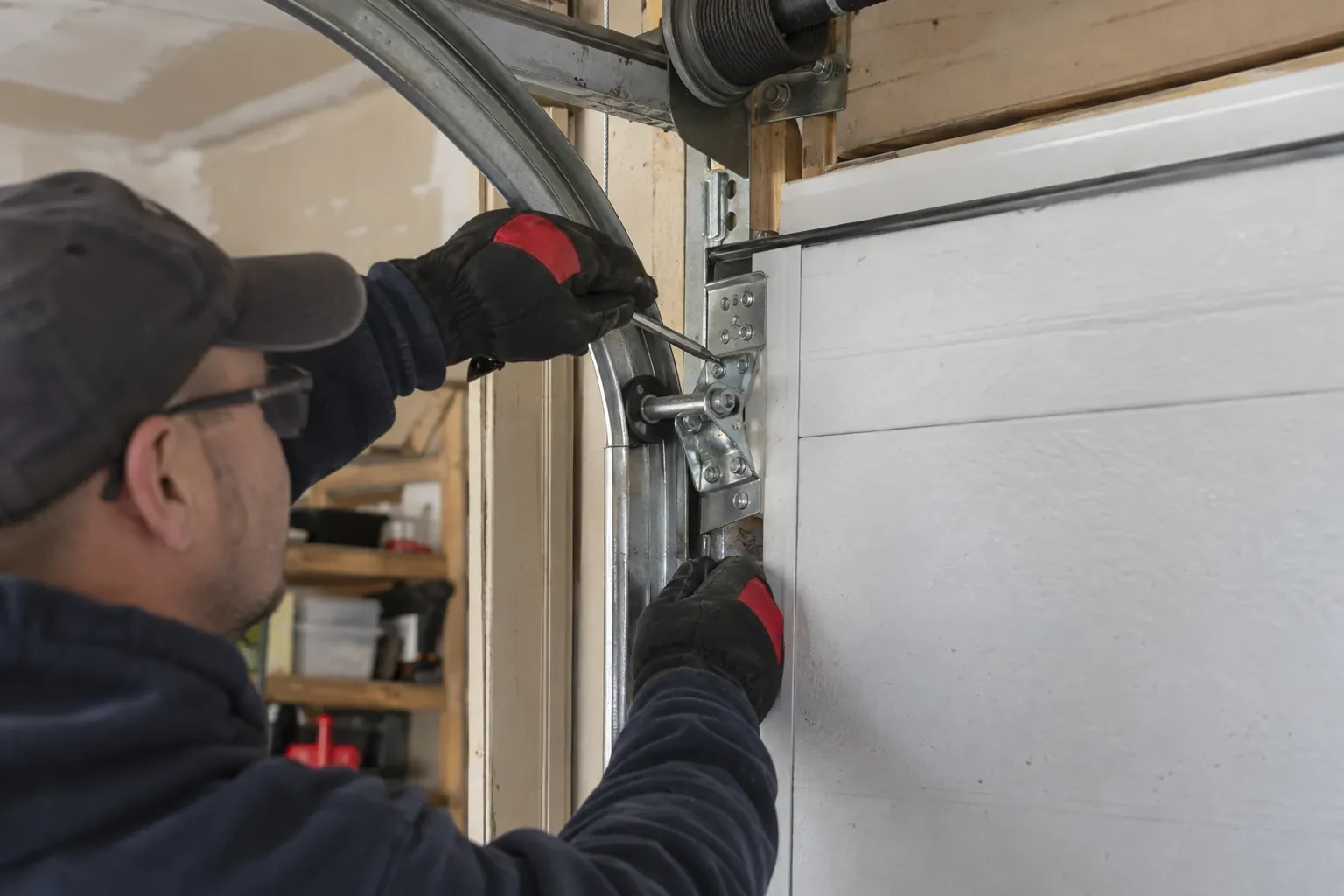
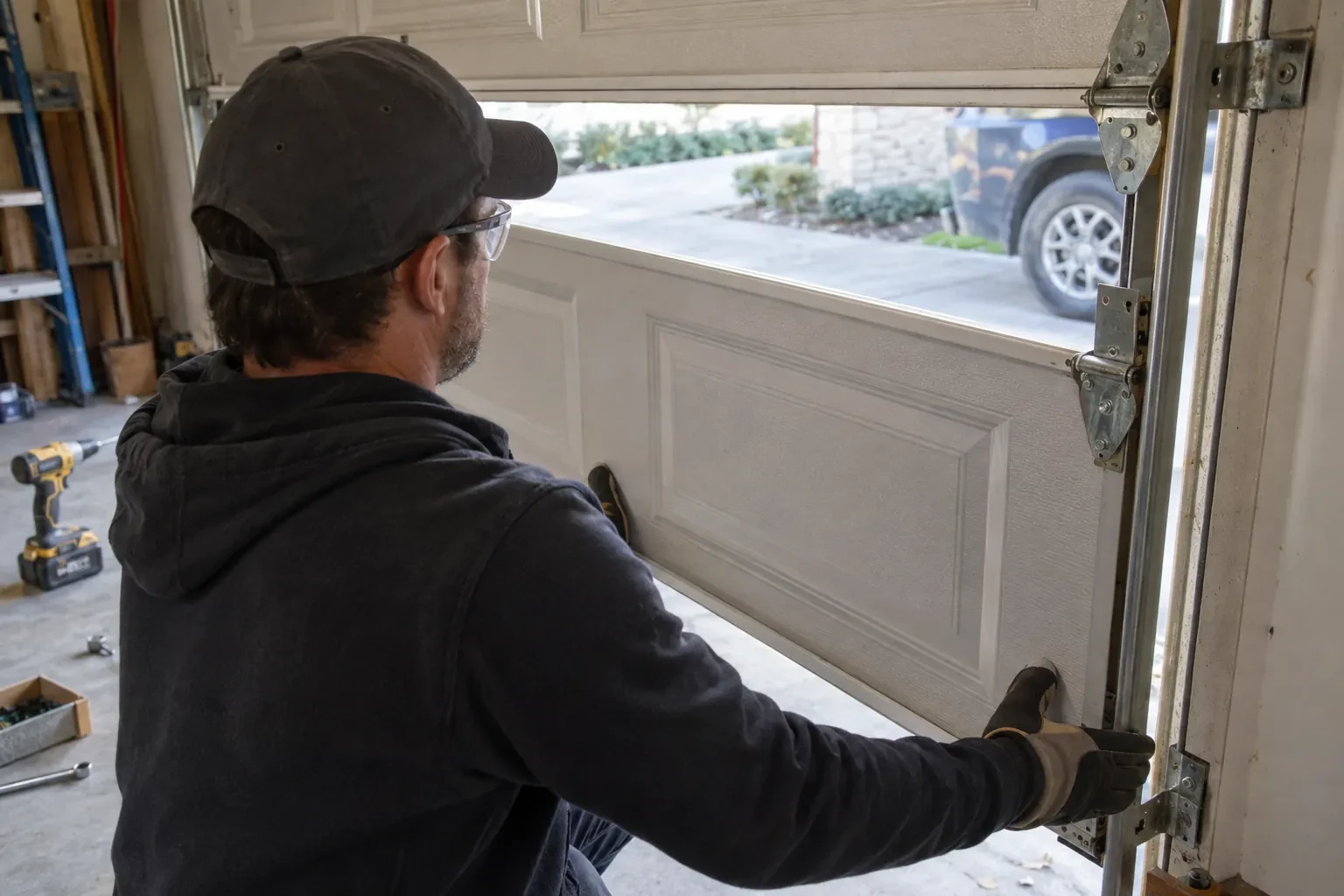
When the by-hand check shows the door is heavy, drifting or binding, the work order changes. The opener is left disconnected and the door side is corrected first: worn rollers replaced, dry hinges and rollers lubricated, loose track brackets tightened, a dropped header bracket re-secured, and spring or cable faults handed to the tensioned-hardware work they require. Only when the door lifts and holds by hand is the trolley re-engaged and the opener tested again. Very often the opener that seemed faulty runs perfectly once it is moving a balanced door, and the repair becomes lighter and longer-lived than any change made at the motor.
A clear path if the unit is near its end
When the diagnosis finds an opener that is safe today but not for long, you leave with a plan rather than a surprise. You know which part is wearing, what the warning signs will be, and how the decision to replace is likely to present itself. If the unit is one the industry recommends replacing, such as a head unit with no photo eyes, that is set out plainly along with what a modern belt or direct-drive unit changes: quieter running, battery backup, soft start and stop, and sensors that meet the current standard. The door is left working and safe while you decide.
Garage Door Opener Diagnosis and Repair
In the van
Travel limit switch or RPM sensor
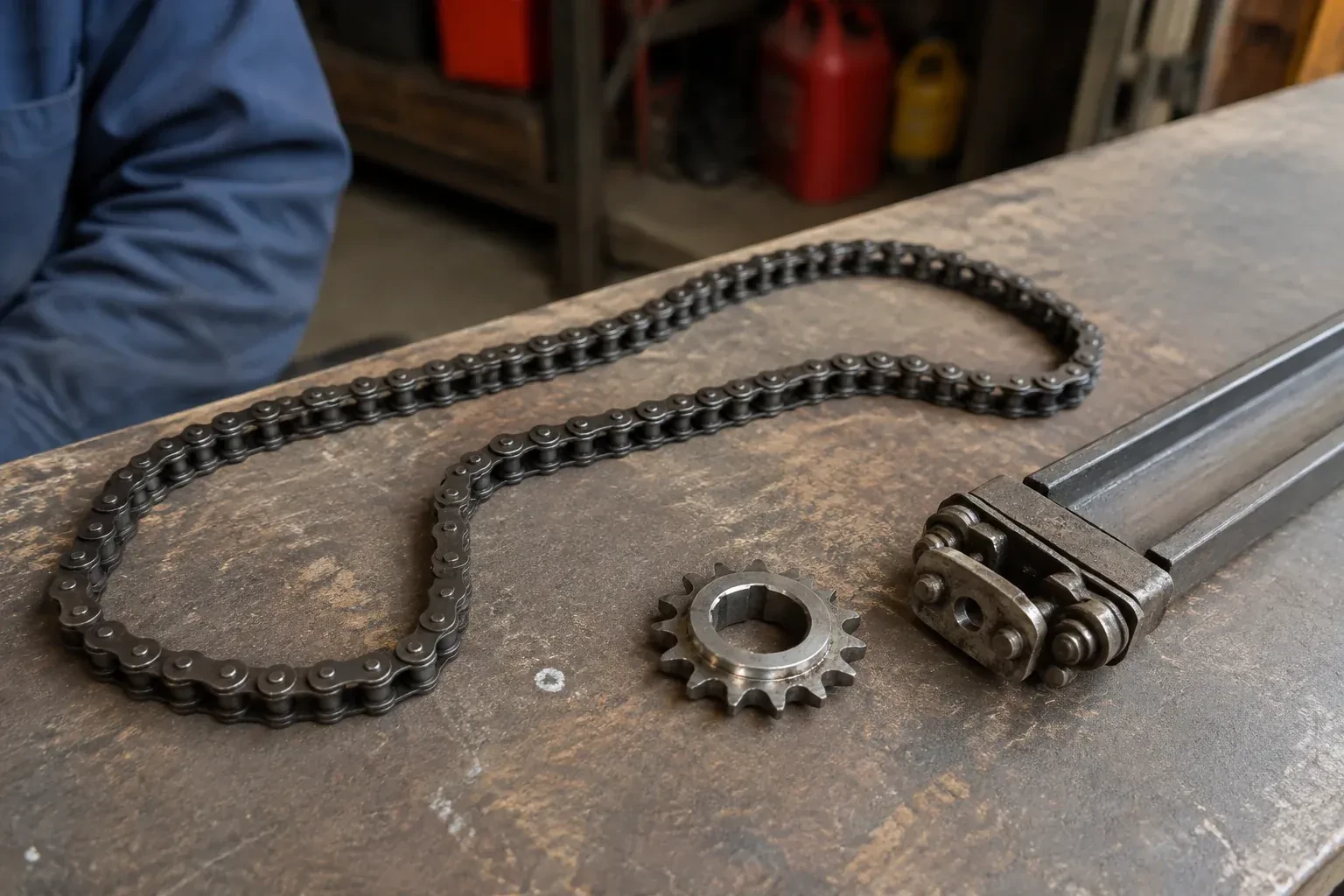
Drive gear and sprocket kit
Wall control
Bell wire and clips
Start capacitor
Garage Door Opener Diagnosis and Repair
What affects the quote
Condition of the mounting
A rail that has sagged, a header bracket pulling out of the wall, or ceiling angle iron that has loosened must be re-secured before the opener is set up, and that hardware work is itemized.
Getting in when the door is stuck shut
A garage with no side door and no house connection means working the release from outside before any test can begin, and the quote includes that entry step.
Type of drive
Chain, belt, screw, direct-drive and wall-mounted jackshaft openers each have their own parts and their own labour; a gear kit on a chain unit is a different job from a coupler on a screw drive.
What to have ready
- Are the lights on the opener or the wall control blinking, and in what pattern?
- Has anyone pulled the red emergency release cord recently?
- Does the fault happen with the wall control, the remotes, the keypad, or all of them?
Garage Door Opener Diagnosis and Repair: questions
QuestionsWhy will the door close only while I hold the wall button?
That is a built-in behaviour, not a new fault. When the sensor circuit reports a problem, most openers refuse to close from a remote but allow a constant-pressure close from the wall control, because someone standing there can see the doorway. It is a strong signal that the photo eyes or their wiring need attention, and once the sensor issue is corrected the door closes normally from every control again.
Should I lubricate the chain, the rail or the track?
Rollers, hinges, bearings and springs benefit from a garage door lubricant once or twice a year. The chain, belt or screw-drive rail is a separate question, since each drive type calls for its own product and schedule from the opener's manual rather than one rule for every unit. The track itself should stay clean and dry, because lubricant there collects grit and makes rollers slide instead of turning. The technician can point out the spots on your door at the end of the visit.
How do you tell whether it is the opener or the door?
By separating them. With the door closed, the emergency release is pulled so the opener is out of the picture, and the door is lifted by hand. A balanced door rises without strain, hangs where you leave it around waist height and stays open at the top. If it does, the opener is at fault. If it is heavy, drifts or binds, the door is the cause and the opener was only reporting the strain. This one check prevents a great many wrong repairs.
Related services
- Belt-Drive Opener RepairThe door used to glide up with a soft hum.
- Garage Door Opener ReplacementYou swapped the old wooden door for a heavier insulated steel one, and the twenty-year-old opener that was kept has never settled.
- Photo-Eye Sensor Alignment or ReplacementThe small light on one of the sensors near the floor has gone dark, or it flickers when someone walks past the track.