Springs · Wexford Heights
Garage Door Balance Adjustment in Wexford Heights
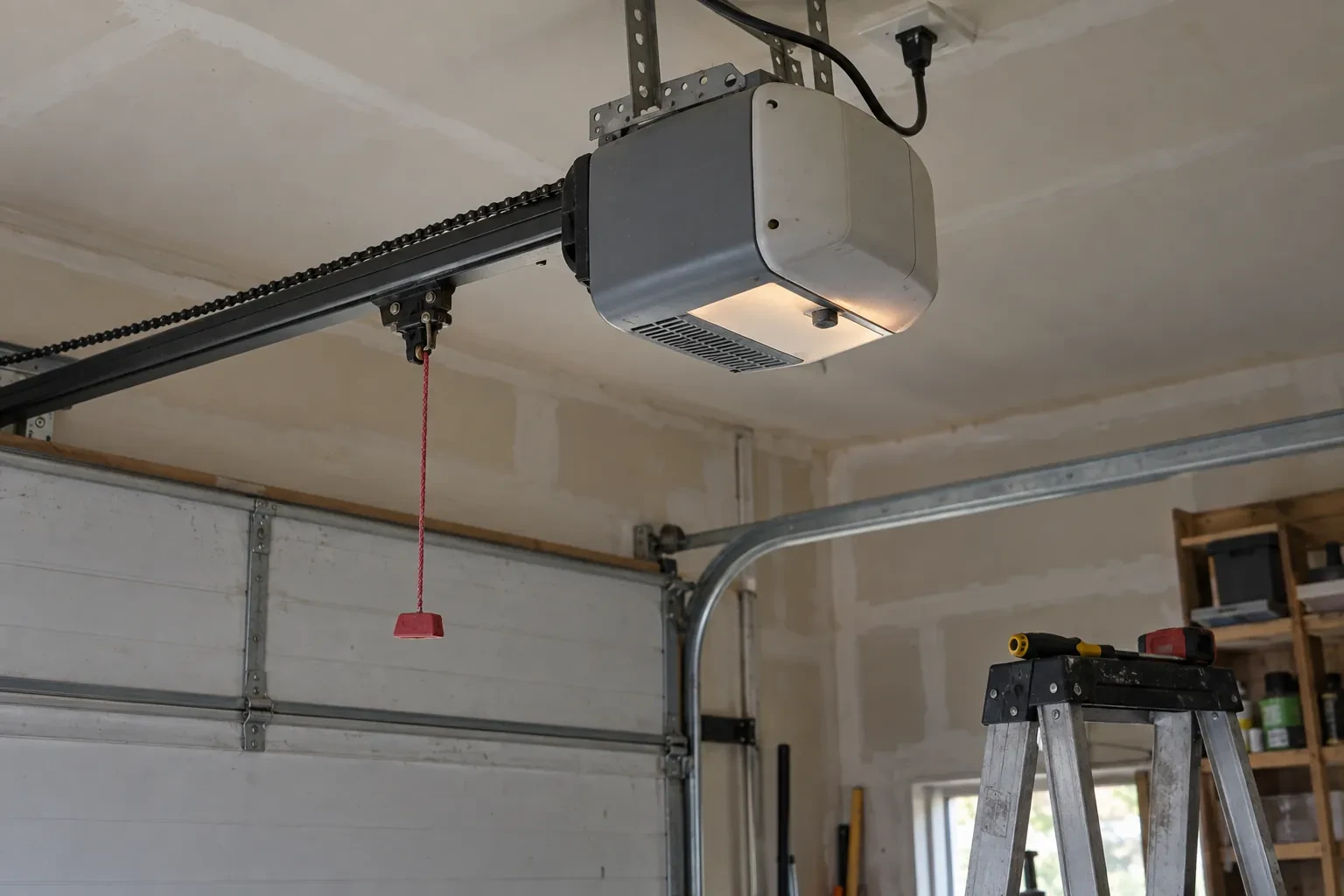
Released from the opener, the door will not hold anywhere.
In plain words
What you get back is a door that lifts with light, even effort and a written note of how it was set. It holds still at knee height, at waist height and fully open, closes onto the floor gently along its whole length, and rises without twisting. The opener sounds relaxed because it is steering rather than lifting, and it reverses cleanly when the safety tests are run. The technician tells you how many turns the springs carry, whether any parts are nearing the end of their life, and how to repeat the hand test yourself each season so you notice any drift early.
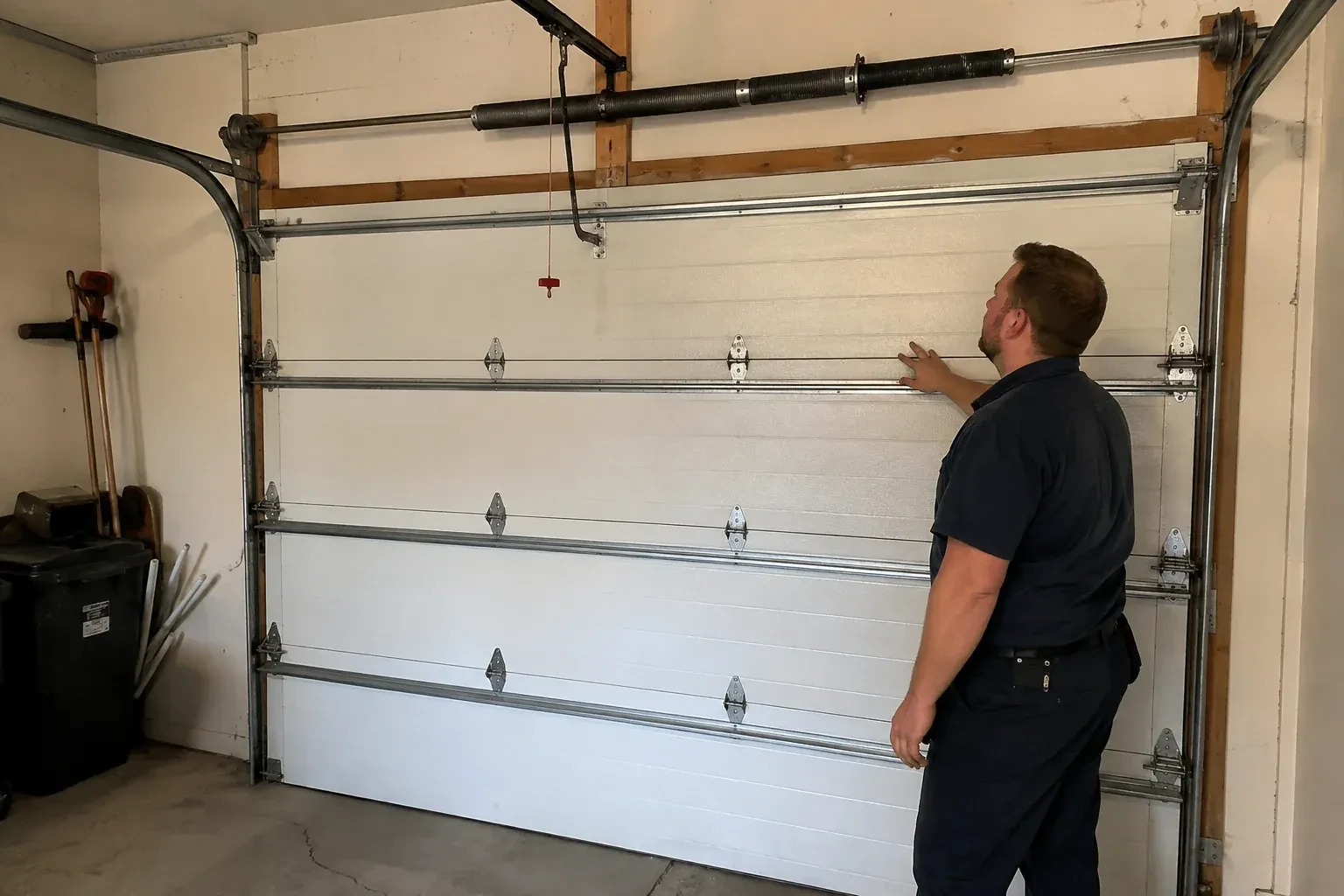
How the visit goesSomeone replaced the springs a while back and the door has bounced at the top ever since. It slams open against the stops, then creeps down a few inches, and the opener trolley rattles because the door is pushing where it should be resting.
Garage Door Balance Adjustment
How the visit goes
What the door weighs now, and what changed
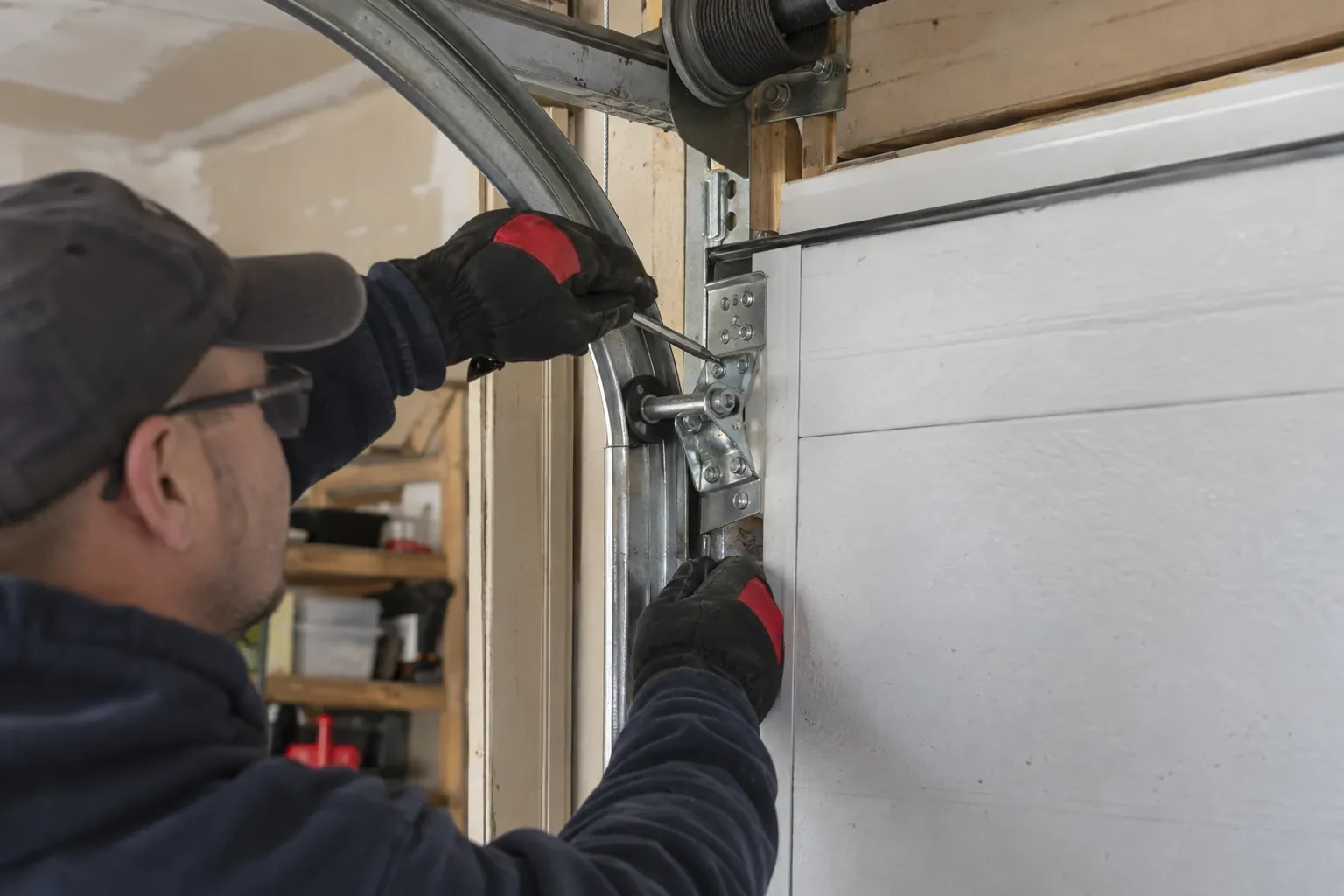
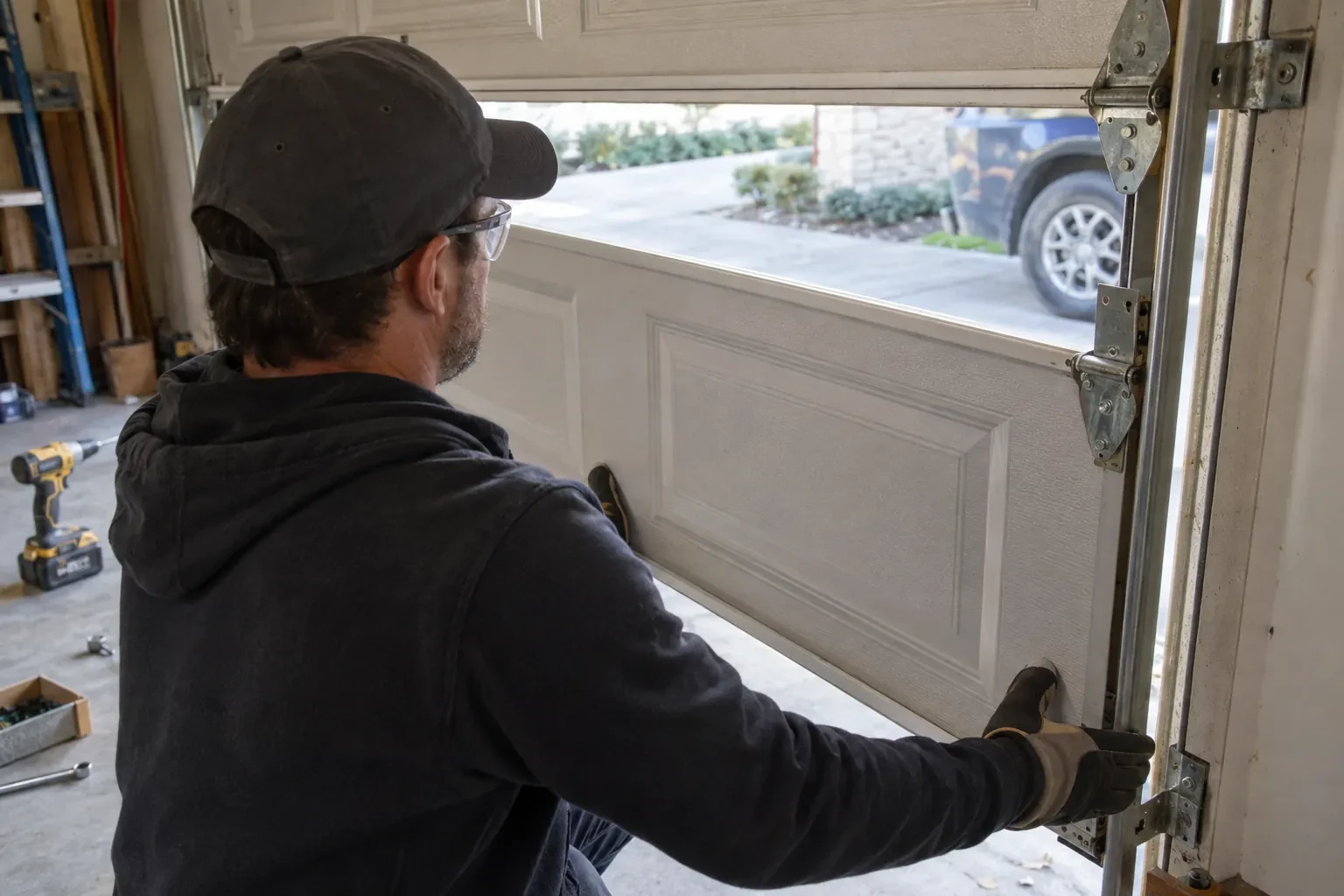
Springs are sized to a door's weight, so the technician asks what has changed since the door was installed. Insulated panels fitted over the original skins, a section replaced after a bump, a row of windows, a heavier bottom seal or decorative hardware all add weight, and even a fresh coat of paint on a wood door counts. Where the history is uncertain, the door can be weighed with the springs relaxed, using a scale under the bottom section. That figure tells the technician whether the existing springs can be adjusted to carry the door or whether the door has outgrown them and needs a different spring specification.
Proving the result with the safety tests
The visit is finished only when the standard tests pass. The technician places a piece of two-by-four flat on the floor in the door's path and closes it with the wall button; the door must strike the wood and return to fully open. Then, with the door closing again, an object is passed through the photo-eye beam, and the door must reverse. Finally the door is released once more and the hand test repeated so you can see it hold at knee height, at waist height and fully open. These are the same checks the door industry's own maintenance checklist uses, and you are welcome to watch each one.
Lubrication that keeps the adjustment true
A balanced door stays balanced longer when the parts that move on every cycle are kept easy. Twice a year, spray a lubricant made for garage doors along the torsion spring, onto each hinge pin, the roller stems and bearings, and the bottom bracket pins, then run the door a few times. Wipe the tracks clean but leave them dry, since a coated track collects grit and lets rollers slide. Avoid heavy grease. Friction is part of what the hand test measures, so a door that is well lubricated reads true, and the springs are not asked to overcome drag that a moment's maintenance would remove.
Garage Door Balance Adjustment
In the van
Nylon or steel rollers
Winding bars
Winding cone set screws
Garage-door lubricant
Extension springs and S-hooks
Garage Door Balance Adjustment
What affects the quote
Rollers, hinges and friction repairs
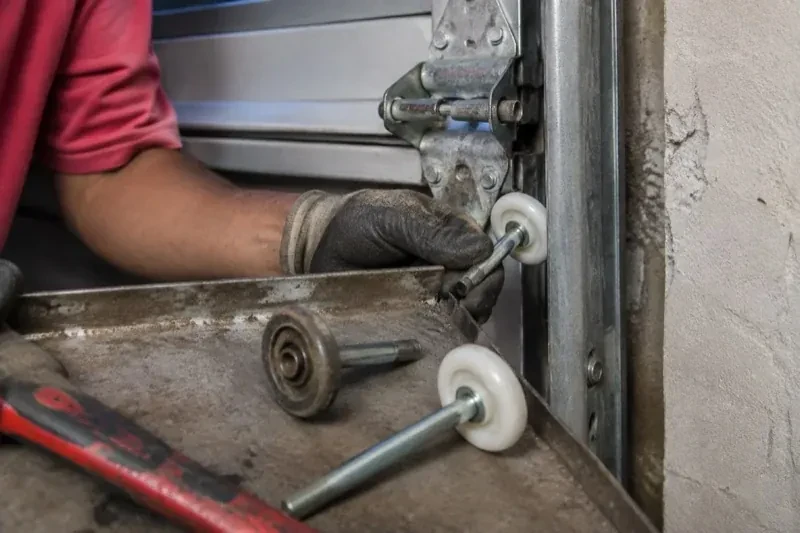
Seized rollers or worn hinges that made the door heavy are pointed out and offered as optional items, since replacing them while the technician is at the door is efficient.
Lubrication and tune-up
Some people combine the balance adjustment with a full lubrication and hardware tightening. That bundle is priced as a whole and saves a separate maintenance visit.
Extension-spring containment and pulleys
On an extension door, a missing containment cable is added and worn pulleys are replaced with the adjustment. Each is a small parts line on the quote.
What to have ready
- Does the door sit level when closed, or is one corner higher?
- Do you have the door or opener manual, or a label with the model?
- When were the springs last replaced or adjusted, if you know?
Garage Door Balance Adjustment: questions
QuestionsThe door was fine until a power cut. Why is it heavy now?
During a power cut the door is often released and moved by hand for the first time in years, and what people discover is a door that had already grown heavy while the opener quietly covered for it. The outage did not change the springs; it revealed them. A balance check confirms what the door weighs against what the springs give, and resets them to match.
What information helps when I book the visit?
Whether the door drifts up, sinks, or hangs crooked when released; whether there is one spring on a shaft above the door or springs along the tracks; whether it is a single or double door and roughly how tall; when the springs were last changed if you know; what has been added to the door; and whether the opener strains, reverses or stalls. A photo of the spring area is useful.
How many turns does a torsion spring need?
As a starting point, roughly one full turn for every foot of door height, so a seven-foot door carries a little over seven turns and an eight-foot door a little over eight. The exact figure depends on the drum size and the spring's rating, so the technician winds to the estimate and then fine-tunes by quarter turns until the hand test passes at every height.
Related services
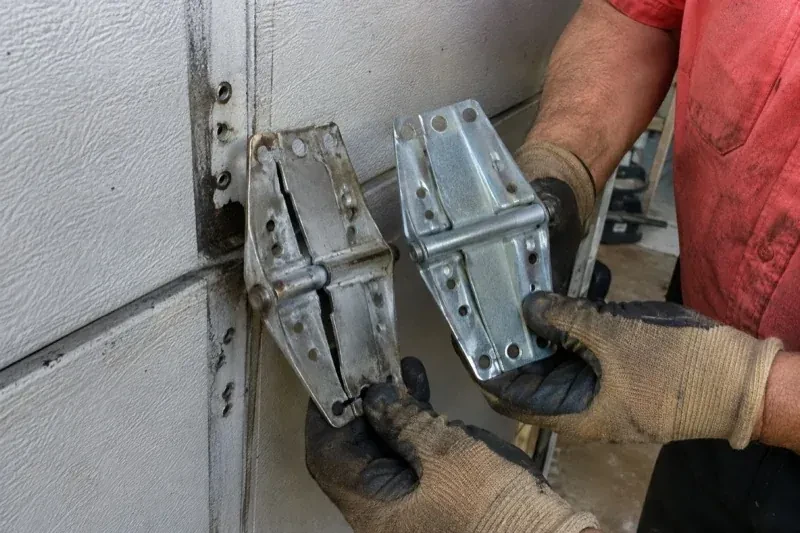
- Garage Door Hinge ReplacementThe roller at the top of the second panel is leaning outward and only half of the wheel is still in the track.
- Garage Door Track Repair or ReplacementThe door has started rubbing the frame on the left, leaving a shiny stripe down the weatherstrip.
- Garage Door Cable ReplacementThe cable has wrapped itself around the shaft above the door instead of sitting on its drum.