Springs · Ellesmere
Garage Door Track Repair or Replacement in Ellesmere
The door has started rubbing the frame on the left, leaving a shiny stripe down the weatherstrip.
In plain words
What you get back is a door that runs its full height without a catch, hesitation or bang, with every roller seated in its channel and both sides rising together. The track sits plumb and firm on the jambs, the horizontal runs hold level from solid hangers, and the door seals along the stop when closed. Because the track was set to the door and the springs re-tensioned to it, the door balances by hand and the opener works lightly. You also leave with a note of the track profile, radius and lift type, which makes any later part a simple match.
How the visit goesThe door climbs crooked, one side clearly ahead of the other. Nothing looks broken, but the two tracks sit different distances from the door, and one leans in toward the opening near the top.
Garage Door Track Repair or Replacement
How the visit goes
The curve and the flag bracket
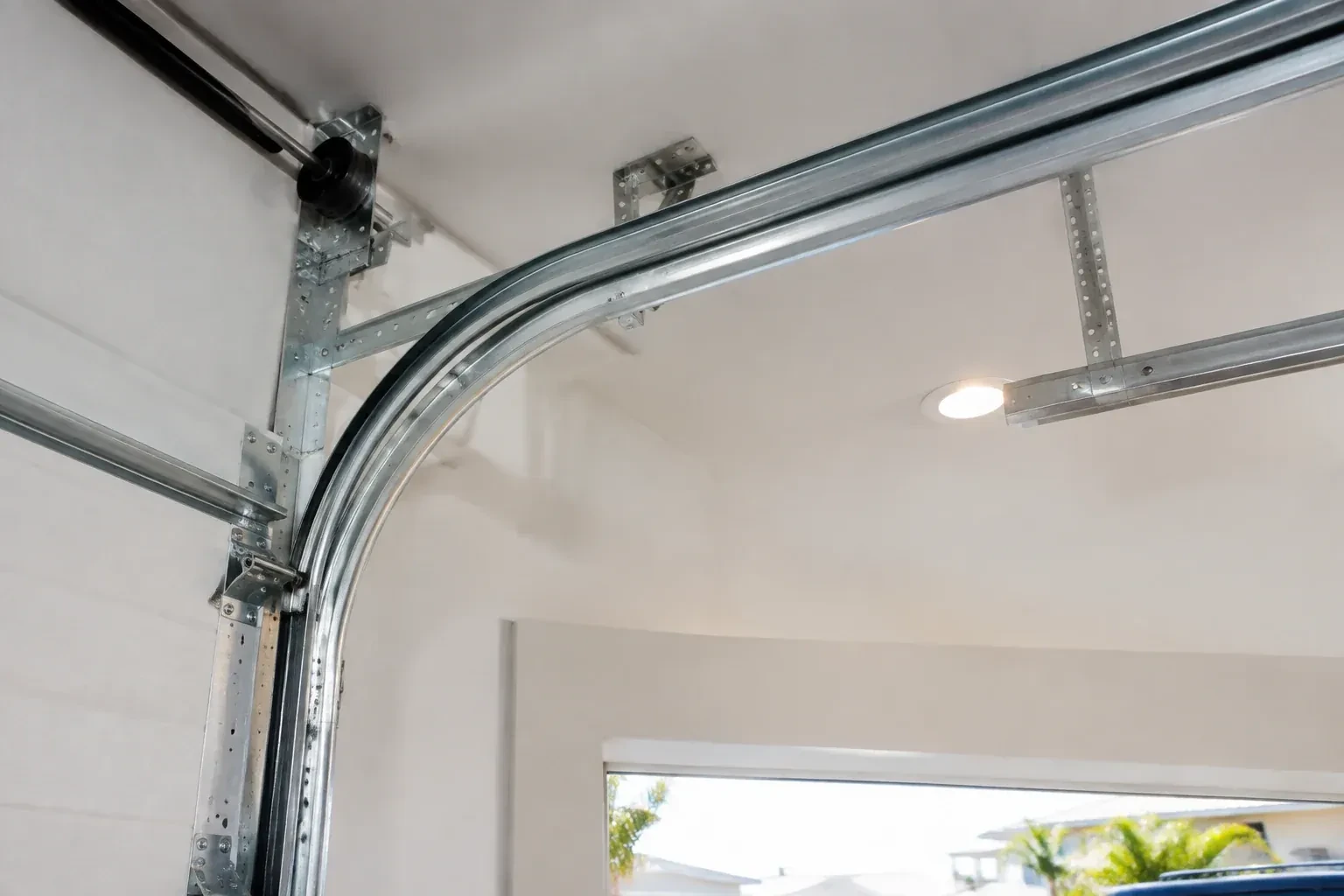
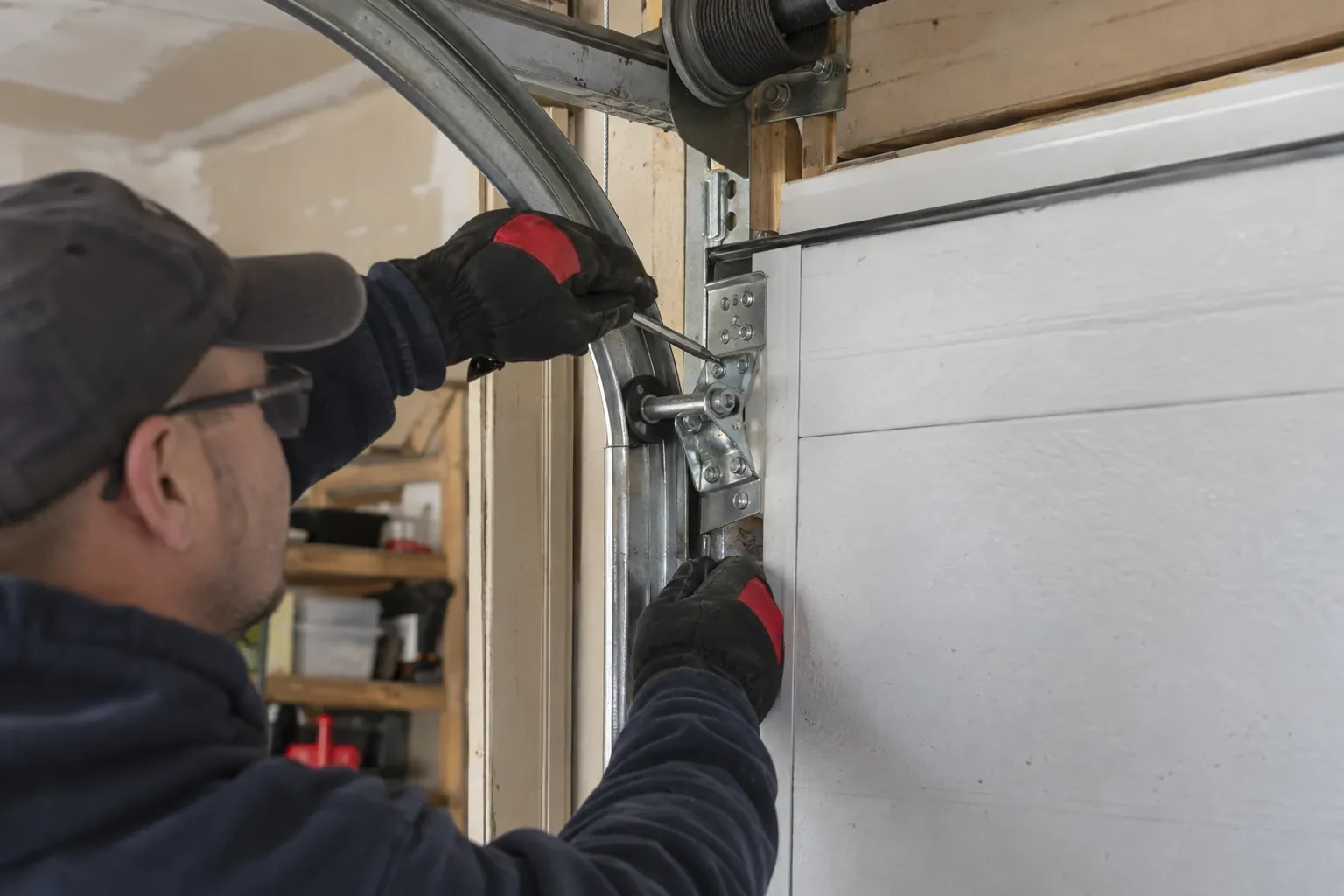
The curved piece where vertical meets horizontal takes the door's weight at the moment its direction changes, and it is the part least forgiving of a bend. The technician checks the curve for flattening, a twist or a kink, and confirms both sides share the same radius. Above it sits the flag bracket, the L-shaped angle that ties vertical track, horizontal track and, on a torsion door, the end bearing plate together. A loose or bent flag bracket shifts everything it holds, so its fasteners and squareness are checked with particular care, and the technician notes that the springs will be unloaded before that bracket is moved.
Setting the geometry
With the pieces in place, the technician sets the track to the door rather than to the wall. Each vertical run is plumbed, the gap to the door edge is matched side to side, and the top of each run is eased away from the jamb by the small amount that lets the door seal at the stop when closed and release on opening. The horizontal runs are levelled to each other and squared to the verticals, and the distance between the two tracks is checked at the floor, at the curve and at the rear so the door is neither pinched nor loose anywhere in its travel. Every bracket is then tightened in that position.
The record of the track profile and layout
Before leaving, the technician tells you what the door runs on: two-inch or three-inch track, the radius of the curve, whether the layout is standard, low-headroom or high lift, and which pieces were straightened or replaced. Write it inside the cover of the door manual or on a card by the opener. Any future part, a roller, a hinge, a section of track, is then ordered to match rather than measured from scratch, and a technician years from now can read at a glance how the door was set up. If the jamb was repaired or a hanger moved to a joist, that goes on the same note.
Garage Door Track Repair or Replacement
In the van
Jamb lumber and construction screws
Replacement rollers and hinges
Lag screws and track bolts
Perforated angle back hangs
Horizontal track with curve
Garage Door Track Repair or Replacement
What affects the quote
Rollers, hinges and top fixtures damaged alongside
Parts that suffered while the door was catching, such as flat-spotted rollers, split hinges or bent top fixtures, are offered as their own items so the new track is not chewed by the old damage.
How the door is sitting
A door resting closed is straightforward. One jammed partway on a bent section, or with rollers out of the channel, has to be supported and freed before the track can be measured.
Snow or ice around the track needing clearing first
A track buried under snow or glazed with ice has to be cleared before the technician can see what is actually bent or worn underneath. That extra step is common in winter and is worked into the visit rather than treated as a separate call.
What to have ready
- Is there one spring above the opening, or springs along the tracks?
- Where is the damage: near the floor, at the curve, or on the overhead run?
- Is anything stored against or hung from the overhead track?
Garage Door Track Repair or Replacement: questions
QuestionsWhat happens during the visit?
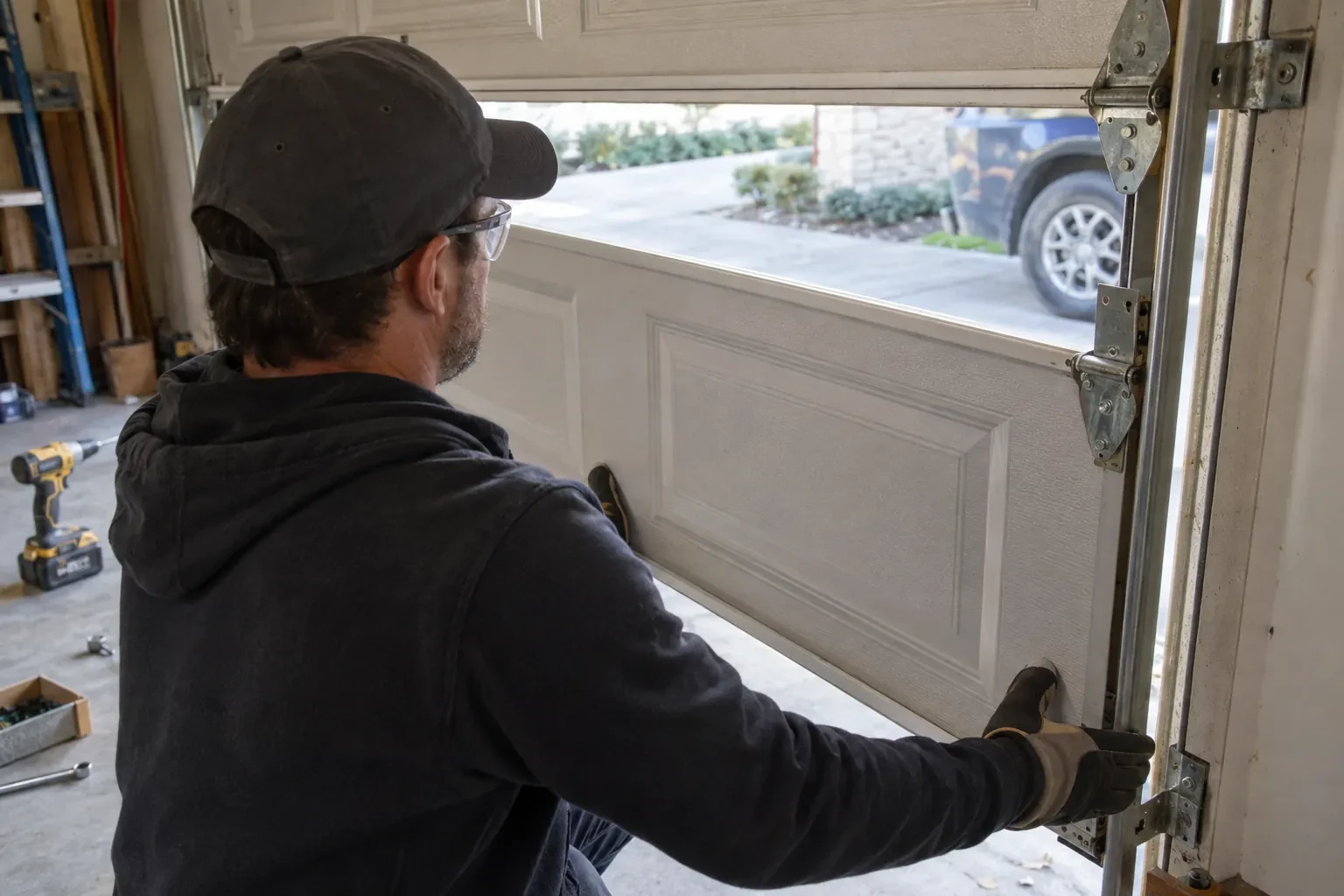
The opener is disconnected and the door clamped. The technician identifies the track type and layout, checks each vertical run for plumb, spacing and fixing, looks at the jamb wood, the curve, the flag brackets, the horizontal runs and their hangers, and how each roller sits. Damaged pieces are dressed or replaced, brackets refixed into sound wood, the geometry reset, rollers reseated, springs re-tensioned if they were unloaded, and the door balanced and the opener tested.
Can worn rollers damage the track?
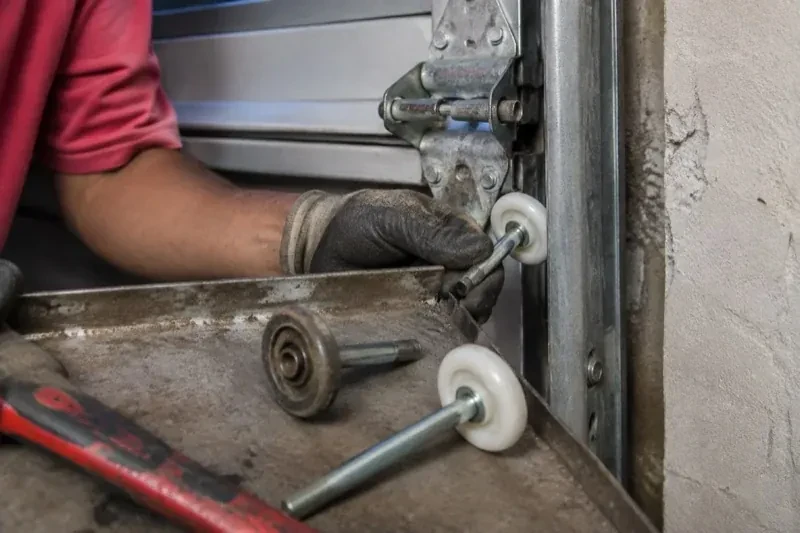
They can, and it is one of the slower ways track goes wrong. A wheel that no longer turns on its bearing skids along one lip of the channel, and over thousands of trips that pressure pries the lip open until a roller can slip out. When a spread section is closed up, the rollers that caused it are replaced at the same time, otherwise the new profile opens again within a season.
Why does the door catch at the same spot every trip?
A catch that repeats in one place is the signature of a local track fault: a dent, a spread section, a step at a joint, or a bracket that has let the track drift. Each roller reaches the flaw at the same point in the travel and bumps over it. The technician finds the spot by running a roller through the channel by hand, then dresses or replaces that length and checks the rest of the run for the same problem.
Related services
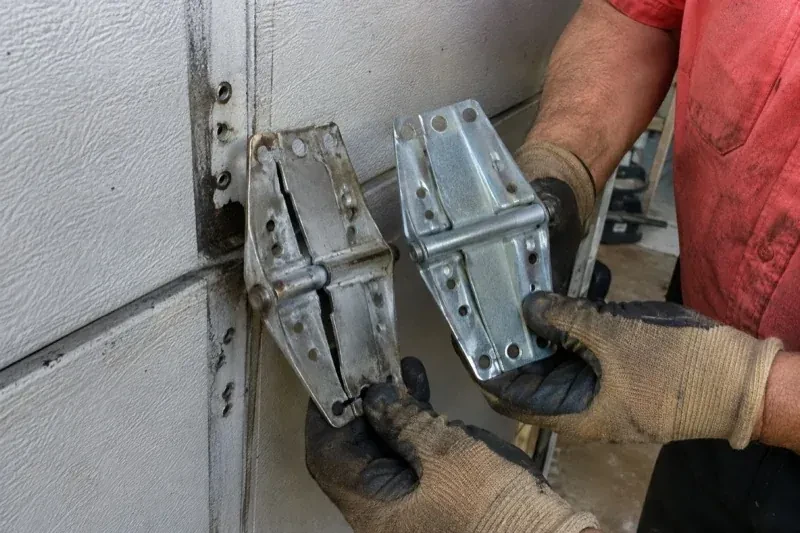
- Garage Door Hinge ReplacementThe roller at the top of the second panel is leaning outward and only half of the wheel is still in the track.
- Garage Door Cable ReplacementThe cable has wrapped itself around the shaft above the door instead of sitting on its drum.
- Torsion Spring ReplacementOn a cold morning the remote does nothing useful: the light comes on, the motor turns briefly, the door stays shut.