Openers · Woburn
Chain-Drive Opener Repair in Woburn
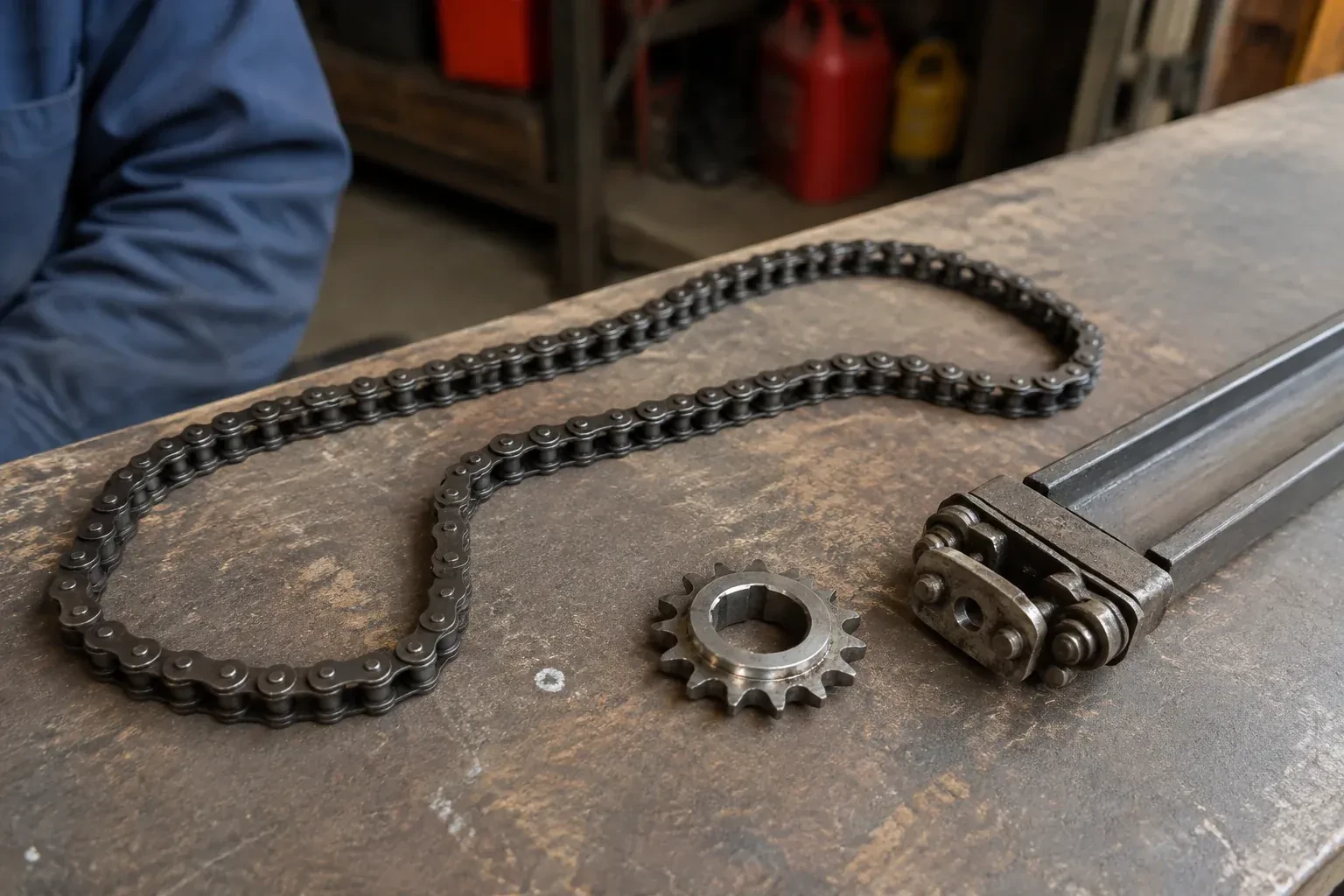
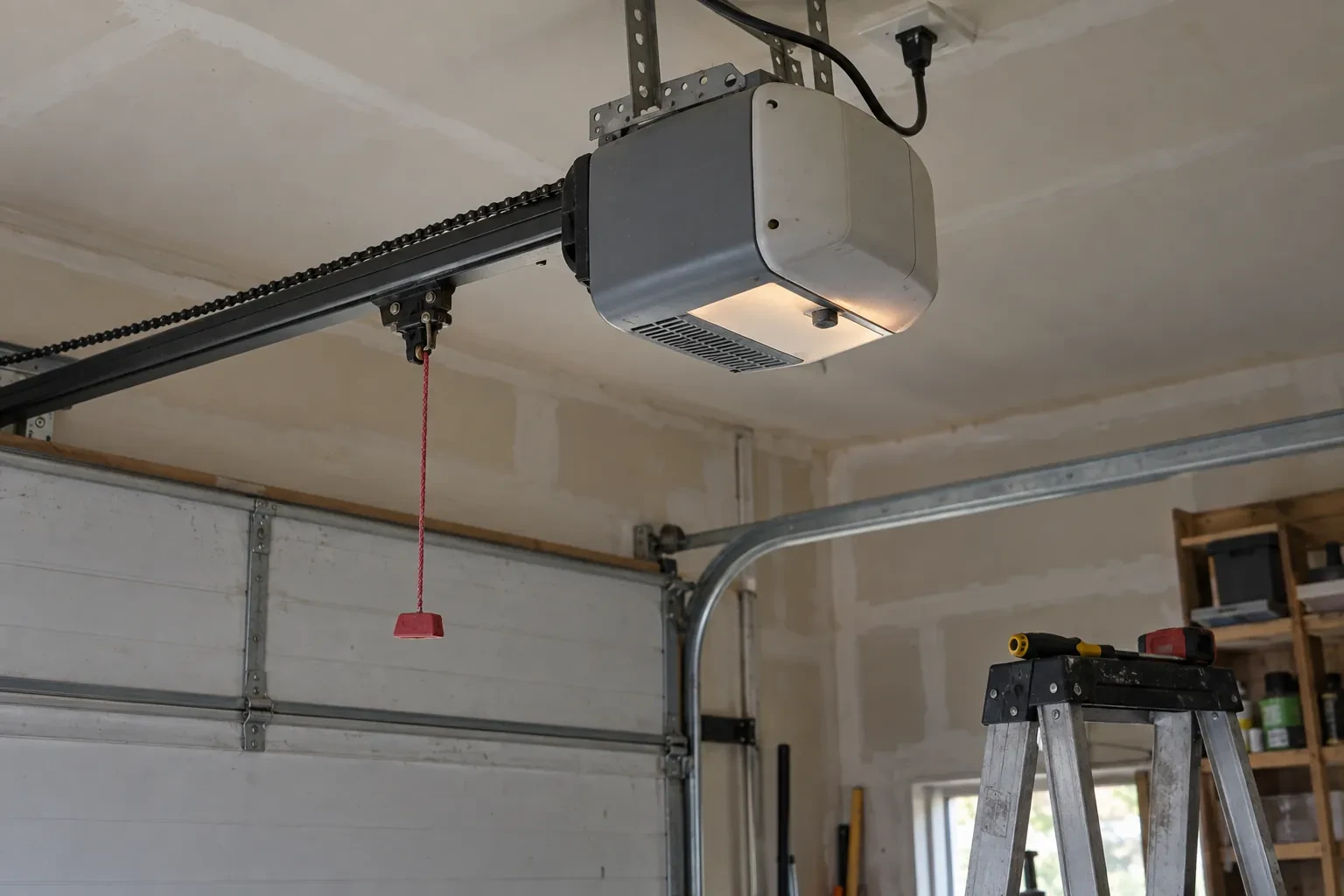
The chain in the detached garage went orange with rust over the winter, the links are stiff, and the opener strains and groans to pull the door up.
In plain words
A chain drive is never silent, but it should be steady. New rattles, clanks and grinding each point somewhere specific. A chain slapping the rail is loose tension. A rhythmic clack at one spot is a worn or hooked sprocket tooth, or a stiff link passing over it. Grinding from the head is gear trouble. A rail that shakes has loose hangers or a header bracket working out of the wood. The technician runs the door by hand first to separate door noise from drive noise, then works through the drive from sprocket to trolley, tightening, tensioning or replacing what the sound identified.
How the visit goesThe door opens about a third of the way and stops. Turning the limit screw on the head has made no difference, and the trolley seems to sit in the wrong place along the rail when the door is fully closed.
Chain-Drive Opener Repair
How the visit goes
Sensors, controls and the garage around them
Before the repair begins, the technician confirms the parts that will be tested at the end are in place. The photo eyes should sit no higher than about 15 cm off the floor with steady indicator lights; the wall control at least 1.5 m up and in sight of the door; the red release handle no more than about 1.8 m above the floor; the manual slide lock on the door disabled. The garage itself is noted: whether it is heated, whether the chain shows salt corrosion from vehicles, and whether the head plugs into a nearby receptacle or a draped extension cord. These points shape the repair and the advice that follows it.
Renewing the drive gear and sprocket
When the gear has stripped, the head is unplugged and the chain is slackened at the trolley and lifted off the sprocket. The old sprocket shaft assembly, drive gear and worn worm gear come out, the shavings are cleaned from the housing, and the model's own gear kit is fitted with a fresh bed of white lithium grease on the teeth. The sprocket is seated and the shaft checked for smooth turning without side play. The chain goes back over the new sprocket with the motor at its closed position so the drive stays in phase, and tension is set before the door is reconnected and the limits are confirmed.
Two tests once a month
The protection built into the operator only counts if it still works, and two short checks each month keep you sure of it. Lay a scrap of 2x4 flat on the floor under the middle of the door and close it from the wall button; the door should climb back to open the moment it touches the wood. Then, with the door closing again, pass a broom handle through the beam of the low sensors; the door should reverse just the same. If either test is failed, stop using the operator and book an adjustment. It is a setting, and a small one, but it is the one that matters most.
Chain-Drive Opener Repair
In the van
Sprocket and shaft assembly
Trolley release lever
White lithium grease
RPM sensor
Inner and outer trolley
Chain-Drive Opener Repair
What affects the quote
When the visit happens
An evening, weekend or holiday call costs the same amount as one on a weekday for a chain-drive repair. The exact figure is confirmed once the technician has looked at the chain, the rail and the gear kit in person.
Rail shape and door height
A T-rail and a square rail take different chains and tension figures, and an 8 ft door runs a longer rail and chain than a 7 ft door, so the length of chain on the quote follows the rail.
Electrical parts inside the head
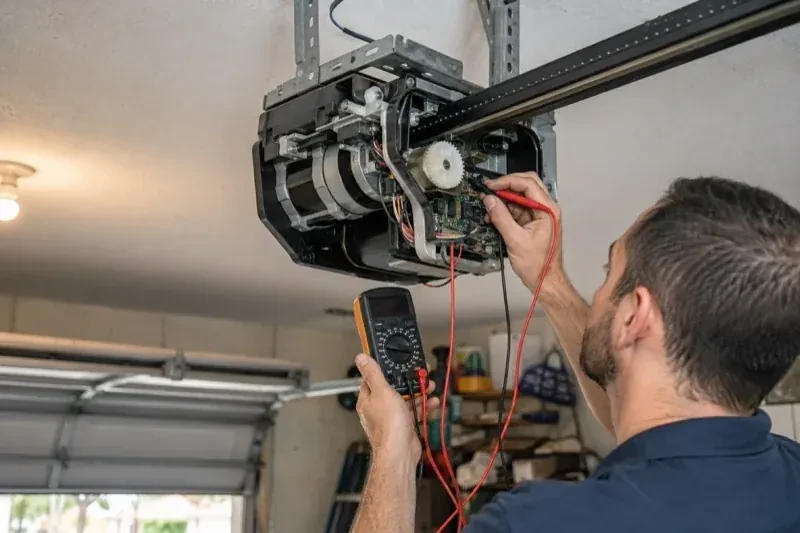
A swollen capacitor, a failed RPM sensor or a damaged board found during the inspection are quoted separately from the mechanical drive, since each is a distinct component for that model.
What to have ready
- Has anyone adjusted the limit or force screws, or run the opener with the chain off?
- What make and model is on the opener's label, and roughly how old is it?
- Have you noticed pale plastic shavings on or under the motor housing?
Chain-Drive Opener Repair: questions
QuestionsIs a chain drive supposed to be this noisy?
A chain drive has a steady mechanical sound that a belt drive lacks, and that much is normal. What is not normal is change: a slap along the rail from a loose chain, a clack at one spot from a worn sprocket tooth, grinding from the head as a gear wears, or a rattle from hangers or a header bracket that have loosened. Each of those has a fix, and a repaired chain drive should sound the way it did when it was new.
How and how often is the rail lubricated?
On the interval the opener's own manual calls for, often every two to three years. With the power off, the old grease is wiped from the rail along the path the trolley travels, and a thin layer of white lithium grease is applied in its place. The door is then run a few times so the trolley spreads it. The door's own tracks, where the rollers run, are never greased; they stay clean and dry, and the rollers, hinges and bearings take a garage door lubricant once a year instead.
What is the trolley, and why would it get stuck?
The trolley is the carriage that rides along the rail, pulled by the chain, with the door arm hooked to it. It gets stuck when the travel limits creep and it is driven onto the stop bolt at the head end or the stop tab at the door end, where the motor hums but nothing moves. The technician slackens the chain, runs the trolley off the stop under power, and pulls the limit back so it stops short in future.
Related services
- Belt-Drive Opener RepairThe door used to glide up with a soft hum.
- Garage Door Opener ReplacementYou swapped the old wooden door for a heavier insulated steel one, and the twenty-year-old opener that was kept has never settled.
- Photo-Eye Sensor Alignment or ReplacementThe small light on one of the sensors near the floor has gone dark, or it flickers when someone walks past the track.