Repairs · Bendale
Garage Door Safety Inspection in Bendale
On bright afternoons the door goes down a metre, stops, and climbs back up while the light on the opener blinks.
In plain words
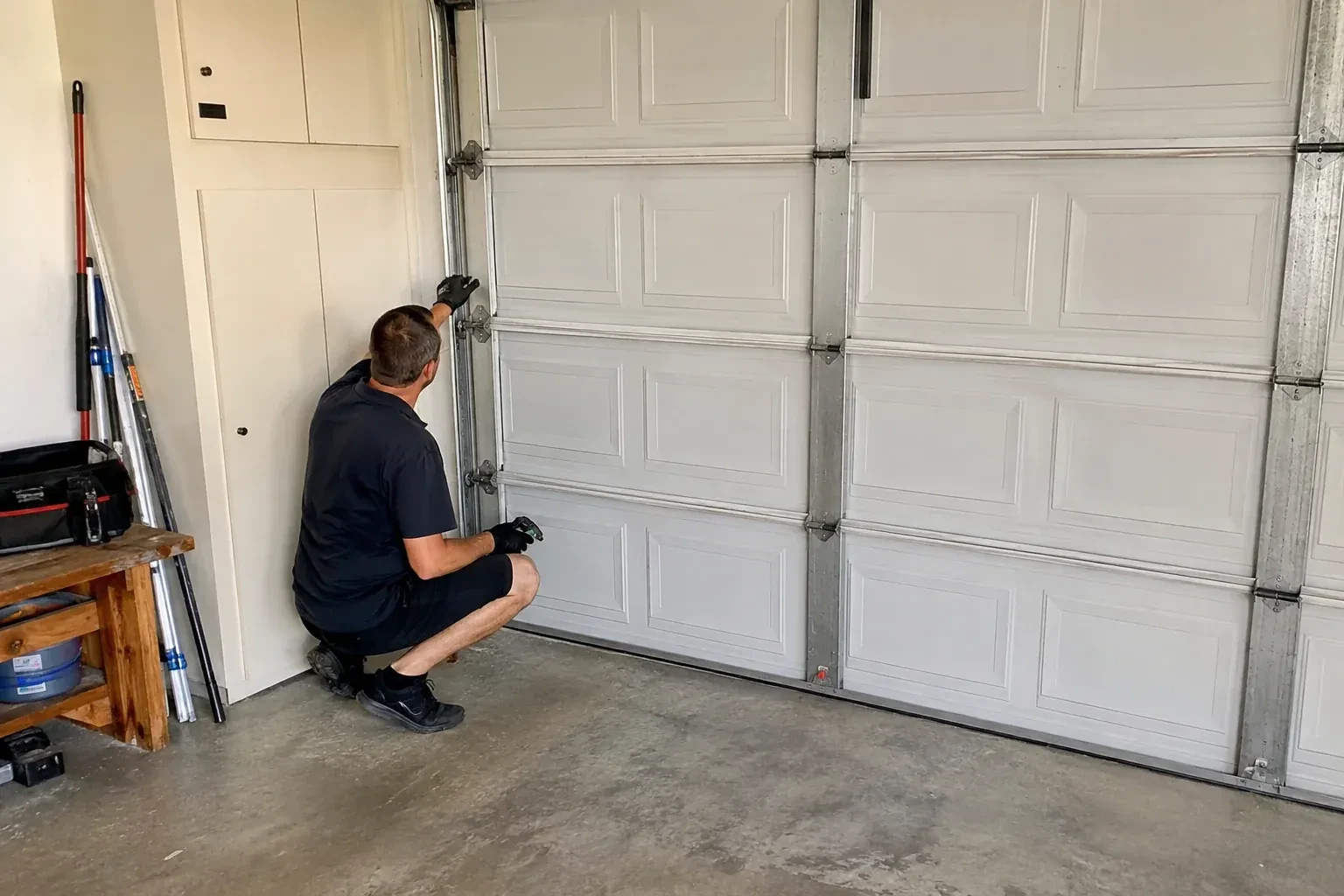
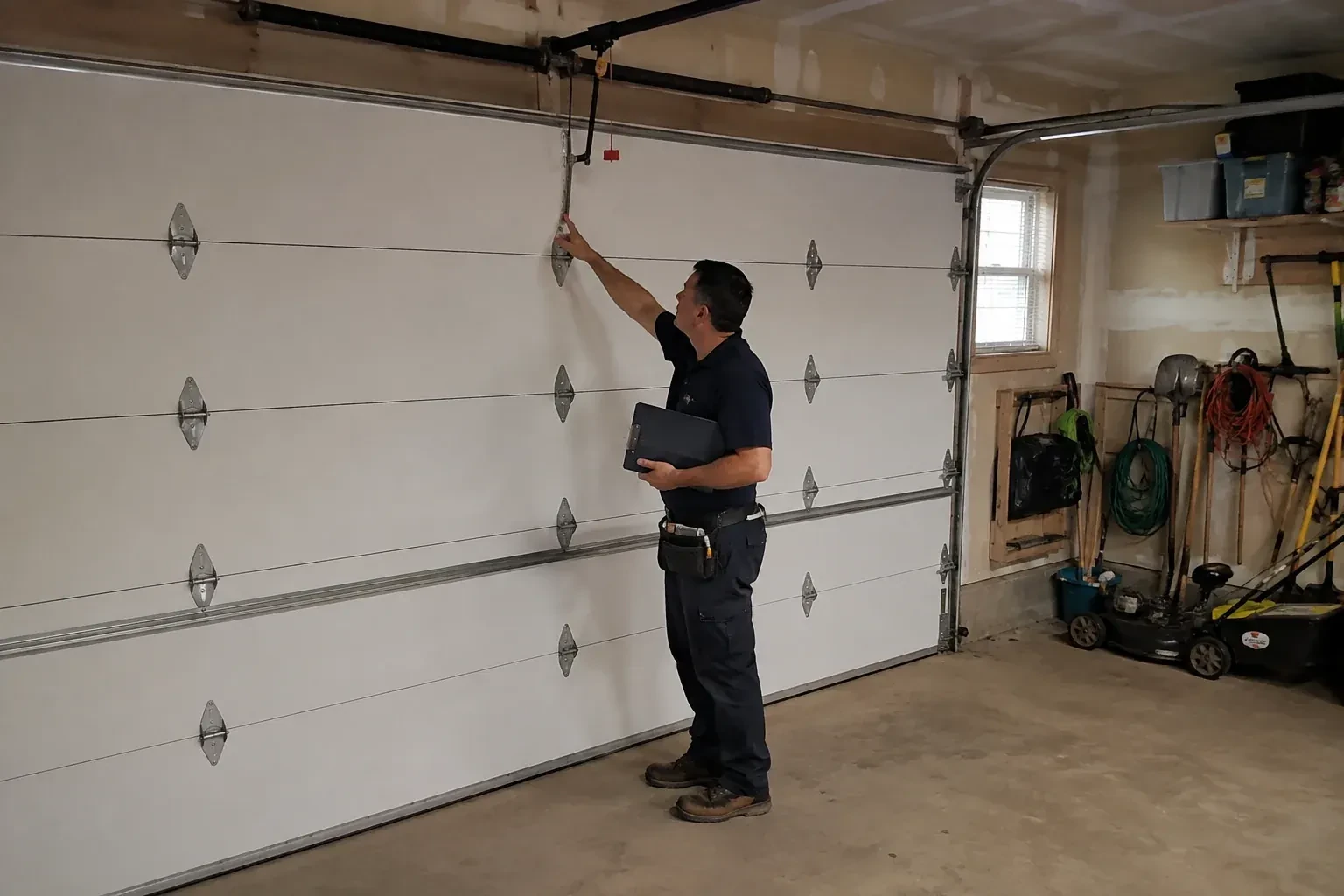
An inspection separates looking from fixing on purpose. Springs, cables, drums and bottom brackets hold the door's weight as stored tension, so the technician examines them closely, measures what can be measured and photographs what matters, without loosening or winding anything. Once the findings are written down, any adjustment or repair becomes its own planned job, done with the door secured and the stored spring tension controlled by whichever method that system calls for. This order protects the hardware as much as the people around it, and it means the report describes the door as it actually is rather than as it was left after a hurried tweak.
How the visit goesYour toddler has discovered the wall button. You want to know, from someone who checks these things for a living, that the door will stop and reverse if a small person is under it.
Garage Door Safety Inspection
How the visit goes
The opening itself
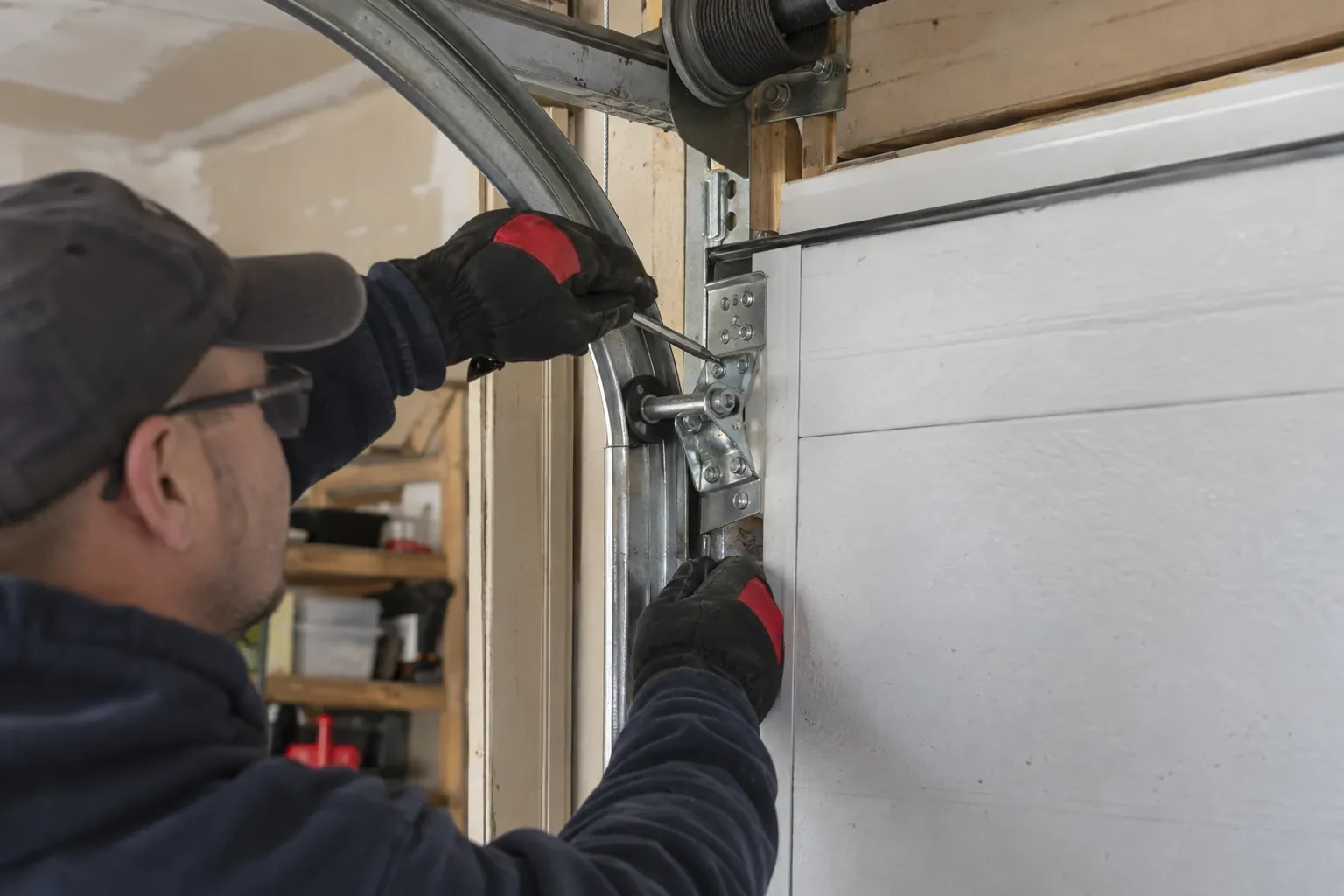
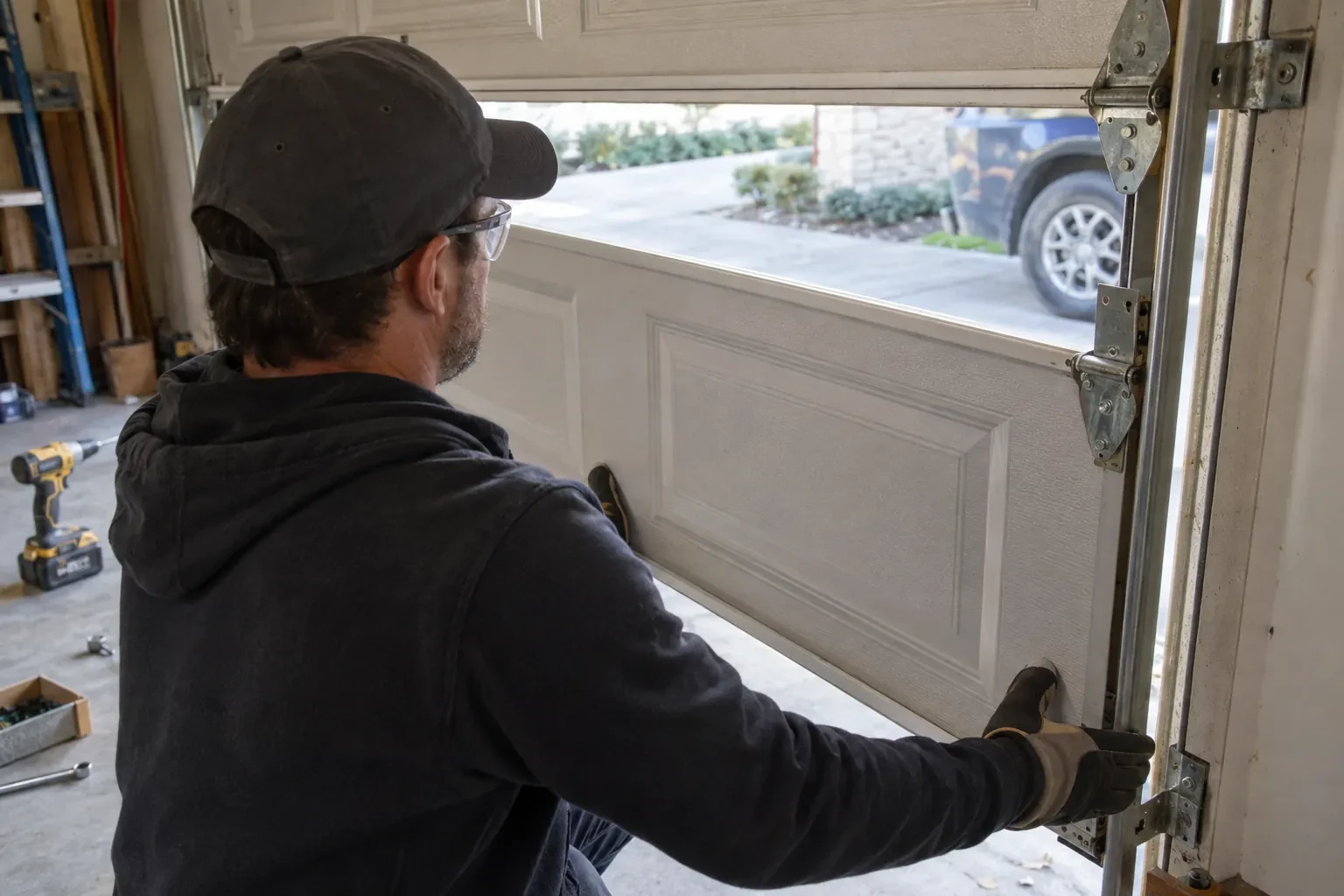
The door is only as good as what it hangs from and closes against. The technician checks the header for sagging where the spring anchor and opener bracket carry their loads, the jambs for soft or split wood where the track brackets bite, and the floor for a lip, heave or ridge that stops the bottom section early. The bottom seal and perimeter weatherstrip are examined for splits, hardening and daylight, since a seal that drags or freezes down puts strain on the counterbalance and the opener. Where a fastener has pulled loose from the framing, that is noted as a repair item rather than tightened into wood that will not hold it.
Maintenance done on the spot, if you wish
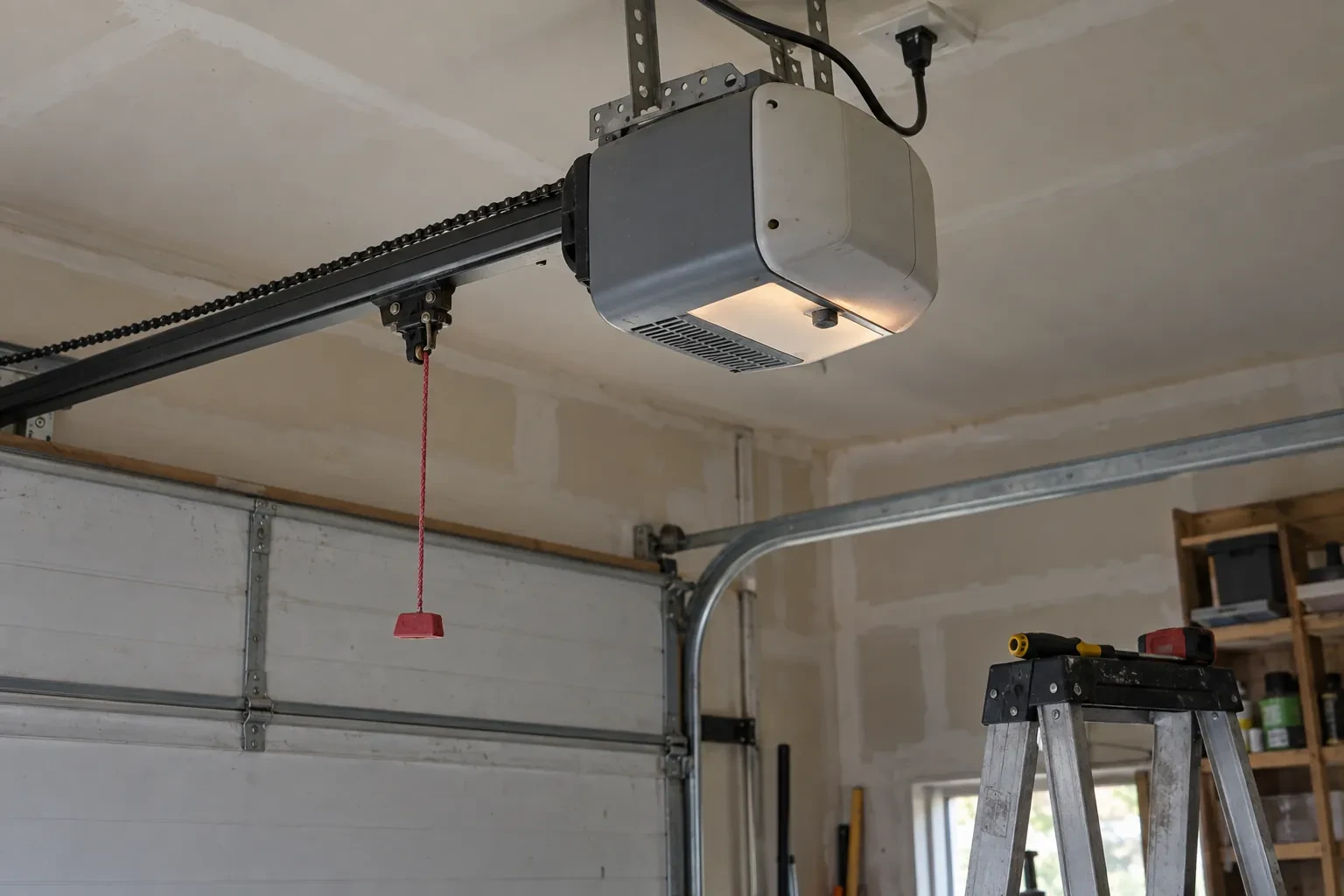
Some findings are simply maintenance, and with your agreement the technician handles them during the same visit. A garage-door lubricant is applied to the springs along their length, to hinge pins, roller bearings and bracket pins, then the door is run to spread it. The tracks are wiped clean and left dry. Photo-eye lenses are cleaned and aligned, loose fasteners tightened, remote and keypad batteries replaced. None of this touches the counterbalance tension or the opener's force settings; those are noted for planned work. It adds a few minutes to the visit and it means the door goes back into service better than it was found.
A dated record you can keep with the manuals
You leave the visit with a written report tied to a date, the door and opener model numbers, and the technician's name. It lists what was in good order, what was maintained on the spot, what is worth planning and, if anything, what must be corrected before the door is used. Measurements and photographs sit alongside the findings so a future repair can be quoted from the record and a future inspection can show what changed. Keep it with the door's manuals or in the home file. It is the kind of document that answers a buyer's question, an insurer's question or your own question in a year's time in one page.
Garage Door Safety Inspection
In the van
Remote and keypad batteries
Lens cloth and cleaner
Socket set and nut drivers
Work light and inspection mirror
Flat 2x4 test board
Garage Door Safety Inspection
What affects the quote
How many doors are on the property
Each door and opener gets its own inspection and its own record. Two doors in one visit share the travel, but the checks are done in full on both.
Torsion or extension counterbalance
Extension-spring doors add pulleys, cable clips and containment cables to the list, while torsion doors call for spring measurements at the shaft; the parts examined shape the time.
High-lift, oversized or custom doors
Doors taller or wider than a standard residential opening, or with high-lift tracks and drums, have more to measure and take longer to observe through a cycle.
What to have ready
- How many remotes, keypads and wall buttons operate the door?
- Is anything stored near the tracks, under the spring shaft or in front of the door?
- Have you tried lifting the door by hand, and how did it feel?
Garage Door Safety Inspection: questions
QuestionsWhat is the balance test and why does it matter?
With the opener disconnected, the door is lifted by hand. If it moves with light effort and stays put at waist height, the springs are carrying its weight as designed. If it drifts up, sinks or feels heavy, the springs are out of step with the door and the opener has been doing the lifting. That strain shortens the opener's life and can defeat its reversal settings, which is why balance is checked first.
Why does my door reverse on the way down for no reason?
Most often it is the photo eyes. A sensor knocked slightly out of line, a lens with a film of road grime, a loose wire, or low afternoon sun shining straight into one eye will each break the beam as far as the opener is concerned. The next candidates are a down-force setting that has drifted, a binding roller or a door that has gone out of balance. The inspection checks each in turn.
What are photo eyes, and how are they tested?
They are the two small sensors low on each side of the opening, one sending a beam and the other receiving it. The technician confirms both indicator lights hold steady, that the units sit at the height the opener maker specifies, and that the lenses are clean and the wiring secure. Then a close cycle is started and something is passed through the beam; the door should reverse. Misalignment or a grimy lens is corrected on the spot.
Related services
- Off-Track Garage Door ResetThe morning after a thaw the opener groaned, the door stayed stuck to the icy floor for a second, then lurched up crooked.
- Garage Door Panel ReplacementAfter an overnight freeze the door stuck to the slab, the opener strained, and something gave.
- Garage Door Bottom Seal ReplacementAfter a spring rain there is a puddle inside the door that reaches the tires.